Visualizzazione post con etichetta radiodns. Mostra tutti i post

10 febbraio 2014

Ginevra, si riunisce il summit della radio digitale europea. Lentamente, si muove anche l'Italia

Nella settimana del World Radio Day, l'EBU di Ginevra organizza anche il Digital Radio Summit, evento mirato a consolidare in Europa il fenomeno della migrazione verso le piattaforme di radio digitale, in particolare il DAB. La conferenza si apre domani, martedì 11 febbraio, ma in parallelo, oggi e domani si tiene anche l'evento RadioHack 2014. Ecco un piccolo sommario delle diavolerie tecniche che verranno "smanettate":


RadioDNS Hybrid Radio with RadioVIS and RadioEPG services. Radio DNS is now an ETSI standard, and its designers and experts will be present to answer questions and assist with implementation. A prototype hybrid radio implementation of the Samsung Galaxy Express handset will be shown.
EBU RadioDNS Manager and Content Manager. Activate RadioDNS hybrid radio in a few click using EBU platform and learn how to use the content manger to create visuals for your radio station.
• The EBU Cross-Platform Authentication group will show its proposed authentication protocol for personal services on media devices (including radios and TVs) based on OAuth 2.0, with a working reference implementation.
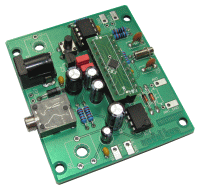
DABberry, a complete hybrid DAB+ radio receiver based on the Raspberry Pi, developed by IRT. This platform offers broadcasters the opportunity to experiment with new radio services, to demonstrate, test or develop them further using an API. Designers will be present and participants can build a DABberry if they wish; for this it's necessary to contact Alexander Erk (erk@irt.de) in advance and bring your own Raspberry Pi kit (with SD and power supply).
• Software Defined Radio. Having started with CRC's mmbTools some years ago, there is now a community of developers using it for real transmissions and continuing development for SFN compatibility, distributed encoding, satellite fed DAB gap fillers, etc. On the receiving side, recent Android devices are now powerful enough to perform the whole demodulation, decoding on the host processor, thus offering a generic receiving platform.
• Updates on other topics such as chaptering for radio programmes and the GENIVI Alliance open source software platform for in-car infotainment.


Mi piace in particolare questo progetto DABberry, il Raspberry come motore di un ricevitore DAB, a suo tempo presentato all'IFA di Berlino.
Il programma della conferenza vera e propria, prevista per mercoledì 12, si può prelevare qui. In rappresentanza di Radio RAI interverrà anche Andrea Borgnino, quindi immagino sarà possibile seguire i suoi canali su Twitter e FB per avere qualche notizia in diretta. La conferenza di quest'anno si concentra sulla questione della migrazione alla radio digitale, che in alcune nazioni europee equiverrà anche al totale o parziale smantellamento delle infrastrutture analogiche in FM. Ma Nick Piggot, celebre esperto inglese oggi in forza a Global Radio, broadcaster commerciale britannico, interviene sulla iniziativa Universal Smartphone Radio Project, che si prefigge di armonizzare e arricchire le funzionalità di ricezione radiofonica dei dispositivi telefonici smart. Un progetto promosso anche dal consorzio RadioDNS, che a Ginevra in concomitanza con il Digital Radio Summit terrà la sua assemblea generale.


In Italia la radio digitale è ancora priva di un piano di implementazione all'altezza di quelli che si sono visti in azione in Germania, Svizzera, Norvegia e persino in Polonia. Ma le iniziative promozionali curate da Digital Radio.it riescono a farsi sentire. A gennaio per esempio è partita la nuova campagna di spot radiofonici e televisivi per la promozione della DigitalRadio, il brand commerciale delle diffusioni T DAB+ Secondo i promotori è stata la prima delle quattro wave, ciascuna di almeno due flight, in programma per l’anno in corso.  La campagna si è sviluppata su tre settimane di programmazione continuativa, dal 13 gennaio al 2 febbraio, con  la diffusione di 1300 spot radio di 40 secondi. Era incluso anche uno spot video della medesima durata in  programmazione sui canali televisivi delle emittenti radiofoniche nazionali e dei loro gruppi editoriali. Il nuovo spot che promuove la “DigitalRadio, il suono perfetto” parla della evoluzione inarrestabile della  tecnologia. 
Parallelamente, continuano a essere aperti nuovi impianti, mentre vengono potenziati e aggiornati al DAB+ diversi impianti utilizzati in questi anni nelle varie sperimentazioni di RAI e privati. A dicembre RaiWay, RAS e Eurodab sono stati molto attivi in Trentino-Alto Adige. Club Dab ha aperto impianti DAB+ in Friuli e in Lazio. Mediaworld e Saturn a Natale hanno reclamizzato la disponibilità di ricevitori DAB+ nei loro negozi. Certo, siamo lontani dai livelli di consapevolezza che hanno raggiunto i consumatori tedeschi e inglesi, ma si è mosso qualcosa. Speriamo che in questo 2014 arrivino altre iniziative e soprattutto altre attivazioni di impianti.

11 febbraio 2013

Tutti gli eventi della Radio Week

Nella settimana del World Radio Day che l'Unesco (interessanti gli interventi sul declino delle onde corte) organizza per il 13 febbraio, anche la European Broadcasting Union attende a Ginevra (neve permettendo e i problemi potrebbero esserci anche viaggiando in treno) partecipanti al Digital Radio Summit, anch'esso previsto per il 13 febbraio. Il programma completo si può scaricare qui e prevede interventi sulla proposta unificata di "un chip per la radio digitale in Europa" ma anche spazi di approfondimento sul caso dello spegnimento della radio analogica in Norvegia. Il DRS 2013 è un evento aperto ma prevede una quota di partecipazione di 100 franchi svizzeri. Si inserisce nell'ambito di una "radio week" che si tiene da oggi al 14 febbraio e della quale vorrei segnalare in particolare due eventi. Uno è promosso dall'IDAG, International DMB Advancement Group per esplorare le possibilità di distribuzione su scala europea di dati digitali attraverso le infrastrutture DAB. L'altro è la nuova edizione del Radiohack Summit, una due giorni (11-13 febbraio) che coinvolgerà soprattutto i tecnici, gli sviluppatori software e i service provider che discuteranno, "mani in pasta", le nuove applicazioni della radio digitale. Il Radiohack ha anche una pagina Facebook. Mi scuso per aver dato così tardi la notizia ma in teoria l'evento inizia alle 13 di oggi quindi si fa ancora in tempo ad arrivare a Ginevra. Il programma dettagliato si può prelevare qui. Segnalo il contributo di Paolo Casagranda della RAI che verterà sugli sviluppi per la trasmissione di slideshow tridimensionali nell'ambito del sistema RadioVIS previsto dalla piattaforma RadioDNS. RadioVIS - che ha anche aperto un forum su Google Developers - è un sistema che consentirebbe la trasmissione via Internet di immagini 3D senza occhialini, da integrare in un contesto crossmediale grazie a RadioDNS. Se avete un iPad e volete sperimentare un servizio molto simile potete scaricare la nuova app della NASA "Spacecraft-3D" che visualizza spettacolari rappresentazioni 3D delle principali sonde spaziali NASA con un iPad che inquadra attraverso la sua fotocamera una immagine-trigger (un QR Code, un semplice pattern). Potrebbe essere un'ottimo strumento pubblicitario se associato, via RadioDNS, a uno spot radiofonico.


Infine c'è ancora tutta la giornata di martedì per seguire l'esposizione parigina di Le Radio 2013, salone innovativo che riunisce i professionisti della radio francese ed europea, ancora in corso al Centre Etoile Saint-Honoré, nella capitale francese. Il salone chiude appunto il 12 febbraio e si è aperto il 9 con una pre-conferenza dedicata alla programmazione, Radio Zest, che ha cercato di essere una TED Conference della radiofonia. Un modello che per qualche ragione nessuno riesce a riprendere, su scala più piccola, qui in Italia.

23 settembre 2011

La radio cambia anche se il DAB non parte

Il problema più complesso dei cronisti delle tecnologie consiste nel rendere potabile la narrazione di un futuro che stenta a trasformarsi in presente. Radiopassioni si avvicina al sesto anno di vita e in tutto questo tempo si è soffermato centinaia di volte sulla questione della radio digitale dei suoi pro e contro, delle sue infinite "sperimentazioni", dei suoi lanci e rilanci, a volte dei suoi fallimenti. Ogni volta si cerca di trovare qualche nuovo spunto, ma oggi alla conferenza "La radio che cambia" organizzata dal Prix Italia a Torino l'impresa è davvero ardua.
La colpa non è degli organizzatori, riusciti a radunare un gruppo di relatori italiani e stranieri di eccezionale livello. Il vero imputato è l'immobilismo ormai patologico della radio numerica in Italia, estenuante come il finale interminabile del primo atto di un melodramma di un autore minore giustamente dimenticato.
È una situazione paradossale, che impedisce di fare in Italia una efficace comunicazione tra i potenziali consumatori di un mezzo - la radio modulata in digitale - che necessita di infrastrutture in buona misura tutte da realizzare. Fatto che nell'era di Internet è già abbastanza controverso. Molto più convincente appare un serio ragionamento sulla proposta di Cridland: puntare subito tutto su una radio diversa, sfruttando la possibilità di inserire preziosi metadati nei flussi RDS dell'FM per realizzare efficaci mashup tra programmi radiofonici e siti Web fissi e soprattutto mobili. Guardatevi il filmato della sperimentazione realizzato nei laboratori RAI del CRIT di Torino con il sistema RadioDNS, al quale la RAI ha ufficialmente aderito. Nel video potete vedere le informazioni visuali trasmesse verso le radio digitali Pure Sensia e Revo Axis, ma anche verso la radio FM di uno smartphone Android (c'è anche un Chumby One che però viene utilizzato solo come visore di slideshow non avendo una sezione FM compatibile con RadioDNS) attrezzato con il software della canadese CRC. Sono davvero bravi i tecnici del laboratorio CRIT, tra i quali Paolo Casagranda che sta parlando con me nel filmato. I test si basano sui metadata RadioDNS trasmessi sulla frequenza FM di Radio 2 di Torino, i 95.6, che servono per attivare nel dispositivo ricevente l'accesso alla intranet RAI che serve i contenuti. C'è anche un esempio di come si potrebbe arricchire un player che accede agli stream Web della RAI con informazioni di EPG e visuali.


Una conferenza del genere si può capire solo nel contesto internazionale del Prix Italia, è sempre un grande piacere ascoltare il futurologo della radio James Cridland parlare di radio ibrida, di integrazione tra contenuti audio e informazioni multimediali del Web, di interfacce utente, di guide elettroniche alla programmazione radiofonica. Anche la storia del DAB+ australiano raccontato da Joanna Warner di Commercial Radio Australia riesce sempre a essere avvincente (bellissimo il riferimento alle stazioni popup e event related, o ai canali sponsorizzati che si possono inserire nei multiplex di questo sistema digitale). Ma l'ennesimo racconto di quello che in Italia "sta per avvenire" non riesco a farlo. I lettori di RP sanno benissimo che cosa si può fare con il DAB, ma sanno anche che gli acquirenti degli apparecchi digitali - che un fornitore come Pure sta importando e promuovendo anche da noi - corrono il serio rischio di non poter ascoltare un singolo segnale DAB nella loro zona di residenza.
Ho trovato molto pragmatici i due interventi di Tim Davie, della BBC, e David Kessler, consulente del governo francese per i progetti di radio digitale. Presentando l'incredibile offerta DAB del Regno Unito (dove l'ascolto sfiora ormai il 18% del totale e il canale culturale di archivio DAB 4Xtra genera una crescita del 60% di audience quando va a sostituire il canale talk Radio 7), Davies ha raccolto in pieno l'esortazione che ha fatto da leitmotiv dell'evento: il digitale ha bisogno di contenuti originali, esclusivi e abbondanti. Ha anche ammesso molto candidamente che è del tutto possibile che un giorno il modello broadband, la distribuzione di contenuti radiofonici su reti IP, vincerà sul modello broadcast. Ma ci vorranno ancora dieci o anche quindici anni e nel frattempo la radio digitale o ibrida può dare moltissimo.
Tim Davie della BBC ha fatto una importante premessa alla sua presentazione, affermando che il successo dei servizi di radio digitali nel Regno Unito sono anche merito del sostegno ricevuto a livello politico e governativo. Sostegno che secondo Mike Mullane dell'EBU verrà cercato dall'organismo radiotelevisivo europeo il mese prossimo a Bruxelles, durante i due giorni della EBU Digital Radio Conference (11-12 ottobre) organizzata quest'anno addirittura nella sede del Parlamento comunitario. La radio digitale nel Regno Unito e altrove è una strategia di sistema, che ha il ragionevole obiettivo di portare allo spegnimento della infrastruttura precedente, per ovvie questioni di politiche anti-spreco (è per questo che vengono fissate delle possibili date di switchoff, mantenere l'FM e il DAB sarebbe da pazzi).David Kessler, al contrario, ha fatto chiaramente capire che il digitale radiofonico in Francia, per ora non parte e forse dovrà aspettare a lungo. Manca una delle motivazioni più forti della tv numerica: rompere l'oligopolio che per anni ha tenutto freno in Francia allo sviluppo di una offerta televisiva ampia e diversificata. E mancano soprattutto le risorse finanziarie, nel pubblico come nel privato, anche perché in Francia la crisi del mercato pubblicitario ha colpito duramente la radio oltre che i giornali.
In Italia non ci può essere niente del genere. A parte la nostra patologica incapacità a dotarci di un minimo di politica industriale, l'unico sistema ammesso nella testa del nostro governante è la strenua difesa dell'oligopolio televisivo. Difesa che ha portato al paradosso di una televisione digitale terrestre che ovunque porta a una scelta più diversificata mentre da noi sta conducendo inesorabilmente alla morte delle televisioni locali. Il responsabile del progetto di radio digitale in RAI WAY, Giuseppe Braccini, ha riproposto al Prix Italia uno spot che ho sentito in tutti gli altri incontri precedenti. Un discorsetto commerciale molto sensato ma anche molto irrealistico. La radio digitale non è mai partita in Italia - ha detto Braccini - perché fino al 2006-2007 era un sistema pensato per nazioni europee dotate di offerta mediatica normale e ben regolata, tutto il contrario della situazione anomala e selvaggia del nostro etere FM. Poi, ha proseguito Braccini, sono arrivate le codifiche del DAB+ e la possibilità di accogliere molti più operatori. RAI WAY ha deciso di portare avanti una strategia di implementazione rivestendo i panni di capofila di una rete condivisa. Il braccio infastrutturale della RAI (sempre che non venga ceduto) non lo fa per beneficenza, agisce in questo modo con l'idea di rivendere la capacità installata, non tanto ai network privati (che sul DAB continuano a essere molto scettici considerata la duplicazione dei costi trasmissivi resa forzata dalla lunga convivenza tra FM e DAB) quanto agli operatori regionali e soprattutto locali. «Il nostro messaggio è semplice: per una somma che può essere di mille euro al mese vi diamo 100 kilobit di banda DAB+, 64 per i contenuti audio e altri 40 circa per le informazioni digitali che servono per potenziare l'offerta.»
Ripeto, è un discorso più che sensato in condizioni normali. E allora perché questo benedetto DAB+ non parte mai? I ricevitori ci sono e persino le case automobilistiche (al convegno del Prix Italia c'era Candido Peterlini, direttore infotainment della Fiat che ha annunciato i primi modelli della casa automobilistica torinese (?) con DAB+ integrato nel cruscotto a partire dal 2012) si stanno impegnando per equipaggiare con le radio DAB+ le autovetture nuove.
Il problema in Italia è di natura politica ed economica. Sembra incredibile ma sul DAB ci sono ancora discussioni sulla ripartizione delle frequenze tra radio e tv, discussioni che si faranno ancora più aspre ora che sono state vendute ai telefonici le frequenze degli 800 MHz e ci si appresta a ridistribuire il dividendo digitale. Finché questo sarà un posto ossessionato dal controllo dei canali televisivi non sarà mai possibile fare chiarezza. Ma anche ammettendo di riuscire a sbloccare la situazione politica e regolamentare, resterebbe la questione dei costi della nuova infrastruttura DAB, delle risorse da destinare al supporto di una radiofonia pubblica e commerciale a doppio regime, analogico e digitale, chissà per quanti anni. Ve la immaginate l'ERT, l'ente radiotelevisivo greco che si fa capofila di un progetto di digitalizzazione della radio oggi? Vi siete chiesti perché tra le nazioni in cui la radio digitale semplicimente non parte ci sono Irlanda e Grecia? E ritenete possibile che un'Italia da molti considerata attendibile candidata al default del debito nazionale, costretta a inanellare una manovra dopo l'altra per cercare di dare respiro a titoli di stato sempre più deprezzati, si metta ad appendere sui tralicci dei trasmettitori DAB? Siamo seri.
Per il momento l'unica alternativa concreta alla radio digitale intesa come modulazione numerica è la radio ibrida nata dal connubio tra FM e Internet. Che senso ha per esempio perseguire obiettivi di creazione di servizi di infomobilità basati su informazioni TPEG trasmesso via DAB quando è perfettamente possibile raggiungere gli stessi obiettivi sfruttando l'RDS per i metadati e la rete 3G per le informazioni sul traffico? Perché invece di continuare a trascinare penosi discorsi di condivisione di frequenze radiotelevisive in banda III non ci si siede a un tavolo per mettere un po' d'ordine in uno spettro FM caratterizzato da enormi sprechi di potenza, duplicazioni di frequenze, contenziosi tra editori e totale esclusione di possibili nuovi entranti?

12 ottobre 2010

Trasmettere via software: EBU/CRC mostrano come fare

EBU Technical Review descrive in un suo contributo sul numero di settembre le demo di radio "ibrida" messe in scena al recente salone IBC di Amsterdam. Nella postazione coordinata da Mathias Coinchon è stato dimostrato come grazie a implementazioni software open source sia possibile allestire con pochi investimenti trasmissioni miste analogico-digitali, con diversi sistemi (FM-RDS, DAB, DRM), utilizzando tecniche di modulazione completamente software. Un altro test molto interessante riguarda il sistema RadioDNS, che sfrutta i metadati integrabili (per esempio via RDS) nelle modulazioni analogiche, così come in quelle digitali per stabilire una connessione diretta tra contenuti radiotrasmessi e contenuti Web.
Per questa dimostrazione, in particolare la parte riguardante la trasmissione software defined, l'EBU ha sfruttato il software raccolto negli mmbTools, un bellissimo progetto realizzato dal Communications Research Centre del Canada. Il sito degli mmbTools mette a disposizione attraverso un LiveCD gli strumenti per "modulare" via software trasmissioni a standard analogico, inclusa appunto l'FM-RDS e digitale T-DMB. La piattaforma utilizzata per le trasmissioni sperimentali DRM all'IBC è la tedesca Spark.

RadioDNS opens up the radio
27 September 2010

At the IBC, a team of EBU radio engineers integrated a full radio chain, from studio to consumer receivers, to demonstrate analogue and digital radio broadcasts with multimedia enhancements. What was the background of this demonstration?

Open software defined radio transmission platform

"First of all we wanted to show how technology is evolving and that it is now possible to create radio broadcasts for virtually any platform (DAB, DAB+, DRM, FM and streaming) with a common, cost-efficient software defined radio platform. That is exactly what we did: we broadcast on all of these platforms at the IBC, using 1 rack of almost of-the-shelf components, all this for less than €5,000. DAB/DAB+ encoding/multiplexing/modulation was performed using MMBTools from CRC. DRM transmission used Spark software while FM was implemented using gnuradio. The RF transmission was then produced by USRP Universal Software Radio Platform. "We hope to trigger radio people that they can try out new things without having to set up an expensive infrastructure", explains Mathias Coinchon (EBU).

Multimedia enhancements of hybrid radio

But the demo was not about the platform only, it also emphasised the developments happening 'around' the radio with the hybrid broadcast/Internet approach, such as RadioDNS and RadioVIS. Specifications which allow radios to seamlessly find additional internet-based content to, for example, show an album picture, do an audience poll or provide extensive EPG information. At the IBC, EBU in partnership with CRC and Global labs showed the RadioDNS system work on various different devices and plaftorms using DAB/DAB+ or FM.

For more information on EBU TECHNICAL's radio work, see the radio section on tech.ebu.ch.


Openmokast and mmbTools at IBC 2010

The Communications Research Centre Canada (CRC) was invited by the European Broadcasting Union to demonstrate CRC's mmbTools open platforms for mobile broadcasting at IBC 2010. These demonstrations will be part EBU's exhibit on "Hybrid Radio" in Hall 10, Booth 10.D21.
In the logical continuity of our CRC mmbTools and Openmokast works for DAB/DMB, we have integrated and developed new approaches and tools to foster the development of innovative hybrid FM-RDS Internet radio applications and services. Here is a list of CRC contributions for this event:
  • CRC mmbTools software (DAB+ audio encoder, multiplexer and mobulator) fo the live on-site 10 Watts DAB transmission
  • DAB to Wifi "repeater" running on the OMAP-based IGEPv2 hardware platform.
  • Real-time FM and RDS software modulators based on GNU Radio and the universal software defined radio platform USRP
  • Real-time FM and RDS reception on the USRP with GNU Radio RDS monitoring
  • CRC's Open source RDS decoding software library
  • CRC mmbTools Live CD which now includes all our FM-RDS tools in addition to our DAB tools
  • Demonstration of DAB and FM-RDS on various Android Smartphones: G1, Nexus One, SE Xperia x10 mini,
  • New release of the CRC FM Radio Player App on the Android Market. This demo shows how an FM App could work on Android if FM APIs were available to 3rd party developers. This App cannot receive FM audio on Android but it receives and decodes real-time RDS arriving from a wifi connection. An RDS server is required to stream RDS over wifi. The App decodes some ODA data like phone numbers and http links.
  • Demonstration of CRC's “CELT over DAB” application. CELT is a royalty-free audio codec developed by the Xiph.Org foundation.

Contact: François Lefebvre
Email: francois (dot) lefebvre (at) crc (dot) gc (dot) ca
Our channel on Youtube: http://www.youtube.com/crcmmb
Our presentations on Slideshare: http://www.slideshare.net/tag/crcmmb
For technical details, online and off-line tools, source code and downloads please visit our projects websites:

18 giugno 2010

Un futuro di radio digitale (Ibiquity) per Apple?


Una richiesta di brevetto appena depositata da Apple fa esplicito riferimento alla radio digitale Ibiquity, HD Radio, come sistema in grado di trasmettere metadati che possono consentire di implementare servizi di ricerca e gestione di contenuti trasmessi via radio. La "patent application" si intitola "Digital Radio Tagging Using an RF Tuner Accessory" e menziona per la verità anche l'RDS della FM analogica. Qui il riferimento al testo completo della richiesta, numero depositata allo USPTO. Naturalmente nella blogosfera si è scatenata una tempesta di illazioni che danno per scontata la presenza di un ricevitore HD Radio nei prossimi iPod e iPhone 5. Questa la nota pubblicata da Apple Insider, che giustamente ricorda la collaborazione tra Apple e Ibiquity per il tagging di brani trasmessi via HD Radio e acquistabili sull'iTune Store.

Apple exploring HD Radio for future iPods, iPhones

By Neil Hughes

The addition of an HD Radio receiver to future handheld devices from Apple could allow users the ability to scan and search through live radio content without having to channel flip.

A new patent application from Apple this week centers around HD Radio, a trademarked wireless radio format owned by iBiquity, which allows both AM and FM radio stations to simulcast digital and analog audio within the same channel. The application suggests that future handsets from Apple, such as the iPod or iPhone, could embrace HD Radio technology to allow users greater flexibility when listening to broadcast media.
Entitled "Digital Radio Tagging Using an RF Tuner Accessory," the application states that users could use a handheld device to scan all stations, or only for stations delivering high-quality digital audio content. Collecting a list of digital stations and the accompanying "raw digital data" broadcast with them would allow users to scan and search stations based on the content that is currently playing, or a number of other factors included in the data.
"Enhanced metadata and searching can provide the listener the ability to refine station choices without having to listen at length to any particular station, and further can facilitate tagging broadcast tracks for subsequent access and/or purchase," the application reads.
With respect to tagging and purchasing tracks, Apple already offers a similar feature on its most recent iPod nano, which features a built-in FM radio. The iPod nano's iTunes Tagging feature allows users to tag songs they like when they hear them on the radio. Songs can then be previewed and purchased from iTunes when synced with a computer.
But Apple's new portables could go beyond FM with an HD Radio tuner, allowing full integration with HD Radio -- a feature that has been rumored for some time. The system describes both an external radio receiver, wirelessly transmitting audio and data to the portable device. It also suggests that such data could be shared with a stereo system in a vehicle.
Last November, The Wall Street Journal reported that Apple was in talks with iBiquity to bring HD Radio to future models of the iPhone and iPod touch. At the time, the trademark holder released the Gigaware HD Radio Receiver, a hardware accessory that -- along with a free App Store application -- allows users to listen to HD Radio broadcasts of local stations.
Apple and iBiquity partnered in 2007 to bring the iTunes Tagging feature to devices that receive the broadcast medium. Like with tagging on the iPod nano, iTunes Tagging with HD Radio allows users to "tag" songs they hear for a later purchase via the iTunes Store.
HD Radio was one of Microsoft's main selling points of the Zune HD, the portable media player that the Redmond, Wash., software giant hoped to position against Apple's industry leading iPod touch.

Non resta che attendere gli sviluppi. Il brevetto menziona in realtà anche i metadati trasmessi via RDS e quasi mi fa pensare che Apple abbia letto con attenzione la proposta di RadioDNS. Quando lo scorso anno è stato annunciato l'iPod Nano con avanzate funzioni di tagging abbinate al tuner FM (analogico) integrato, avevo fatto osservare la scelta da parte di Apple di supportare una tecnologia meno recente rispetto a HD Radio, utilizzata invece per il nuovo player Microsoft ZuneHD (che non mi risulta aver avuto soverchio successo). Naturalmente, la presenza di HD Radio in un dispositivo venduto in milioni di pezzi rappresenterebbe un formidabile incentivo per i broadcaster americani nel continuare a dispiegare una tecnologia finora ampiamente snobbata dal grosso degli ascoltatori. All'inizio del 2010, la FCC ha tra l'altro autorizzato le emittenti ad aumentare la potenza della componente numerica del segnale ibrido HD Radio in FM, per ovviare ai problemi di scarsa ricevibilità all'interno degli spazi chiusi. Più recentemente, alcune stazioni in AM hanno invece lamentato problemi di interferenza che stanno spingendo diverse emittenti a rinunciare a HD Radio in onde medie. Era una tendenza prevedibile, considerando che in AM il vantaggio qualitativo del segnale digitale è molto più discutibile. In FM, invece, un sostegno indiretto da parte di Apple potrebbe determinare un punto di svolta. Soprattutto dopo la decisione da parte di AT&T, operatore esclusivo di iPhone negli Stati Uniti, di abolire le tariffe flat senza limitazione sul volume di dati scaricabili, limite che potrebbe rendere alquanto costoso l'ascolto di stazioni radio in streaming sull'infrastruttura mobile. Il brevetto depositato da Apple sembra proprio una risposta a questa decisione e potrebbe rilanciare il concetto di terminale ibrido in un contesto di convergenza di infrastrutture e linguaggi.

08 giugno 2010

Intervista con l'autore di Radio Wave Tuner

Qualche mese fa mi sono soffermato sulla problematica delle EPG, le guide elettroniche alla programmazione radiotelevisiva, parlando di una piccola, fantastica guida alla programmazione radiofonica di musica classica, Radio Wave Tuner. E' una vera e propria EPG che indica minuto per minuto i programmi diffusi anche via Web, da una quarantina e oltre di emittenti e c'è anche la nostra Radio RAI Auditorium, fatto tanto più soprendente se si pensa che l'autore di Radio Wave Tuner è un programmatore americano, Scott D. Strader. Dopo averne parlato scrissi a Scott per chiedergli se era disposto a rispondere ad alcune domande e dopo un po' lui si è fatto gentilmente vivo, ha acconsentito ed ecco il risultato di questa intervista via mail.
Ho pensato di mantenerla in originale, per favorire per una volta i miei pochi lettori all'estero. Per conoscere le altre attività di Scott fate riferimento al suo blog, Messages from Ether.

Here follows a short e-mail interview with Scott. D. Strader, Radio Wave Tuner's inventor and developer. RWT is a brilliant online EPG with constantly updated schedules for dozens of radio stations broadcasting classical music (all of which are available via their Web stream). I find RWT an incredble achievement, considering Scott's automatic "scehdule aggregator starts from multiformat and highly unstructured data. Please find more about Scott and his other activities, interests or views on his Messages from Ether blog:

1) How did Radio Wave Tuner come to be? What exactly sparkled your interest in a EPG concept applied to radio programming?

I have the somewhat common combination of interests both in programming and in music. As a software engineer I spend much of my day at the computer, and as a pianist I enjoy listening to streaming classical music stations throughout the day. To choose what to listen to, I'd browse the different web sites, find the program guides for each, and then perform the mental gymnastics to normalize their time zones to mine. None of those aspects are terribly cumbersome on their own but together they are an unpleasant barrier-to-entry when you just want to listen to something interesting.

At the same time that I had the idea for RadioWave (~2004) I was moving from Windows desktop application development to Java and web development. Parsing web-based radio schedules was an ideal task for me at the time. Being my first Java project, it still bears the blemishes of that learning period. I wrote about the idea on my blog even though I had plans to create the web site myself. I felt that if I failed, maybe someone else would want to create it.


2) How did you manage to extract so many informations from highly unstructured data? I assume few or no stations at all make available any orderd metadata, let alone any xml feed... So what's the secret behind Radio Wave Tuner?

Back in 2004, I'd read an article by Paul Ford illustrating the limitations of data retrieval via screen scraping (just grabbing text off of web pages) compared with using semantic tags (accessing meaningfully tagged data). Even today the Semantic web is in its infancy, so my only choice was to scrape data from web pages. Sadly, there is no secret behind radio schedule retrieval beyond brute-force. I have headaches when a station does a complete redesign of its web site, but that's rare and overall RadioWave is relatively low-maintenance. The RadioWave web crawler (dubbed "yoink!" after the frequently-used Simpsons exclamation) runs automatically to spider the different schedule pages and cleanup old schedules in the database.

Over the years and while continually adding more stations, I've become more efficient at extracting and organizing broadcast information while also adding what I hope are useful features. Some stations, such as Public Broadcasting networks in the US, share a common format and so use the same web crawler code. Others, such as Radio Swiss Classic and Klara Continuo, have quite spare web pages and take little effort to retrieve. Still, there are those whose web designers seem to delight in making it difficult for me to extract their pages' program information.

Overall, the biggest problem has been lack of stations with both a streaming presence and a published schedule. I've relied on friendly emails to point me to new sources.


3) What are your general feelings about radio oriented EPGs? Do you thing it's something listeners would care about?

I'm not sure why radio has remained so deficient in this area compared to television broadcasts or any other form of entertainment. One can easily compare what's on different TV stations at 8 PM or what movies are playing in different theaters around town. However, if I get in my car to drive to my brother's house 30 minutes away, I'm resigned to channel surfing. At home, I have more freedom to choose (browsing a program guide while driving could get dicey) yet I am equally limited by what broadcasters offer. Even satellite radio provides only genre descriptions for its different stations and not detailed listings.

I can only look at this from an American perspective (yes, we're a little behind), but with greater choices such as 4G wireless becoming available and phones being used increasingly for streaming audio, it is time that radio program guides improve.


4) Which requirements do you think would have to be put in place for effective EPGs to be implemented? Do you think for instance that only higher rate metadastreams within digital modulation schemes (HD Radio, Eureka 147...) would suit?

Ideally, providers should be able to publish as much or as little information about their programming as they want. The most useful aspect of coordinating different broadcasters' streams would be if those broadcasters used a standard data format. If everyone provided the same semantic structure, developers would be free to "mash up" those data streams in useful and creative ways. Just as RSS has made every web site equal and equally readable within news aggregators, the RSS of media streams could enable listeners to browse, subscribe, and group streams of interest. This could include audio, video, or any scheduled media.


5) Are you familiar with the RadioDNS project aiming at a connection between onair metadata and Internet distributed information?

I was not familiar with RadioDNS before your email. What a great concept! Where I've been focusing on data normalization,RadioDNS has worked towards an elegant method of broadcast normalization. And their use of the existing internet DNS database infrastructure is perfect. This is certainly something to watch.


6) Who Scott D. Strader is and how would he describe his relation with radio and software?

My work with RadioWave was driven completely by a simple desire to discover what's playing right now. I realized that I could easily solve that problem without coordination from larger groups, and so pursued it. Streaming radio has always felt like a niche area because the geek world that I know is generally more interested in on-demand (e.g. Rhapsody) or custom stations (Pandora, SHOUTcast). Still, there's not a day I don't personally use RadioWave and suspect that it interests others too.

06 maggio 2010

Integrazione FM-WEB, chip e software da sperimentare

Continuano le sperimentazioni dell'amico Cédric, sul suo blog dedicato al DX in FM pieno di progetti di circuiti e componenti per l'estrazione delle informazioni RDS dal segnale FM. I suoi ultimi esperimenti riguardano il receiver on chip di SiliconLabs, l'SI4735, un ricevitore AM-SW-FM con decoder RDS integrato. Cédric ha aperto un Google Group per gli interessati alle sperimentazioni, che nel suo caso si basano su una evaluation board tedesca che integra il magico chip Silicon Labs e un controller. Il costo di questa schedina è inferiore ai 60 euro, ma ci sono altre possibilità di sperimentazione con una evaluation board messa a punto dalla stessa Silicon e commercializzata (al doppio del prezzo) da Mouser.


Ha ancora senso parlare di questi esperimenti hobbystici in un momento in cui la radio analogica sembra avviata a un inesorabile tramonto? A mio modesto parere sì. La radio FM ha davanti a sé un futuro ancora relativamente lungo e la possibilità di integrare nei suoi segnali dei metadati in formato digitale rappresenta una piccola ma formidabile opportunità di aggancio dei suoi contenuti con servizi di directory e distribuzione di contenuti basati su Web, una specie di interfaccia programmabile che permette di inserire la modulazione analogica in un contesto Web-digitale. Il sistema RadioDNS è un esempio molto eloquente di come sfruttare questa opportunità e se aziende come Apple hanno capito il meccanismo con dispositivi come l'iPod Nano e il suo sistema di tagging sul ricevitore FM (analogico) integrato, vuol dire che si possono immaginare scenari e applicazioni molto interessanti.
Il lavoro svolto da programmatori amatoriali come Cédric può diventare prezioso per tutti, anche perché non è certo un caso isolato. Il tedesco Michael Feilen ha per esempio rilasciato in questi mesi un decoder software per "Wide" FM che estrae l'audio stereofonico e in parallelo il bit stream dell'RDS. Il progetto di Michael si chiama FMStack e si trova su Sourceforge , una versione aggiornata realizzata appositamente per il ricevitore SDR Perseus si trova qui: http://www.drm-sender.de/fmstereodemod_v0_3.zip
FMStack può essere adattato anche ad altre SDR. Tutto quello che serve, come del resto per il Perseus, è un convertitore che trasferisca la porzione di banda da 88 a 108 MHz nella finestra ricevibile con i vari ricevitori SDR per HF. Uno di questi down converter è l'FMC108-28 della tedesca NTI (conversione nella porzione 7-28 MHz) ma anche il bravissimo Martin Pernter, lo sviluppatore del ricevitore SDR PMSDR , ha annunciato l'arrivo di un converter opzionale per l'FM. Lo stesso Nico Palermo sta pensando a qualcosa per la decodifica della WFM anche se non con il software del Perseus (non ottimizzato per questa modulazione).

12 marzo 2010

RDS RT+, metadati per la radio (e iPod Nano)

Una interessantissima recensione di Alan Jurison su RadioWorld svela molti particolari tecnici della funzionalità di tagging integrata dal nuovo Apple iPod Nano nel suo ricevitore FM/RDS. Per implementare la funzione - che permette di marcare i brani ricevuti via radio e successivamente collegarsi all'iTunes Store per eventualmente acquistare questi brani - Apple ha utilizzato una parte dello standard RDS introdotta già da qualche anno, il Radiotext Plus o RT+.
E' veramente incredibile pensare a quante cose sono possibili già oggi con la radio analogica e una manciata di metadati. Cose che chissà perché nessuno si immagina di utilizzare. Le specifiche RT+ hanno introdotto, grazie ai campi delle Open Data Application previste dalla normativa che regola questa codifica, un discreto grado di informazione all'utente e interattività. Sto parlando in questi giorni del nuovo sistema RadioDNS, proposto per ovviare ai "limiti" dei metadati trasmessi con i segnali della radio analogica e digitale. RadioDNS è stato definito alla fine del 2009 ma già nel 2006 la rivista tecnica dell'EBU di Ginevra pubblicava un breve ma dettagliato articolo che spiegava che cosa era possibile fare con RT+ (l'articolo si può prelevare qui). Il sistema, sviluppato guarda caso da Westdeutscher Rundfunk (WDR), Nokia e Institut für Rundfunktechnik (IRT), consente di inserire nel flusso informativo RDS dati relativi al TMC, al tagging, alle emergenze e può consentire un certo grado di interattività con l'inserimento di informazioni come numeri di telefono e URL. Tra le aziende che producono encoder RDS che offrono questa opportunità c'è per esempio l'americana Audemat con il modello FMB80. Lato ricevitore, è semplicemente questione di programmare la decodifica a valle dei componenti che già oggi demodulano la sottoportante RDS (o RDBS negli USA, che con l'avvento di ricevitori come iPod Nano e lo stesso Microsoft Zune HD, che supporta RT+ nella parte analogica, sta scoprendo un sistema finora diffuso principalmente in Europa), una semplice questione di software. Eppure siamo qui a lamentarci per una radio che non riesce a stare al passo di Internet. Ma chi l'ha detto?
L'articolo di Jurison è chiaramente rivolto ai tecnici delle stazioni radio interessate a sfruttare la funzione di tagging dell'iPod Nano. L'autore osserva giustamente che maggiore è il numero di stazioni impegnate a diffondere questi metadati, maggiore sarà l'interesse da parte dei costruttori di ricevitori, nell'eterno gioco uovo-gallina che caratterizza l'industria. Certo che appare francamente stupido il clima di attesa che inevitabilmente trasforma ogni nuovo standard tecnico in una possibile "rivoluzione", quando i primi a non accorgersi delle rivoluzioni possibili con gli standard precedenti sono proprio i tecnici.

(...)
FM radio review

If you have used the classic iPod user interface, you’ll be right at home. For those new to the iPod, the wheel user interface may take a little time to get used to. Apple also does a great job with its music playing, display, interface and organization on this device. Seeing album art when playing a stored song is a cool and slick feature, and the buttons and controls within the Music, Video and Photos section are intuitive.
The radio, though, is why I ran out and bought one. (Note that we’re talking about only analog FM here; there’s no HD Radio and no AM capability.) The FM tuner works internationally. When you launch the radio for the first time, it asks what region you’re in (Americas, Europe, Japan, etc.). You can then select “Play Radio” and you’re ready to scan the dial. You can use the outer “wheel” or circle of the control pad to scan the virtual radio dial at the bottom of the screen. Clockwise moves the frequency up in the FM band, counterclockwise moves down.
Once you’ve tuned to a station, or after a period of inactivity, the virtual radio dial display goes away and the functionality of the outer wheel changes to become your volume control. Again, for the non-Apple person, this can take time to get used to. At first, I found myself inadvertently changing the volume when wanting to change the station.
If the virtual radio dial has disappeared and you want to change the station, lightly tap the center button; the dial will return. If you’ve come across a station you like, hold the center dial position for about a second and you can select “Add to Favorites.” Once you’ve added several stations to favorites, use the left/right “Last Track/Next Track” buttons to navigate to your presets. This will navigate the stations in order by frequency, from the bottom of the band to the top. There’s no way to have your own preferred sort order, or to position your most favorite stations first, which could be an improvement.
The sensitivity of the receiver is excellent; even with the supplied earbuds, the radio works as well as you’d expect any portable. I’ve used it indoors in many occasions, especially in larger business structures, and it performs well. The Nano seems to do a great job at decoding RDS even on stations that have a low RDS injection rate.

Radio Live Pause

By default, the radio “Live Pause” feature is turned off; as far as the user interface is concerned that’s probably a good thing because when you turn it on, it does make navigating the iPod a little more difficult. That’s because the center tap and next track/previous track/volume buttons now serve three purposes: to turn up the volume, change the station and fast forward/rewind the recorded audio from the station.
This gets a little tricky and at times annoying, so it has been my preference to turn off the Live Pause function unless I want to use it. I would suggest that Apple add another physical button or two in future models to reduce the many functions of the center button. Perhaps moving the volume controls to dedicated buttons like on the iPhone and Touch models would be the best way to handle this.
The radio “Live Pause” feature is neat. Once you turn it on, it continuously records the station to which you are tuned. It even caches the RDS messages the station sent in real time with the audio and displays a little marker of the time of the event; e.g., if you go back at noon through five minutes of recordings, it shows 11:55 a.m. as the time of recording.
You can use the left/right “Last Track/Next Track” buttons to jump one minute behind or ahead, or you can use the wheel “circular” control for precise fast forward/rewinding. Keep in mind that you cannot store the recordings. This feature is just a way to pause 15 minutes of live radio; the content is lost as soon as you tune away from the station.
While this is an interesting feature, I’m not sure of the usefulness for consumers other than to pause something they are enjoying if they are interrupted and need to attend to something else, or to “rewind” something they just heard that they wanted to hear again.
For some, however, this will be a noteworthy addition. It means that if you are listening to a station and you have “Live Pause” activated, you can go back at any time to re-hear the last 15 minutes of radio content. This “radio rewind” lets you go back for a phone number, or the name of a song that the DJ gave at the top of the song but not at the end; or to listen to what a fast-talking traffic reporter just said about the backup on I-81. A user can now catch anything that normally goes by too fast on the radio.

RDS support

When you tune to an FM station that has RDS, the Nano immediately resolves the short, eight-character PS field. If the station also transmits the longer RadioText (RT), or the 64-character field, it will replace the short PS with the full RT. The Nano does a great job displaying your RadioText, and will scroll it if it’s too long for the display. It’s important for stations that have RDS to make sure their PS and RT are correct. I know of stations that have focused on the short eight-character PS because many car receivers only support that field or only display that field automatically. More radios are supporting RT and more radios are now displaying it prominently, so make sure your station’s PS and RT have the station name, song information and other information you want conveyed in the RadioText. If your station doesn’t do RadioText right, your listeners will miss out on what you want them to see.
The Nano also supports RT+, which is the internationally recognized RDS standard to allow you to denote where the Artist and Title reside in the long 64-character RadioText field. With stations that support RT+, this gives a listener with the Nano an “MP3 Player Feel” while listening to your station.
As soon as the Nano decodes the RT, and if the station has RT+ tagging packets, it will copy the Artist and Title out of your RadioText and display the Artist and Title in a separate section of the screen. Kudos to Apple for keeping the original RadioText on the screen, as this allows people to see other promotional messages and station branding still while tuned into the station. It’s quite a handsome display.
If the station you’re tuned to has RT+ encoding, you’ll also note that, next to the title, is a paper clip icon; this denotes that you can “tag” the song. Hold the center button of the Nano when you see this for about two seconds, and a menu will pop up that allows you to “tag” the song for later purchase. This is a great way to enable listeners who like the song you’re playing to purchase it later when they connect their Apple Nano to their computer with iTunes. Here in Syracuse, Citadel (my employer) and Clear Channel stations are encoding; other stations are not.
In future versions, Apple should explore integrating Wi-Fi (802.11) connectivity so you wouldn’t need to hook it to a computer to purchase a song.
The Nano supports Apple’s proprietary iTunes Tagging RDS protocol as well, which allows encoding stations to send the specific Apple ID of a song to allow the listener who tags a song to download the exact version of the song you played. This is particularly helpful for songs that might have various different versions, which will provide a better user experience.
It also allows you to transmit a unique identifier so your station can get credit for a song purchased through iTunes and allows the station to get a commission from Apple if you participate. Luckily, Apple does not require this in order for the Nano to do tagging, so stations that just encode with the international RT+ standard don’t appear to be much different than those who use Apple’s proprietary iTunes Tagging protocol. The next time you attach the Nano to your computer and it synchronizes, any tagged songs show up in iTunes for download. You can click on the tag and look at the song, preview it again, and look at the album art and other songs on the album. If you already have your iTunes associated with an account, you can buy the song with one click.
While some critics have questioned the usefulness of this feature, I think this is an important way to stay relevant with our listeners. Now, when they hear songs our stations play, they can tag them for later purchase. The “killer app” will be when Apple develops a device using this technology that has a Wi-Fi or 3G/4G connection, which is probably not far from happening. Once the music player is connected to the Internet directly, the listener would be able to tag and download that song to their personal connection immediately.

RDS issues

On the whole, Apple did a great job for its first attempt at an FM receiver with RDS support. I did discover a few issues related to the RDS RT+ support. I found that the Nano initially had a problem in its software and would not decode RT+ packets that are placed in a station’s Open Data Application (ODA) groups of 8A or 9A. There was also an issue where the Nano was using the RadioText (group 2A) “Text A/B Flag” as defined in section 3.1.5.3 in the U.S. RBDS Standard as part of the decision process of whether to display a tag instead of solely relying on the Item Toggle Bit as defined in the RT+ ODA Standard, Annex P.
Upon finding these issues, I got in contact with Apple’s engineers and presented my findings. They were very interested and immediately started working on a solution. Apple quickly released the Nano 1.0.2 revision of software on Nov. 9 that corrected the issues. Your Nano can be upgraded by just connecting it to iTunes; it should suggest that you download the new version of software. My contact at Apple was easy to work with and I am encouraged that the company was able to dedicate resources and respond to this problem in relatively quickly. I think Apple is going to be a great partner; there are exciting possibilities when broadcasters and Apple work together.
While the new software release is out, remember that many Nano units in the field probably haven’t been upgraded. Also, I’m sure most stock at retail outlets will have the original version of software for some time. If your station is airing RT+ tagging, I would review which ODA group you are running it in. Some RT+ hardware installations use 8A as a default, and that means it won’t work on the Nano until the user has upgraded their software version. Since it’s difficult to predict if and when all Nanos will have the newer software, I would suggest moving your RT+ ODA groups away from 8A or 9A just to avoid this problem.
After the 1.0.2 release, I noticed another small issue with the Nano’s RT+ tagging support that Apple has acknowledged and is working on. If you’re tagging more than just ITEM.ARTIST and ITEM.TITLE, you should note that in some cases the Nano doesn’t like when these two fields are separated in separate tags.
So, for example, if you are tagging ITEM.ARTIST, ITEM.TITLE and ITEM.ALBUM, be sure to put ITEM.ARTIST and ITEM.TITLE in the same RT+ tagging packet, and then send ITEM.ALBUM in a different RT+ packet. This is a simple work-around until the problem has been addressed by Apple, and it’s compatible with other RT+ receivers like the Zune.
Also, I hope that Apple starts supporting ITEM.ALBUM on the display. Right now, if your station encodes and send the song’s Album data via RT+, it never will show up on the display of the Nano. The Zune HD supports this feature and I hope the Nano does someday too.

Summary

The new Apple Nano offers a good FM tuner and a great user experience for its first product to support an integrated radio. I hope Apple continues to work on improving the user’s experience by improving on some of its issues with RT+ support that I noted above. I also hope Apple publishes its proprietary iTunes Tagging RDS protocol public for the entire industry to see.
If your station isn’t encoding with RDS, you should consider encoding to support this device and a whole host of new products that support RDS on the marketplace.
If your station is encoding with RDS, make sure that you’re paying attention to the data you’re sending in the short eight-character PS, as well as the longer 64-character RadioText. My testing with the Nano shows that most stations are not encoding with the new RT+ standard. With the Nano and the Microsoft Zune line of products, it’s important for all stations that support RDS to add RT+ encoding. Those that don’t encode with RT+ don’t offer the same user experience; and your competition might already be encoding. I strongly suggest you consider adding this functionality; it’s in the best interest of your listeners. As more broadcasters ask for their vendors to support RT+, better, lower-cost solutions should come to market as well.
If broadcasters get on the RT+ encoding bandwagon, it will encourage receiver manufacturers to embrace the standard and incorporate FM tuners and tagging in their devices. I think this is a great opportunity for broadcasters to rally for the RT+ standard and start rapid deployment. If we can get this done, I think we’ll all be delighted at the results. Meanwhile, I hope Apple will consider FM (and HD Radio) tuners in future revisions of its iPhone and iPod Touch flagship products.
Maybe even AM?


07 marzo 2010

RadioDNS, un ponte tra la radio (anche FM) e Internet

Non serve aspettare la lenta affermazione del Digital Audio Broadcast per capire che la radio sta cambiando, è già cambiata. Il lancio ufficiale del sistema RadioDNS, il cui consorzio costitutivo si è dato un ordinamento - tra l'altro no profit - a fine febbraio è un esempio molto interessante per tutti. RadioDNS è un modo per stabilire un collegamento tra un programma radiofonico analogico (FM/RDS) o digitale (sistema DAB, DRM o HD Radio) e un qualsiasi servizio IP: un sito Web, un flusso streaming, il feed di un Podcast. Per stabilire questa connessione RadioDNS utilizza un sistema del tutto simile al Domain Name Server di Internet per realizzare una lookup table che fornisce una relazione di corrispondenza tra il metadato diffuso via radio (per esempio il PI CODE del Radio Data System) e il Fully Qualified Domain Name della risorsa IP.
Un dispositivo che supporta il sistema RadioDNS estrae il metadato di partenza dalla trasmissione ricevuta, consulta le tabelle di look up e riceve in cambio la URL del servizio abbinato al programma stesso. In linea di principio non è neppure necessario che il dispositivo RadioDNS-compatibile possa stabilire la connessione tra programma ascoltato e URL in tempo reale. Per esempio, un lettore mp3 con radio FM integrata, potrebbe effettuare il collegamento quando il suo utente lo connette al personal computer per scaricare i brani. Le specifiche RadioDNS adesso comprendono anche sistemi come RadioVIS, RadioTAG e RadioEPG, tre estensioni pensate per associare al programma radiofonico la proiezione via Internet di immagini (visual radio), o per marcare i contenuti ascoltati via radio a precise azioni effettuate via Web, per esempio per sottoscrivere un podcast o acquistare un brano musicale, o per pubblicare guide elettroniche ai programmi.
Il progetto RadioDNS nasce un anno e mezzo fa su iniziativa di un gruppo di pionieri della radio 2.0. La prima riunione statutaria ha avuto luogo nel novembre scorso all'EBU di Ginevra. Ora RadioDNS ha aperto l'iscrizione ai nuovi membri e sta definendo i meccanismi fiduciari che consentiranno alle emittenti di "popolare" le tabelle di consultazione con i record che materialmente associano i metadati identificativi trasmessi e le URL di Internet. Tra i supporter del sistema troviamo tre entità italiane: ClubDAB, EuroDAB e RTL 102.5 (avete letto benissimo, la RAI non c'è, probabilmente perché decidere di mandare qualcuno richiede troppe autorizzazioni). C'è anche il primo dispositivo che supporta RadioDNS e VIS: il ricevitore visuale per DAB, FM e Internet della britannica Pure. L'obiettivo è far crescere la già solida relazione tra radio e Internet utilizzando un metodo il più possibile non invasivo e sperimentato. Sarebbe possibile trasmettere i metadati relativi alle risorse IP direttamente via radio, ma per farlo sarebbe stato necessario definire un format e modificare migliaia di set di parametri RDS, DAB e HD Radio che sono già on air. RadioDNS è un ponte costruito esternamente ai metadati, ma si basa su software di provata efficacia e non comporta un carico di lavoro eccessivo da parte di chi dovrà comunicare le URL delle risorse Internet che intende condividere. Milioni di telefonini possono ricevere l'FM e navigare, almeno sommariamente sul Web, poi ci sono i lettori mp3, gli iTouch, gli iPhone, presto gli iPad e le nuove radio digitali DAB. Facendo leva su questo sistema relativamente semplice sarà possibile fornire ai propri ascoltatori un sacco di contenuti e servizi in più.
Siete i responsabili di una stazione e volete informarvi? Il sito RadioDNS offre una dettagliata pagina di documentazione. Non mancano gruppi di discussione per gli sviluppatori e per tutti coloro che vogliono restare aggiornati sulle novità.
Ecco infine un breve filmato YouTube che spiega (in inglese) come funziona il tutto.


06 gennaio 2010

AM/FM, l'autoradio e la concorrenza digitale

La newsletter di Tom Taylor su Radio-Info parla di un intervento di Bob Struble sul futuro della radio digitale. Struble è il capo di Ibiquity l'azienda che ha lanciato il sistema digitale ibrido HD Radio. Il suo discorso si focalizza sulla concorrenza tra autoradio AM/FM convenzionale e l'insieme delle tecnologie digitali oggi disponibili a bordo dell'automobile. Secondo Struble così com'è non può competere con tecnologie come il Dvd o iPod, deve offrire maggiore qualità sonora, contenuti più ricchi e interattività con altri dispositivi e media. Ergo, la radio AM/FM deve digitalizzarsi.
Ecco un estratto del suo articolo, che trovate qui se vi va. Conoscete ormai la mia opinione: sono convinto anch'io che la radio debba in parte reinventarsi e ricombinarsi con altre modalità di distribuzione (digitale) dei contenuti, ma non sono altrettanto certo che l'approccio corretto sia quello delle modulazioni numeriche come IBOC o DRM. Forse questa strada poteva essere percorribile 15 anni fa. Oggi le tecnologie digitali wireless IP e le relative infrastrutture, sempre più capillari e ubique, rappresentano un'alternativa semplicemente troppo vantaggiosa. Il settore radiofonico farebbe bene a ripensare non le modulazioni ma i suoi contenuti, il modo di produrli e di integrarli in un contesto cross-mediatico, puntando eventualmente alle soluzioni - come RDS - che consentono di integrare informazioni digitali e metadati nelle modulazioni utilizzate attualmente e affrontando il problema della scarsa qualità audio con una buona regolamentazione dello spettro e l'uso intensivo di componentistica e algoritmi DSP nei ricevitori.

An automobile is a what with four wheels? A computer? An office? A game room? Being a geek, I'd call it a mobile infotainment center.
Don't get me wrong, AM/FM is still a fundamental part of the driving experience. Every car sold in this country comes with a radio, positioned square in the middle of some of the world's most valuable real estate – the car dashboard. But the days of AM/FM's monopoly hold on auto infotainment are long gone.
AM/FM can no longer take for granted that it will be automatically built into cars, or that it will be used by drivers. No, radio has to fight for its position in the dash. The green flag has been waved in this race, and after starting in the pole position, radio is no longer leading the pack.
To mix my metaphors, this race will be run on two fronts. First, to keep listeners interested in the car, radio broadcasters have to keep doing what they always have done, but do it better than they have ever done: create compelling programming, address the local tastes and needs of their audience, and promote their product like craz
But second, to meet the heightened demands of today's digital consumers, AM/FM has to offer more of what listeners have come to expect in a digital world: higher audio quality to take advantage of those great audio systems, more diverse content to compete with all those other choices listeners have, and more applications and interactivity to provide consumers additional value.
HD Radio Technology is a new engine which can supercharge broadcaster efforts in this critical race – a digital broadcast pipe to consumers in their cars.
By improving audio quality – digital FM sounds like a CD, digital AM like full stereo analog FM – HD Radio broadcasts allow listeners to experience AM/FM in the same high quality as their other digital audio sources.
With HD2 and HD3 channels, broadcasters are providing a diverse new set of programming choices to compete with all those other digital options. The progress on HD2 and HD3 channels has been accelerating, with nearly 1100 new channels on the air. Sports franchises like the Cowboys, Yankees, Penguins and Mets have multicast offerings. Religious (Mormon Channel), ethnic (WorldBand's HumDesi Southern Asian language programming), and lifestyle (PRIDE Channel) broadcasters bring new local and national offerings. And there are targeted local niche offerings: Boston's Irish Channel, DC's Bluegrass Country, Miami's Dance, to name just a few.

Anche James Cridland si occupa di onde medie sul suo blog sugli incroci tra radio e digitale. James si trova in Canada per ragioni di studio e consulenza e oltre a nuovi tipi di birra sta sperimentando un fenomeno per lui sconosciuto: il successo (che in Canada è molto relativo visto che le stazioni in onde medie stanno tutte passando alla modulazione di frequenza) delle stazioni AM. Cridland non si capacita che nel Regno Unito le onde medie siano praticamente defunte, come quasi ovunque in Europa. E si chiede se tecnologie come RadioDNS possano contribuire a inserire anche questo vetusto medium nel contesto digitale, magari adottando la versione modulata in ampiezza dell'RDS: l'AMSS o Amplitude modulated signalling system.

30 dicembre 2009

Digital Radio Summit 2010, Ginevra 17 febbraio '10

Tutto sommato non è che manchino troppi giorni al Digital Radio Summit 2010 organizzato dall'EBU di Ginevra per il 17 febbraio. Il programma si intitola "Defining multiplatform hybrid broadcast/broadband radio" e coinvolge le parti interessate a quattro grandi iniziative: il consorzio WorldDMB, quello per il sistema Digital Radio Mondiale, la Internet Media Device Alliance (che promuove la standardizzazione nel nascente settore delle Internet radio) e RadiDNS che con molta intelligenza si occupa di stabilire connessioni più solide e fruttuose tra il mondo dei contenuti broadcast e i servizi basati sul protocollo IP, senza necessariamente passare per l'uso di modulazioni numeriche.
Ecco la locandina con l'annuncio:

This digital radio summit will gather all the key players in European digital radio:

- WorldDMB - the developers of DAB, DAB+ and T-DMB
- DRM - the developers of DRM30, DRM+
- IMDA: Internet Media Device Alliance, developing and promoting Internet Radio devices
- RadioDNS, a organisation aiming at providing an efficient and seamless link between broadcast and IP platforms

Developing the magic formula in this context raises questions:

- How do these delivery platforms work with broadcasting content? What strategy do the broadcasters need to adopt?
- Which services work best with each platform - is there a pattern?
- How can they work together in a hybrid broadcast broadband environment?
- How will the receiver industry cope?

Who should attend?

- Broadcasters working on strategy, media delivery, new media, multimedia developments
- Service providers
- Industry forums: receiver manufacturers, platform manufacturers

E già che ci siete, cominciate a segnare in agenda l'appuntamento per il 18 e 19 marzo 2010 con Multiplatform Multimedia Radio (nuovo acronimo di Multimedia Meets Radio) 2010, organizzata come sempre dal grande Mike Mullane dell'EBU. Il programma preliminare, con tante caselle ancora da riempire si trova qui. Il focus della nuova edizione del convegno, che si terrà a Hilversum in Olanda, riguarda i social network e gli user generated content. Da non mancare.