Visualizzazione post con etichetta Africa. Mostra tutti i post

25 marzo 2013

Centrafrica, saccheggiati gli uffici dell'ultima stazione SW

Cominciano ad arrivare da Bangui, nella Repubblica Centrafricana, i primi report sulla situazione dopo il golpe dei ribelli Seleka e la cacciata del presidente Bozize. Da qualche anno a nord di Bangui opera una emittente in onde corte dell'organizzazione religiosa ICDI, Integrated Community Development International, collegata alla nota istituzione cristiana non denominazionale HCJBli uffici di questa ONG sono stati saccheggiati, come riferisce in questa telefonata pubblicata su Web uno dei dipendenti. Radio ICDI, dalla località di Boali, è stata segnalata su 6030 kHz, ma da diverso tempo non esistono più rapporti d'ascolto. Un'altra frequenza è 3390 kHz e anche in questo caso non ci sono notizie recenti sullo stato di attività. Probabilmente in questa fase è ancora più difficile che le trasmissioni possano essere regolari. Nessuna nuova anche per quel che riguarda le frequenze in onde corte dell'emittente di stato, le storiche 5035 e 7220 kHz. Per dettagli molto aggiornati sulle emittenti africane vale sempre la lista Africa on Shortwave del British DX Club.

07 settembre 2010

Il missionario della radio in Togo su Radio 1 e Rete Due

Non si può dire che non sia un personaggio, il sessantaquattrenne Giorgio Lolli, imprenditore bolognese da anni radicato nell'Africa occidentale subsahariana, per la precisione in Togo. Un'esperienza all'emittente Punto Radio di Bologna e poi l'Africa, dove tra Eritrea, Mali, Togo e altre nazioni Lolli, con la sua piccola azienda, è riuscito a fornire circa cinquecento stazioni radiofoniche (e qualcuna televisiva) a carattere religioso, commerciale, comunitario. La sua Société Solaire, con annessa stazione radio "promozionale", X Solaire, lavora chiavi in mano costruendo tutto: trasmettitore, studio e traliccio. Nelle sue aule vengono anche svolti i corsi di formazione per il personale tecnico e giornalistico delle stazioni. Una stazione da 30-50 Watt costa tra i 15 e i 20 mila euro, ma Lolli osserva divertito che in questi anni sono pochi quelli che sono riusciti a pagarglieli. Mettendo insieme la sua esperienza con quella dell'amico Enrico Li Perni, in Kenya, altro imprenditore italiano attivo nel settore della radiofonia Fm (in pieno sviluppo nel continente) e di altri analoghi casi, si ricava l'impressione che gli italiani in Africa si siano scoperti una vocazione da missionari della radio.
Giorgio Lolli ha raccontato la sua storia ad A tu per tu, la trasmissione di Stefano Mensurati su Radio 1. E Rete Due della Svizzera italiana deve aver apprezzato molto la trasmissione (la potete ascoltare in MP3 grazie al sito dei radioamatori della RAI di Milano visto che il podcast di A tu per tu non funziona) e ha addirittura inviato in Togo una corrispondente che lo ha intervistato per il programma Laser, in onda domattina, mercoledì 8, alle ore 9, in replica alle 22 e successivamente in podcast.
Sul Web, insieme a una intervista di sei anni fa tratta da PeaceLink dalla rivista Volontari per lo sviluppo, ho visto citato Giorgio Lolli in una corrispondenza non datata di Marco Trovato, fotoreporter di ReportAfrica, un bellissimo sito in cui Trovato pubblica le cronache delle sue esplorazioni africane. "Viaggio (in modulazione di frequenza) tra le radio del Mali" parla appunto del Mali, nazione in cui il fenomeno delle radio comunitarie è particolarmente vivace.

23 dicembre 2008

Voci di incertezza da Conakry

Come riferisce Radio France Info oggi, il corpo del defunto presidente della Guinea Lansana Conté non era ancora freddo quando un gruppo sembra molto minoritario di membri della Forze Armate (che non riuscirebbero neppure a mettersi d'accordo sul nome del loro capo) ha preso il controllo della radio nazionale annunciando la sospensione dei diritti costituzionali. Le autorità ufficiali minimizzano, ma la situazione non è affatto chiaro. L'audio dell'annuncio lo trovate nella stessa pagina che ospita la corrispondenza di France Info. Molte informazioni e clip audio (il link si rifeisce proprio al comunicato dei responsabili del putsch) si trovano anche sull'eccellente sito di Radio France Internationale.
Non è una grande sorpresa. Conté nell'ultimo quarto di secolo, dopo il golpe del 1984 ha governato con il pugno di ferro, era malato, ma non ha pensato alla propria successione. In linea teorica le nuove elezioni presidenziali dovrebbero tenersi tra due mesi, ma in una nazione africana come la Guinea ha sempre molto poco senso distinguere tra colpi di stato, tentativi autoritari e brogli alle elezioni. C'è speranza di sentire qualcosa in diretta da questa ennesima zona di crisi? Beh, sì, in questi mesi Conakry viene segnalata abbastanza regolarmente su 7125 kHz, una frequenza dei 41 metri che nel tardo pomeriggio e al mattino si dovrebbe sentire. Purtroppo nel corso del tempo le altre frequenze in onde corte della radio nazionale, specialmente i 4910 kHz sono sparite. Dalla Guinea è regolare d'inverno l'emittente regionale Rurale Labé, su 1386 kHz (vagolanti), ma l'ascolto richiede attrezzature avanzate e buone condizioni propagative, a meno di non trovarsi direttamente sulla costa meridionale siciliana.

Guinée : décès du président Conté et tentative de coup d’Etat

FRANCE INFO - 14:15

Il était le deuxième président de Guinée depuis que l’ancienne colonie française opta pour son indépendance il y a cinquante ans. Le président guinéen Lansana Conté, au pouvoir depuis 24 ans, est décédé à l’âge de 74 ans. Il s’était emparé du pouvoir en 1984, après la mort d’ Ahmed Sékou Tourédu, premier chef de l’Etat du pays. Un pays qui pourrait revivre un nouveau coup d’Etat...

La succession du président Lansana Conté plonge la Guinée dans l’incertitude. On s’attendait à une application de la Constitution et à une transition calme. C’était sans compter sur un groupe de jeunes militaires, qui semble avoir pris le pouvoir.
L’annonce a été faite à la télévision d’Etat tôt ce matin : Le président guinéen Lansana Conté est décédé à Conakry des suites d’une longue maladie. Âgé de 74 ans, Lansana Conté était en mauvaise santé depuis des années et souffrait notamment de diabète.
"J’ai la lourde et difficile tâche de vous informer avec une profonde tristesse du décès du général Lansana Conté, président de la République de Guinée, à la suite d’une longue maladie", a déclaré le président de l’Assemblée nationale, Aboubacar Somparé, annonçant un deuil national de 40 jours.
Lansana Conté appartenait à l’ethnie Soussou, minoritaire en Guinée-Conakry. Il s’était emparé du pouvoir quelques jours après la mort du premier chef de l’Etat du pays, Ahmed Sékou Touré, fin mars 1984. Depuis son coup d’Etat, le dictateur dirigeait la Guinée d’une main de fer.
Né vers 1934 dans une famille paysanne, Lansana Conté s’était engagé dans l’armée française en 1955. Il avait été affecté deux ans plus tard en Algérie pour lutter contre les insurgés. En 1958, la Guinée opta pour l’indépendance et il fut l’un des premiers militaires guinéens à choisir de revenir au pays et d’y servir le tout nouvel Etat.
Après son arrivée au pouvoir il y a 24 ans, Lansana Conté installa un gouvernement composé pour moitié de civils, entreprit de démanteler l’Etat policier le plus dur que comptait alors l’Afrique de l’Ouest et s’employa à améliorer les relations entre la Guinée et les pays voisins.

Coup d’Etat ?

Tous les hauts responsables du régime en Guinée étaient réunis dans la nuit pour évoquer "la succession du président". Conformément à la Constitution, le président de l’Assemblée nationale doit devenir président par interim et a deux mois pour organiser une nouvelle élection.
Mais quelques heures à peine après le décès du président Conté, un capitaine de l’armée guinéenne annonçait à la radio d’Etat "la dissolution" du gouvernement et et la suspension de la Constitution en Guinée. "A compter d’aujourd’hui, la Constitution est suspendue, ainsi que toute activité politique et syndicale", a déclaré le capitaine Moussa Dadis Camara sur les ondes de Radio Conakry. "Le gouvernement et les institutions républicaines sont dissous", a-t-il ajouté en annonçant qu’un "conseil consultatif" allait bientôt être mis en place, "composé de civils et militaires".
Une annonce des militaires putschistes démentie quelques heures plus tard par le Premier ministre guinéen Ahmed Tidiane Souaré, qui affirme ce midi sur RFI que gouvernement "n’est pas dissous". Et le le président de l’Assemblée nationale guinéenne, Aboubacar Somparé, d’assurer pour sa part qu’une "minorité de soldats et d’officiers" avaient mené la tentative de coup d’Etat militaire et que "la grande majorité, est encore loyaliste".

Un pays en crise

"Les institutions républicaines se sont illustrées par leur incapacité à s’impliquer dans la résolution des crises" que traversent le pays, a notamment reproché le capitaine Moussa Dadis Camara dans un communiqué, évoquant le "désespoir profond de la population" ou la nécessité du "redressement économique" et de la lutte "contre la corruption".
Malgré la richesse de ses sols, la Guinée, qui fournit la moitié de la production mondiale de bauxite, une matière première qui entre dans la composition de l’aluminium, reste pourtant l’un des pays les plus pauvres d’Afrique. En proie à une instabilité politique grandissante, le pays a été le théâtre d’émeutes et de mutineries répétées ces deux dernières années.
Réactions internationales
L’Union africaine (UA) a dit suivre "avec attention et beaucoup de préoccupation" la situation politique en Guinée, tandis que la présidence de l’Union européenne a appelé au "respect des dispositions constitutionnelles" en Guinée.

12 novembre 2008

Broadcaster africani a convegno a Lagos

Il Nigeria Guardian si è occupato della conferenza Africasta 2008, che ha riunito a Lagos i rappresentanti dei broadcaster africani. Parte della conferenza era focalizzata sulle problematiche della digitalizzazione della tv, tema che comincia a fare capolino nelle agende dei regolatori africani, ma il grosso della corrispondenza verte su una sezione dedicata alle radio comunitarie che in Africa, paradossalmente (o forse no), stentano a decollare. Tra gli altri sono intervenuti i rappresentanti dell'AMARC, l'associazione mondiale delle radio comunitarie che festeggia quest'anno il suo 25esimo anniversario (proprio in questi giorni a Montreal). Molto interessante il discorso sui rischi di una digitalizzazione troppo affrettata di un mezzo che continua, malgrado tutto, a funzionare in analogico e la cui modernizzazione rischierebbe solo di innalzarne la soglia di accesso in una geografia come quella afrincana. Molte delle cose che leggo nell'articolo sembrano copiate da qui, non se questo significa che io e l'AMARC siamo solo dei beceri ludditi.

Monday, November 10, 2008
At Africast, echo of Community Radio keeps pulsating
By Kabir Alabi Garba

THE aggregate of views on the recently held International Conference of African Broadcasters tagged Africast 2008 acknowledges the marked improvement that has attained the organisation of one-in-two-year event. Participants praised the facilitator, the National Broadcasting Commission (NBC) for the 2008 edition which, they declared, was rich in content, better in coordination, robust in intellectual offering, and receptive in accommodating variety of issues germane to the growth of the broadcast industry.
In line with the theme of the three-day conference (October 21-23, 2008), Digitisation and the Challenges of Broadcasting, there was high concentration of attention on the transition from analogue television broadcasting to digital, a phenomenon that is dictating the pace of broadcasting in the world today.
But the focus was not at the expense of other critical issues in the industry. In fact, a whole session on Thursday, October 23 was dedicated to community broadcasting where advocates in that special segment of the industry were invited to update participants on the progress made so far in the campaign to bringing broadcasting to the grassroots. Amplifying the People's Voices - Community Broadcasting in a Digital Era: Dialectics of mascots and jinxes was the subject of discussion and three speakers treated it satisfactorily. They were Steve Buckley, President, World Association of Community Radio Broadcasters (AMARC); Dr. Tunde Adegbola of African Languages Technology Initiative in Ibadan; and Mrs. Jummai Umar Ajijola, who was represented by her husband, Hakeem. They are members of the Community Radio Coalition (CRC), an advocacy group rooting for the establishment of community radio in Nigeria and other African countries.
Other members of the coalition that participated in Africast are Pauline Bend, Programme Director, Panos Institute West Africa; Franklin Huizies, Board Member, AMARC-Africa and CEO, National Community Radio Forum of South Africa; Friday Aizeboje of Sound Broadcast Communication; Idayat Alimi, Department of Communication and Languages Arts, University of Ibadan; and Akin Akingbulu of Institute for Media and Society (IMESO), Lagos.
In his submission, Buckley appreciated the invitation to him to participate in the conference for the second time. He was around during the 2004 edition when he had expressed the hope of having hundreds of community broadcasters established in Nigeria soonest. "Somewhat optimistically, and no doubt infected by the enthusiasm of those present, I suggested this could happen as early as 2006."
Since his expectation is yet to materialise, he said, "Well here we are again. Some important, though tentative, steps have been taken. And may I especially congratulate, for their excellent work, Professor Alfred Opubor and the diligent members of his Drafting Committee for a Community Radio Policy. But community broadcasting, as internationally understood, is still yet to achieve a solid presence on Nigeria's airwaves. I trust its presence as a topic on this week's agenda is an indication that, behind the scenes, there is a seriousness of intent and that, long before Africast 2010, Nigeria will have moved from policy to implementation," Buckley envisaged.
He described the rider of the topic of discussion: 'dialectics of mascots and jinxes' as curious subtitle, while noting the universal profile of his association. "AMARC is an international membership organisation that groups together community radio stations, production groups and their federations in 113 countries worldwide. This year we are celebrating 25 years since our foundation, in Montreal, in 1983, by a group of Canadian community radio activists. But community broadcasting has been around a lot longer than that. It is more than 60 years since its early origins in the Americas - in Bolivia, Colombia and the United States."
But on the African continent, community broadcasting, according to him, "is a relative youngster" Buckley traced its emergence to "a wave of democratic reform and political change."
In 1991, he said, Mali became the first country to end the state broadcasting monopoly inherited from colonial times and to open its airwaves to private and community broadcasters. Benin followed in 1992 and then South Africa, following the end of the apartheid era. "The majority of countries in sub-Saharan Africa today have at least some community broadcasting services. More often than not, their emergence has been associated with broader political developments - strengthened democracy, greater civic participation, increased social accountability."
AMARC boss reiterated the fact that community broadcasting has secured its status in Africa is not in doubt. "Indeed, the Declaration of Principles on Freedom of Expression in Africa, adopted by the African Commission on Human and People's Rights, calls on African governments to ensure 'an equitable allocation of frequencies between private broadcast uses, both commercial and community' and states 'community broadcasting shall be encouraged given its potential to broaden access by poor and rural communities to the airwaves.'
"So what then of its prospects in the digital era? Is digitalization an opportunity or is it, perhaps, a jinx? Let me tell you a story that might lead us to suspect it is the latter.
"Three years ago I was in another African country working on an advisory report to its government on strategies for media reform. Shortly before my arrival, the national regulatory agency that allocates broadcast frequencies had taken out an advert in the national press. The advert announced a moratorium on the licensing of FM spectrum for private and community radio services. The reason given: digital switchover. This, despite the fact not a single digital sound broadcasting service had been licensed. Fortunately, in this case, the regulator came to see the error of its ways and the moratorium was withdrawn. But this is not the only occasion that digital switchover has provided a pretext for the premature announcement of the death of FM radio.
"Now, behind this announcement, there exists a state of some confusion which has become rather widespread. It is one that, some suggest, has even been deliberately encouraged. The confusion is to use the term 'broadcasting' when what is really meant is 'television'. Because, as you all know, radio and television are two different things. "What is true of television is not necessarily true of radio. And the strategy for digital switchover that is being adopted for television most certainly can not be easily applied to sound broadcasting nor is there even any need to so do."
He enumerated three wishes that are widely held for a successful digital broadcasting technology. First, that it should lead to more efficient use of available spectrum. Second, that it should improve the quality of the signal. And third, that it should lead to more choice for the listener and viewer. He explained further: "It would be fair to say that current plans for digital terrestrial television are well placed to achieve all of these things. They will free up a substantial part of the broadcast spectrum for other uses. They will enable improved quality including high definition services and there should be space for more television channels, if not more diversity.
"On the other hand, the first generation of digital sound broadcasting systems provides none of these things. The European model, known as DAB, is no more spectrum efficient than FM for local radio, the sound quality improvements are marginal and where DAB has been introduced it has mainly duplicated the existing services.
"The US model is no better and in certain respects it is significantly worse. Germany and France have now abandoned their commitment to these first generation technologies. In Europe, only the UK and Denmark are committed to DAB, and the UK position is looking increasingly fragile. Last year, the largest UK commercial radio group, GCap, withdrew from the DAB platform, and only last week, the much heralded new national UK DAB service plunged into crisis when its main backer, Channel 4, pulled out.
"Most European countries are now considering choosing from a second generation of digital sound broadcasting technologies, with names like DAB+, DMB and DRM, which means listeners who have bought first generation DAB receivers have spent a lot of money on an item that will be obsolete before their FM wireless goes silent."
So what does this mean for community broadcasters? Buckley provided the answer: "Well, if it's community radio that we would like to develop, then analogue broadcasting, on FM and AM, remains the only game in town. It is on the FM platform, in particular, that community radio must establish its presence and demonstrate its sustainability if it is to find a future on whichever digital platform finally prevails. So any suggestion that FM should be faced with a switch-off time table should be vigorously opposed.
"On the other hand, for local and community television services, the switch to digital may indeed be an opportunity. More channels should become available and if governments are to respect the call for an equitable allocation of frequencies, set out in the Declaration of Principles for Freedom of Expression in Africa, then that commitment must apply in the digital environment as it does in the analogue."
He was emphatic that there should be no switch off timetable for FM or AM sound broadcasting services until there is a proven and viable digital replacement technology. "At least, part of the FM band should be retained for local and community radio for the foreseeable future.
In countries where community radio has not yet developed to the point of being near universal availability, Buckley canvassed that priority should be given to ensuring this is enabled to happen including reservation of a substantial part of the remaining FM and AM spectrum.
He would also want an equitable allocation of the spectrum freed up by the switch from analogue to digital television be reserved for the future development of digital community broadcasting - radio and television - using whichever technologies prove suitable. These three points are important, according to him, "because community broadcasting, and community radio in particular, reaches out to and engages some of the poorest and most marginalized communities - amplifying people's voices, improving access to information and contributing to a more equitable and sustainable development. We can not wait for technologies of tomorrow when appropriate tools are available to us today."
Dr. Tunde Adegbola, in his presentation, also linked developments that have made broadcasting possible at the community level to advancements in digital technology. He went down the memory lane: "In the early days of radio broadcasting, radio studios utilised expensive analog sound production and reproduction equipment which had to be operated by specially trained engineers. In addition, the transmitter, which is the core equipment in radio broadcasting, depended on a specially and precisely cut crystal which controlled the frequency at which the transmitter radiates the electromagnetic energy that propels the sounds to be communicated.
"Such transmitters which incorporated large coils and condensers were expensive and so were beyond the economic reach of the average small community that would have wished to use radio to extend its voice. Today, however, with digital technology, and particularly the development of the simple phase locked loop (PLL) circuit, it is now possible to determine and control the frequency of a transmitter by the simple throw of a set of DIP switches. This and many other advantages of digital technology have made radio broadcasting much cheaper and hence democratised access to one of the most popular means of mass communication. Due to these developments, it is now possible to purchase a complete radio station in a suit case for under about N750,000."
This digital technology, Adegbola argued, has not only widened access to radio broadcasting "by making it feasible to set up a relatively cheap radio production and transmission chain in a local community," it has also engendered high efficiency in the utilisation of the radio spectrum by the use of broadcasting techniques based on digital radio transmission. Besides, it has the overall effect of expanding the existing radio spectrum by accommodating each radio station in much smaller slices of the radio spectrum. But to take full advantage of this level of use of digital technology however, Adegbola said, "there is a need for some major changes in the equipment used by every radio listener. It is the need to mediate this change process in order to make it easy for the average loyal radio listeners to handle that has attracted so much attention to the conversion of analog to digital broadcasting."
He canvassed the need to develop effective strategies for the digitisation process in ways that the rural communities can accommodate the change without any unnecessary strain. While acknowledging the availability of various practical models for the analog/digital transition, one model, that particularly addresses the needs of rural West African communities, according to him, is the West Africa Democracy Radio (WADR) model. With its headquarters in Dakar, Senegal, WADR is a network of community, public service and commercial radio stations in West Africa initiated by the Open Society Initiative for West Africa (OSIWA). Its objectives include: promoting peace and reconciliation within a more open, tolerant and democratic society in West Africa; creating a channel that enables people to voice their opinions on issues affecting them; as well as facilitating information exchange, especially among the people in rural West Africa, encouraging them to enter into dialogue at a regional level and thereby capacitate them to appropriate the processes of globalization. WADR also provides a platform for an alternative to the 'bad news is good news material' approach of foreign press in reporting on Africa.
"Africast 2008 was eventful" was the verdict of Akin Akingbulu, CEO of Institute for Media and Society as he reviewed the three-day outing. "In addition to participating in the conference and its allied activities, our members present also undertook advocacy meetings within and outside the programme vicinity, Akingbulu submitted, adding that "from the morning of Day 1 (October 21) when the programme was declared open by Senator Ayogu Eze on behalf of Senate President David Mark, events moved smoothly through to the finale in the evening of October 23."
What gladdened the hearts of Akingbulu and his colleagues in the CRC most was the advocacy meeting the coalition held with the Director-General of the NBC, Engineer Yomi Bolarinwa, who, according to Akingbulu, reiterated the commitment of the NBC to the development of community radio in the country. The NBC boss was quoted saying that the regulatory body was awaiting go- ahead from higher quarters, just as he wished the coalition well in the advocacy.
They also met Senator Ayogu Eze, Chairman, Senate Committee on Media and Information, in the company of his colleagues in the Committee: Senators Saminu Turaki and Kamorudeen Adedibu. "They all expressed positive disposition towards CR development and requested follow- up written briefs with which they would engage the process," recalled Akingbulu.


24 settembre 2008

L'albero parlante, il Prix Italia parla di radio per l'Africa

Venerdì scorso ho dovuto lasciare Cagliari e il Prix Italia prima del convegno dedicato alla radio per e verso l'Africa. Un incontro tra operatori e broadcaster internazionali preceduto dalla proiezione di The Talking Tree un documentario di Nello Correale sulle stazioni radio rurali del Mali che Andrea Borgnino mi aveva molto raccomandato. Il film di Correale era stato proiettato anche al Festival del Cinema Africano, qui a Milano, evidentemente è destino che io non riesca a vederlo. Adesso ho trovato sul sito di Articolo 21 questa breve cronaca dell'evento pubblicata da Ideeradio, un bel sito di Francesco Anzalone pieno di notizie e idee dal mondo della radiofonia italiana.
Radio Africa a Prix Italia: frequenze per unire un Continente

Una grande onda lunga che si diffonde per un intero continente. Si possono immaginare così le migliaia di stazioni radio che trasmettono in Africa. Un brulicare di voci e suoni che raccontano la vita delle comunità, dalle più grandi metropoli ai più piccoli centri rurali. Nell'immensità del continente africano la radio assume forme molto diverse e può diventare uno strumento portatore di pace o anche essere il veicolo su cui fare viaggiare importanti informazioni sulla prevenzione dell'Aids o sulle tecniche agricole. Radio comunitarie, radio rurali, micro radio alimentate con energia solare, reti radiofoniche spontanee: sono solo alcune delle realtà di questo medium che vive in Africa ogni giorno una nuova alba e un nuovo rinnovamento. Di questo si è discusso, in un workshop, moderato da Elisa Marincola, Rai News24, presso il Molo Ichnusa di Cagliari, nell'ambito del Prix Italia.
Un incontro che vuole raccontar, come si possa utilizzare la radio al massimo della sua capacità comunicativa e connettiva, con tecnica sia analogica che già digitale. Tra i partecipanti al workshop, Jean Marie Etter, presidente Hirondelle Foundation (Svizzera), Soulè Issiaka, manager Radio Netherlands African Bureau (Benin), Filomeno Lopes, redattore della Sezione Portoghese Radio Vaticana (Guinea Bissau), Pellet Kipela, Vice Capo Redattore Radio Okapi (Congo), Paolo Sannella, già Ambasciatore, Presidente CREA (Centre de Recherche et de Formation sur l'Etat en Afrique). L'incontro si è aperto con la proiezione del documentario The Talking Tree, di Nello Correale.
Un viaggio tra le radio rurali in Mali guidati da coloro che la radio la fanno. Da Bamako a Timbouctu, il lavoro dei giornalisti radiofonici per conoscere personaggi, luoghi e situazioni di un'Africa ancora poco nota. In quest'epoca di divario tecnologico, la radio è il mezzo più democratico e che meglio si adatta alla tradizione di cultura orale africana. Un mezzo che raggiunge tutto il continente ma che ha avuto in Mali il suo inizio e il maggiore sviluppo, soprattutto per le radio rurali e comunitarie. Un vero strumento di sviluppo, specie in campagna, dove non esistono televisioni e computer, un piccolo transistor alimentato a pile, aiuta a rompere il senso di solitudine che avvolge chi vive in zone isolate.


12 maggio 2008

Malawi, dove la radio vale il 70% dei media

Due articoli del Nyasa Times (il Nyasaland era il nome coloniale dell'attuale Malawi) parlano della storia della radio nella nazione africana dove "radio equivale a circa il 70 percento dei media" e della sua importanza come strumento di formazione del consenso. L'episcopato cattolico del Malawi ha appena pubblicato una lettera pastorale che invita l'emittente di stato MBC a non incitare all'odio interetnico in previsione delle elezioni del 2009. Al momento ci sarebbero una ventina di emittenti FM in tutto il paese e ci sarebbero già sei Web radio. Una lista parziale è questa, curata dalla Malawi Communications Regulatory Authority. Purtroppo, la frequenza di 3380 kHz (variabili) che secondo la lista Africa On Shortwave si sentiva bene fino al 2002 risulta spenta da allora.
Radio Still Matters in Malawi

Victor Kaonga 01 May, 2008 10:15:00
Nyasa Times

This weekend, the whole world is celebrating World Press Freedom Day (WPFD) with a global appeal to free the media in China. According to information on its website, the WPFD "serves as a reminder to governments of the need to respect their commitment to press freedom and is also a day of reflection among media professionals about issues of press freedom and professional ethics."
Since 1993 when the UN General Assembly declared 3rd May as WPFD, journalists in different parts of the world undertake various activities highlighting and celebrating the media freedoms under which they operate. Sadly the WPFD is often a reminder of how governments restrain and suppress the media from doing their job freely. I salute all colleagues who have fought and suffered at the hands of enemies of media freedom.
While colleagues from many parts of the world gather in Maputo, Mozambique, to mark World Press Freedom Day, I want to turn my attention to radio matters in Malawi. As you will notice, the radio sector in Malawi constitutes probably about 70 percent of mass media. The radio industry has not only been very dynamic but also very controversial especially in the last ten years. But the background to this is equally interesting.
Historically, there have always been strategic reasons for setting up radio stations. In the late 40’s when radio was introduced in Nyasaland and the two Rhodesias, writes Samwilu Mwaffisi of Zambia, the colonial masters, wanted to inform the "Africans in the country about the progress of the Second World War.
Enter MBC in 1964; exit the Federal Broadcasting Services of Rhodesia and Nyasaland and the purposes could not have been different. Were they? May be.
One communications scholar Paul de Vaeur has stated, that Malawi like other former British colonies looked at broadcasting as "the most effective means of interpreting government policy to the people, of spreading Christianity among the Africans, of teaching English, and of improving the life of women." May be there is some truth in this statement as it relates to the thirty years when broadcasting was under one-party rule.
The state radio was our pride and we believed whatever we were told. "Tamva pa wayalesi" (we have heard from the radio) so goes the popular expression justifying the credibility of radio.
Currently one would say we still believe what radio says a lot. And Lilongwe-based Zodiak Broadcasting Services’ promo Zikachitika Mumvera Kwa Ife" (You will hear from us when it happens) reinforces the Malawian attitude to radio. May be it is changing.
Growing up in a very rural area in hills of Viphya, all I knew was MBC as it greeted us with Kwacha Kwayera and run programmes to the epilogue at 00:10. While in primary school I enjoyed the weekly Let the Mbumba Sing programme. This programme was marvelously done, in praise of the father and founder of the Malawi nation Dr Hastings Kamuzu Banda. The voices in the songs were marvelous and I should say I miss the music.
Every effort to have other broadcasters seems not to have worked. It is only recently that I came to learn that the MBC MEMA studios in Lilongwe was/is actually property of the Nkhoma Synod of the CCAP. So it seems the vision of having a station during the days of Kamuzu did not materialize as it was taken over. Ask what MEMA actually stands for! Modern Evangelism Methods for Africa.
MBC formed my world of the media until the late 80's and early 90’s when I learnt that in some countries there is a plurality of the media.
There are lots of great things that MBC did for the good of the country and it could be naïve for one not to acknowledge that role. However there was a bad side that probably most of us only started recognizing at the introduction of multi-party politics.
Exit the single-party state, enter multiparty with a democratically elected president Bakili Muluzi in 1994. Could the broadcasting be any different?
I wondered why the first FM station in multi-party Malawi could not air news. When Radio ABC in Lilongwe was introduced in 1995, it was limited to gospel messages and music and the station did everything to keep away from anything political and play it safe. I thought this was multiparty time and if they wanted they could start offering that after all students were taught journalism and communication.
Many admired getting to ABC because of the communication courses (minor) that they offer after all such courses were not easy to find in Malawi at the time. So while in a new Malawi we had only 2 radio stations until 1998 when new ones came on the scene. Around this time, came the Communications Act out of which the Malawi Communications Regulatory Authority (MACRA) was born. But why it took the entire long to have this regulatory body in place is another tough question about media development in a so-called democratic Malawi.
Congrats to Malawi TV for clocking 9 years this month. Finally we had television in Malawi yet our neighboring countries had one much earlier. Of course at this age we could have been seeing more programmes and more hours on air of local content but that is still a dream. Unfortunately some Malawians are not as proud of our first TV station largely because of how it is used by politicians.
So sad that it has the whole parliament last year did not even want to give any money to the state broadcasters. Otherwise the TV is a medium we are proud of at least in that screen, we can see our artists, our relatives, our village, our minibuses when we are in problems, church building, mosques, the new bridges, ourselves, etc. If television was very vibrant, may be it could have taken over radio audiences.
The interesting thing is that in multi-party we have the opposition political parties who complain about abuse of such state media. And they have a point which also proves the very value of such media because none of the three main political parties in Malawi can claim to be clean of influencing state media when they were in control. The MCP has its history, came the UDF has its own image and now DPP.
During the reign of Bakili Muluzi as president, there was heavy praise for the leadership in state media. The trend continues and is probably necessary for the politics of the day.
Sembe Gondwe captured it well in a Nyasa Times article stating "When Atcheya went into marriage with Musician soldier Lucius Banda people thought he was crazy. Banda went on to sing the hit single ‘Yellow’, a song that campaigned heavily for UDF and the Now Mose Wa Lero. Talking about Mose Wa Lero, he is Mose Wa Lero because Joseph Nkasa sang the same."
Radio stations especially were and are the primary channels for playing the music. How different are the perceived purposes of such songs from the reign of Let the Mbumba Sing?
In the days of Kamuzu, it was rare to hear the head of state on air but it is no longer the case now. While this is good, I look forward to the day when the president or cabinet ministers can avail themselves fully to all media for live programmes where they can answer people’s questions without having the staged programming. This should be extended to other stations and MBC alone.
The people in towns with good FM coverage may easily tune in to other radio stations. That is where they can get an alternative views or voices. But I am sure it is only MBC that has fully national coverage so it is the only one reaching those pockets that the private media don’t touch. It is common knowledge that radio is cheaper and more user-friendly in Malawi. While some people can afford a newspaper, the numbers that read are far too few and concentrated in towns where their offices and personal money enable them get a copy of the dailies and weeklies.
Today with about 19 FM outlets in the country, one would see how "blessed" Malawi is with a diversity and hopefully plurality of media. Apart from the state channels Radio 1 and 2, some of the radio stations have been established for faith reasons (and they are in majority) while others tend to have commercial interests or education in mind. Whatever mission is there, it is encouraging to see we have a variety of radio stations.
According to Article 19, diversity in broadcasting "implies pluralism of broadcasting organizations, of ownership of those organizations, and of voices, viewpoints and languages within broadcast programming as a whole." If this is anything to go by in Malawi, we have to ask ourselves if our diversity implies "the existence of a wide range of independent broadcasters and programming that represents and reflects society as a whole."
So another Internet radio for Malawi has been launched adding the number to six of Malawian radios with online presence. I listened to Radio Chambo (www.radiochambo.com) a few days ago and it adds to the value of radio for Malawi and beyond. Its language, content, format, etc tells our own story about Malawi.
With 2009 presidential and parliamentary elections coming, radio stations may change their tunes to fulfill a certain agenda. However objectivity, credibility and independence among other media principles will vindicate their image and identity in today’s Malawi and beyond. Creating trust in your listener takes time but with a few seconds of biased broadcast, you may turn his or her attention to another station.
Radio in Malawi remains an important mass medium as among others, it is a tool for gaining and controlling power, sharing the faith, strengthening democracy, gaining prominence, civic education, earning money and also a reminder of how much more development we are supposed to have. As radio continues to matter to Malawians, let the broadcasters be encompassing and meet the needs of the listeners who are ever there and loyal.

***

Catholic Bishops censure Malawi state radio

Josh Ashaz 11 May, 2008 12:09:00

Malawi national broadcaster MBC has been highlighted in pastoral letter issued by Catholic Bishops on Sunday that it promotes hate-filled messages in the run-up to next year’s general elections.
Human rights groups have continuously condemned state run MBC and TV Malawi for their propaganda programmes which broadcasts hate messages against the opposition.
The Bishops said they are concerned with some programme on the public media and mentioned Makiyolobasi, Mizwanya and Kuganizira Dziko as contributing "political intolerance and demonisation of certain individuals in our society." The Bishops appeal: "We therefore call upon the concerned parties to consider seriously curtailing such programs or giving them a different direction and orientation."
The letter also cited other programmes from private station such as Kalibu, Boiling Pot and Tiphunzitsane Mtundu. "All media houses should avoid language that may breed hatred and cause violence," said the Bishops statement read out in all catholic parishes on May 11. The Bishops pledged that they would lead by example by ensuring that the Church’s radios stations; Radio Maria and Radio Alinafe will observe impartiality.
They all also called on authorities to ensure that all political players in the next year’s general elections should be given equal access to public media. "Malawi Communications Regulatory Authority (MACRA) being charged as a watchdog for media practice, should enforce strict observance of the code of ethics by the media."
They also bemoaned the use of "divisive, abusive and violent language" by the print media. "While we applaud the talent and creativity that is mushrooming in the media, we are wary of the fact that such talent and creativity can be a disservice to the country if not guided properly," said the Bishops.
Archbishop Tarcizio G. Ziyaye, Bishop Remi G. Ste-Marie, Bishop Alessandro Pagani and Bishop Joseph Zuza have signed the pastoral letter. Others who have signed are Bishop Peter Musikuwa, Bishop Thomas Msusa, and Bishop Emmanuel Kanyama.

09 aprile 2008

Zimbabwe e Somalia, notizie via radio

Un leader politico ultrasettantenne che starnazza di brogli e risultati elettorali fasulli e non vuole concedere un millimetro di un potere politico che gli ha dato alla testa. Succede in...
Zimbabwe, che credevate. Per tutte le ultime notizie dalla ex Rhodesia, potete consultare il sito di SW Radio Africa, emittente dell'opposizione in esilio a Londra. La stazione dovrebbe essere attiva su 12035 kHz. Interessantissimo anche il sito del partito MDC, che chiede a gran voce la pubblicazione dei risultati da parte di una giunta elettorale molto recalcitrnte . Tutto il mondo chiede a Mugabe di fare un passo indietro. Ma le ultime notizie dall'Unione Africana dicono che l'ex dittatore non risponde neppure al telefono.
Dalla martoriata Africa, segnalo anche la nascita di una trasmissione in onde corte verso la Somalia da parte dell'agenzia di stampa umanitaria delle Nazioni Unite, IRIN. Le strutture utilizzate sono quelle sudafricane di Sentech (9665 kHz).


SOMALIA: IRIN Radio now on short wave


Participants in the IRIN Radio training workshop for the new short wave radio service, held in Bossasso, March 2008.

NAIROBI, 3 April 2008 (IRIN Radio) - IRIN Radio is now broadcasting news and information in Somali directly to listeners in Somalia and the Somali-speaking region.

From 1 April 2008, find us on frequency 9665 kHz on the 31 metre band, every day of the week at 2030-2045 local time (1730-1745 GMT). The programme will bring you a mix of news, features, music, drama and announcements.
Write to us at feedback (at) IRINnews (dot) org telling us where you are and if you can hear the programme clearly, with any other comment. We want to hear from YOU!

25 marzo 2008

Arcipelago delle Comore, invasa l'isola ribelle

Dalla loro indipendenza dalla Francia, conquistata nel 1975, le isole Comore non hanno conosciuto un giorno di quiete. Diciannove tentativi di colpo di stato, molti dei quali riusciti. E in più fino a oggi c'era la bega di Anjouan, una delle tre isole principali di questa federazione in pieno Oceano Indiano. Dal 2007 il governatore di Anjoun, Mohamed Bacar, ha dichiarato un grado di autonomia prossimo all'indipendenza dal resto delle Comore, proclamando un suo governo con tanto di ministeri.
Poche ore fa le truppe tanzanesi dell'Unione Africana e dell'esercito federale delle Comore hanno occupato Anjouan dove - riferiscono le stazioni radio africane - si sente ancora sparare. Tanto per cambiare c'è anche di mezzo una storia di censura radiofonica locale. L'emittente privata Radio Dzialandzé Mutsamudu è oggetto di prevaricazioni e divieti. Nel 2005 venne addirittura chiusa e solo l'intervento delle organizzazioni internazionali fece tornare il governo locale sui propri passi. L'emittente ufficiale è Radio-Télevision Anjouanaise, costituita nel 1997 nella sede dell'ORTC come simbolo dell'autonomia e oggi attiva su quattro frequenze in modulazione di frequenza. Le Comore si potevano sentire molti anni fa nei 90 metri in onde corte, erano parecchio rare. Peccato che adesso non si possa proprio ascoltare niente qui dall'Europa.

African forces invade rebel Comoros island

MUTSAMUDU, Comoros (AFP) — African Union (AU) troops Tuesday entered the capital of the Comoros rebel island of Anjouan to oust its renegade president, sparking fierce fighting near the presidential palace and the airport.
AU troops engaged in heavy clashes with forces loyal to Anjouan's leader Mohamed Bacar near his residence in Ouani, north of the capital Mutsamudu.
Other Tanzanian soldiers entered Mutsamudu without resistance and were cheered on by locals, witnesses said.
The presidential palace was deserted Tuesday, an AFP correspondent reported, adding sentry posts were empty at the gates of the Dar el Najah palace, located a few miles away from the capital Mustamudu.
The palace doors were wide open and nobody was visible inside, although an AFP reporter on the ground said a few local gendarmes could be seen in the vicinity. Nor was there was any sign of troops from the African Union force.
Federal Comoran forces deployed with AU forces in the fight against Bacar, fired from a ship docked off the shore of Ouani, where heavy explosions and rifle fire could be heard, according to an AFP journalist.
Bacar's forces, tying red ribbons -- the colour of the Anjouan flag -- around the barrels of their assault rifles, were deployed on the road between Mutsamudu and Ouani and around the cliffs of the capital early Tuesday.
Several Comoran soldiers told AFP that they had landed in Ouani with Tanzanian troops in the offensive named Operation Democracy in the Comoros.
Comoros President Ahmed Abdallah Mohamed Sambi announced in a nationally televised address on Monday that he had given the green light to a long-threatened joint operation by Comoran and AU forces to reunify the Indian Ocean archipelago.
Heavy weapons fire, probably from a high calibre machinegun, began around 5:00 a.m. (0200 GMT).
Ships carrying the AU and Comoran troops had left the nearby island of Moheli early on Monday, and a helicopter dropped leaflets on Anjouan warning citizens that the taskforce could arrive within hours to depose Bacar.
"I have ordered the Comoran army and the the forces of our country's friends to bring Anjouan back under the rule of law and free her citizens," Sambi said, adding that he did so "without joy, like swallowing a bitter pill".
Since winning independence from France in 1975, the Comoros have never known constitutional stability and have faced 19 coups or coup attempts.
Bacar had been the elected president of Anjouan -- each of the three islands in the federation has its own leader, under a federal president -- since 2002.
He ran for re-election in June 2007 in a poll that was declared illegal by Sambi's federal government and was never recognised by the African Union. He has run the territory as a breakaway province ever since.
In an interview with AFP on Thursday, Bacar had taken a defiant stand.
"I am still determined to defend Anjouan despite my concern that people are ready to come here and fire on the Anjouanese. But I am continuing with my preparations to defend Anjouan," he said.
In addition to the African Union, France, the country's former colonial power, has also given the operation to oust Bacar its blessing, and helped air-lift the AU troops to the area.

28 febbraio 2008

Trasferita in Italia una delle voci di "Radio Odio"

Che bello, la storia giudiziaria dell'Italia, già molto complicata di suo, si arricchisce di un nuovo tassello e del discutibile primato di avere un suo concittadino coinvolto in uno dei più pazzeschi genocidi della storia recente. E' infatti stato trasferito nel nostro Paese, per scontare il resto della sua pena, l'unico non rwandese condannato dal Tribunale Criminale Internazionale per il Rwanda in seguito ai fatti di Radio Milles Collines, l'emittente che con i suoi slogan razzisti incitò e guidò il massacro dei Tutsi nel 1994. L'imputato si chiama Georges Ruggiu, è italo-belga e all'epoca dei fatti lavorava come producer e presentatore nella stazione radio diventata simbolo della violenta propaganda razziale in Africa, tornata al lavoro anche di recente in Kenya. Il suo trasferimento avviene in seguito alla decisione della Corte d'Appello di Roma per il riconoscimento del ruolo del Tribunale Internazionale. Il che autorizza l'Italia a diventare parte attiva nell'esecuzione delle sentenze. Ecco il comunicato stampa della corte:
Georges Omar Ruggiu Transferred to Italy

Georges Omar Ruggiu the only non-Rwandese convicted and sentenced by the International Criminal Tribunal for Rwanda (ICTR) was today surrendered to a high level delegation of the International Police Cooperation Service of the Italian Ministry of Interior. Mr. Ruggiu was thereafter transferred by a special Italian Air Force flight to Italy where he is to serve the remainder of his sentence.
The transfer follows an agreement on enforcement of sentences signed between the Government of Italy and the United Nations on 17 March 2004 and the recent decision of the fourth Criminal Section of the Appeals Court of Rome recognizing the ICTR sentence and authorizing its enforcement in Italy.
Mr. Ruggiu, born on 12 October 1957 in Verviers province of Liege, Belgium worked with RTLM from 6 January 1994 to 14 July 1994, at the time of genocide in Rwanda. He was arrested during the ICTR Prosecutor’s operation codenamed NAKI (Nairobi-Kenya) on 23 July 1997 in Mombasa, Kenya, by the Kenyan authorities. He was immediately transferred to the Tribunal’s detention facility in Arusha, Tanzania.
Following his guilty plea to two counts charging him with direct and public incitement to commit genocide and crimes against humanity, Mr. Ruggiu, a former journalist and broadcaster with Radio Television Libre des Mille Collines (RTLM) was sentenced on 1 June 2000 to 12 years in prison by the Trial Chamber I then composed of Judges Navanethem Pillay, presiding, Erik Møse and Pavel Dolenc.
Mr. Ruggiu was the eighth accused person to be convicted by the Tribunal and the third to plead guilty to charges of genocide and crimes against humanity committed in Rwanda in 1994.
Secondo Trial Watch, Ruggiu (nato in belgio da un padre italiano che faceva il pompiere) è stato processato con due capi d'accusa:
a) direct and public incitement to commit genocide (Art. 2 § 3 lit. c ICTR Statute)
b) crimes against humanity (persecution) (Art. 3 lit. h ICTR Statute)
Tra gravanti e attenuanti, Ruggiu ha ricevuto una condanna forse più mite del previsto per aver aiutato alcune vittime. Ruggiu si era dichiarato colpevole (potrebbe averlo fatto, suggerisce questo articolo apparso nel 2000 sull'Independent, per evitare che il tribunale acquisisse e facesse ascoltare in pubblico le registrazioni delle sue trasmissioni). In seguito aveva deciso di non fare appello alla sentenza.
a) Aggravating circumstances: the particularly serious nature of the infractions, the central role played by the Accused, due to his capacity as producer at the RTLM, in the unfolding of the massacres in Rwanda.
b) Mitigating circumstances: the fact that he pleaded guilty, his cooperation throughout the proceedings, the absence of any criminal record, his easy to influence character, his regrets and remorse, the fact that he had played a hand in saving a few Tutsi children, the fact that he neither belonged to the Rwandan ruling elite nor to the decision making body of the RTLM, and finally the fact that he had not participated directly in the massacres.
Sulla pagina di Radio Netherland dedicata a "Radio Odio" trovate un breve spezzone audio dalle trasmissioni di Milles Collines.

15 febbraio 2008

Radio Maria insegna a fare radio in Africa

Un master di primo livello in Gestione della Comunicazione per lo sviluppo, una patente universitaria per chi voglia creare stazioni radio e giornali in Africa o America Latina. Secondo quanto leggo su Caserta 24 Ore, l'iniziativa dell'Università Europea di Roma (inutile cliccare sulla sua URL, il sito non funziona) è stata allestita con la collaborazione di una vera esperta in materia di proselitismo radiofonico, la World Family of Radio Maria:

Fondare una radio, un giornale, un’agenzia stampa o un canale televisivo nel cuore dell’Africa o dell’America Latina, dove la gente vive in grande difficoltà e povertà. Perché farlo? Perché la comunicazione è cultura. Può contribuire ad offrire strumenti di informazione per creare migliori condizioni di vita nei Paesi in via di sviluppo. [...] Per cercare di realizzare questa missione, nell’Università Europea di Roma si terrà un Master di primo livello in Gestione della Comunicazione per lo Sviluppo, organizzato da World Family of Radio Maria, in collaborazione con la Direzione Generale per la Cooperazione allo Sviluppo del Ministero degli Affari Esteri e con la stessa università. [...]

Burundi: taci, in nome della democrazia

Radio Publique Africaine è una stazione privata di Bujumbura, in Burundi. Dove la situazione non è mai molto allegra sul piano dei conflitti etnici e della libertà di espressione. Da sempre (RPA è stata fondata nel 2000) bersaglio di angherie e improvvisi imbavagliamenti, in questi giorni la stazione è stata invasa da un gruppo armato, tra cui cinque persone "smobilitate" (meno male) dall'esercito regolare. Si sono presentate come Forza per la difesa della democrazia e in questa nobile veste hanno imposto al direttore Emmanuel Nsabimana, di piantarla con tutte quelle trasmissioni contro la corruzione e le violazioni dei diritti umani in Burundi. La notizia viene da una associazione di difesa, Journalistes en Danger, che cerca di fare luce sui numerosi casi di violazione della libertà di espressione in Africa. Non si sa come sia finita per i giornalisti che lavorano a RPA.

Burundi / Bujumbura
Un groupe des démobilisés envahi une chaîne de Radio privée au Burundi

LA RADIO PUBLIQUE AFRICAINE(RPA), chaine privée émettant à Bujumbura, capitale du Burundi, a été envahie, lundi 11 février 2008, par un groupe d’individus parmi lesquels cinq démobilisés de l’armée Burundaise. Des témoins à la radio ont indiqué à journaliste en danger(JED) que « les démobilisés appartiennent à la Ligue des jeunes du Conseil National pour la Défense de la Démocratie-Force pour la Défense de la Démocratie (CNDD-FDD) », parti au pouvoir. Selon des informations obtenues par JED, ces individus sont arrivés de la commune urbaine de Kanyosha, pour protester contre « certains reportages faits sur les ondes de cette radio et qui auraient mis en danger leur vie ».
Interrogé par JED, Emmanuel Nsabimana , directeur de la Radio a déclaré que « ce qui s’est passé à sa station est une mise en scène qui relève d’une campagne d’intimidation contre les journalistes de la RPA en particulier ». Il a ajouté que « ce groupe voulait empêcher la Radio de faire éclater au grand jour certaines vérités sur la corruption, les violations de droits de l’homme et l’insécurité ».

06 gennaio 2008

Decisioni difficili per l'assemblea di Africa N. 1

Si è aperta oggi a Tripoli l'assemblea generale degli azionisti di Africa N. 1, emittente gabonese fondata da una società mista di giornalisti libici e gabonesi e controllata al 52% da capitali libici. Il progetto, nato diversi anni fa per iniziativa del presidente del Gabon, Omar Bongo Ondimba, sembra essere entrato in crisi di identità, motivazioni e capitali. Oltre all'impianto in onde corte di Moyabi inaugurato nel 1979, Africa N. 1 è presente in FM in 14 capitali africane. Per anni i suoi potenti relay hanno trasportato i programmi di diversi broadcaster internazionali (perfino le trasmissioni di Radio Giappone in Italiano venivano da Moyabi) ma oggi molte di queste ritrasmissioni sono cessate per mancanza di committenti.
I toni del comunicato stampa ufficiale sono roboanti, come avviene spesso quando c'è di mezzo Qaddafi, ma tra le righe è facile leggere la triste conclusione di sempre: non ci sono più né soldi, né interesse nel continuare a trasmettere.
Radio "Africa N° 1": L'Assemblée générale se réunit à Tripoli
Tripoli - 06/01/2008

Le secrétaire du comité de direction de l'Office général des radiodiffusions libyennes, Abdallah Mansour a ouvert dimanche à Tripoli, la réunion de l'Assemblée générale de la radio "Africa n° 1", une société mixte libyo-gabonaise de journalistes libyens et gabonais.
M. Abdallah Mansour a affirmé que la vision du guide Kadhafi relative à la révolution culturelle en Afrique a jeté des bases solides pour immuniser les citoyens africains à travers une profonde sensibilisation pour faire face à toute sorte d'hégémonie et d'exploitation et pour se libérer des séquelles de l'héritage colonial.
Il a précisé que l'Afrique regorge de ressources humaines bien formées notamment les compétences dans le domaine médiatique capables de construire des institutions et leur gestion d'une manière à garantir l'exploitation optimale des ces capacités dans la bataille de la construction de l'unité du continent, son développement, son progrès et pour contrer les images inexactes que l'autre essaie d'ancrer injustement a détriment du continent pour justifier les tentatives du retour de la colonisation et d'imposition de nouveau de la tutelle étrangère.
Le secrétaire du comité de direction de l'Office général des radiodiffusions libyennes a affirmé que Radio "Africa N° 1" qui dispose d'un centre de diffusion sur les ondes courtes au Gabon et 14 stations de retransmission dans 14 capitales africaines sur les ondes de fréquence "FM", contribuera à assumer cette responsabilité historique d'information au niveau du continent.
Le comité de direction de la société libyo-gabonaise Radio "Africa N° 1" a consacré, sa première réunion dimanche à Tripoli, à l'examen de l'élargissement du champ de diffusion de la radio pour couvrir tout le continent du point de vue audiovisuel par l'utilisation des services du premier satellite africain "QAF1" et cela par le biais de "PanAfricansat" qui est le premier fournisseur africain unifié d'accès aux diverses communications par satellites.
"Africa N° 1" dont le siège se trouve dans la capitale gabonaise Libreville, couvre actuellement 12 pays africains sur les fréquences de la bande "FM" tout comme elle couvre la périphérie de la capitale française Paris pour permettre aux immigrés et aux communautés africaines qui y résident de suivre le mouvement que connaît le continent sur la voie de l'édification des Etats Unis d'Afrique.
Cette radio couvre aussi sur les ondes courtes plusieurs pays du monde.
La Libye détient, rappelle-t-on, 52% du capital d'"Africa N° 1".


12 dicembre 2007

Uganda, no ai radiostregoni

La lettura di questa breve notizia Reuters sulle azioni del governo ugandese contro la pubblicità degli stregoni via radio dovrebbe far riflettere le testate radiotelevisive e cartacee italiane che continuano a dare spazio a fattucchiere, maghi e cartomanti assortiti. "I direttori delle stazioni radio devono fare in modo che gli stregoni non riescano ad attirare le loro vittime attraverso i programmi," recita una nota ufficiale, aggiungendo che il governo è pronto a vietare per legge certe forme di pubblicità, come si fa per il tabacco e l'alcool. In Uganda molti si rivolgono allo stregone prima che ai medici e in questo periodo di ritorno del virus Ebola, troppi stregoni potrebbero risultare ancora più dannosi del solito. Se in Uganda arrivano a una simile conclusione, è possibile che i maghi debbano trovare tutto questo spazio sui nostri media? Questa storia africana mi ricorda anche un libro che ho da molto tempo nella mia wishlist su Amazon e che prima o poi dovrò ordinare. Border Radio: Quacks, Yodelers, Pitchmen, Psychics, and Other Amazing Broadcasters of the American Airwaves, di Gene Fowler e Bill Crawford, ricostruisce le vicende delle stazioni radio americane che operarono subito oltre il confine messicano e diedero ampio spazio a politici, truffatori, religiosi e altri "quacks" in un periodo che andava dagli anni 30 ai primi anni 60. Un testo tutt'altro che di serie B: pubblicato nel circuito delle edizioni universitarie è una analisi che cerca di individuare le radici culturali di certe forme di marketing e religiosità mediatica tipicamente americane.
Uganda cracks down on witchdoctor radio ads

Tue 11 Dec 2007

KAMPALA, Dec 11 (Reuters Life!) - Uganda's witchdoctors are increasingly trying to hook clients with radio advertisements, the government said on Tuesday, adding that it would legislate if necessary to stop stations giving them a voice.
Like many countries in sub-Saharan Africa, Uganda has a long tradition of belief in witchdoctors and the spirit world they claim to represent. Many Ugandans, especially in rural areas, consult witchdoctors before medics when they fall sick. "Increasingly, radio stations are advertising services of witchdoctors on their airwaves," a government statement said. "Managers are required to make sure that witchdoctors are not permitted to lure people ... via their stations." The communiqué said the government was considering amending existing laws to explicitly ban advertising witchdoctors' charms or potions, much as tobacco adverts are banned on radio and TV stations in many countries.
A surge in activity by Ugandan witchdoctors has coincided with an outbreak of Ebola fever that has infected 116 people and killed 30, spreading panic across the country. The epidemic of the deadly haemorrhagic fever, which causes many victims to die bleeding through their eyes, ears and other orifices, has been largely confined to the remote western Bundibugyo district, which borders Democratic Republic of Congo.
But many fear the outbreak could mushroom into a major epidemic affecting the capital Kampala and other cities. "Promotion of activities that are deemed to be exploitative of the people will not be permitted ... such as witchcraft," the government statement said.

02 dicembre 2007

Onde africane libere

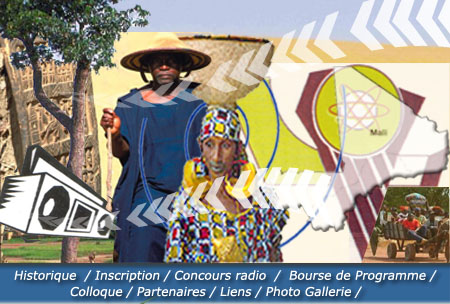
Onde di libertà, manifestazione biennale organizzata a Bamako dal governo maliano con la collaborazione di Unesco e altri organismi è arrivata alla sesta edizione e si sta svolgendo in queste ore nella capitale del Mali. Tema principale di discussione quest'anno è il ruolo della radio nella lotta all'AIDS. Ondes de liberté riunisce i rappresentanti di molte radio, pubbliche e comunitarie, africane. In Mali per esempio trasmettono circa duecento stazioni.
La notizia viene data da AFP, ma comprensibilmente non sono riuscito a trovare siti Web ufficiali aggiornati. Riporto qui i materiali raccolti da Mediamali.org in occasione dell'edizione 2003.

La 6e édition du festival biennal de radios africaines "Ondes de liberté" s'est ouverte samedi à Bamako en présence de plusieurs radio-diffuseurs du continent autour du thème "Radio et lutte contre le sida".


La cérémonie d'ouverture s'est déroulée en présence du chef de l'Etat malien Amadou Toumani Touré, et de la ministre malienne de la Communication et des Nouvelles technologies, Mme Flantié Diallo Diarra, qui a souligné devant la presse le rôle important de la radio dans la sensibilisation sur le VIH-sida.
"Dans nos sociétés de tradition orale, la radio conserve un rôle polyvalent. Elle informe, éduque, mobilise et sensibilise. C'est pourquoi elle peut-être un puissant vecteur pour la lutte contre le sida", a estimé Mme Diarra.
Selon les organisateurs, des professionnels représentant une vingtaine de radios privées d'Afrique prennent part à l'édition 2007 de ce festival visant à célébrer le "pluralisme radiophonique" sur le contient.
Les participants sont notamment venus du Togo, du Burkina Faso, du Bénin, de la Côte d'Ivoire, de la République démocratique du Congo (RDC) et du Sénégal. Les manifestations prévues incluent une bourse d'échange de programmes, un concours radiophonique, ainsi que des expositions en stands.
Le festival "Ondes de libertés", qui se tient tous les deux ans, est organisé par le gouvernement malien, avec l'appui d'institutions et organisations comme l'Unesco, l'Union des radios et télévisions du Mali (Urtel), et l'Institut Panos Afrique de l'ouest (IPAO).


23 marzo 2007

Africa: una radio per farsi sentire

Non amo particolarmente la retorica terzomondista ma a volte noi occidentali progrediti fino alla noia dovremmo ricordarci di quella parte di mondo ancora tagliata fuori dalle dispute sullo standard radiotelevisivo digitale più opportuno. Non saranno molti, ma qualche milioncino di individui ha seri problemi a sbarcare il lunario, bere un bicchier d'acqua e curarsi il raffreddore. Figuriamoci l'AIDS. E dal punto di vista mediatico sono milioni di persone che non sanno che cosa sia un personal computer e non possono guardare la televisione a causa di un piccolo problema logistico: l'elettricista del villaggio ha dimenticato di installare la presa di corrente. Per queste persone la radio è ancora uno strumento vitale, e non parlo di radio satellitari, o tantomeno digitali, parlo della famose radioline cinesi per le onde corte. Un mezzo di comunicazione semplice, economico, senza tanti fronzoli.
Mentre l'occidente annoiato è impegnato a superare gli irritanti difetti di una tecnologia così antiquata (l'evanescenza del segnale, orrrore; il rumore elettrico, che maleducazione), capace di portare notizie e cultura a enormi bacini di pubblico, da quello che leggo su un sito Web sudafricano segnalatomi da Renato Bruni, il continente africano è tutto un brulicare di progetti che hanno al centro la radio, le comunità di ascolto, la formazione a distanza fatta con pochi mezzi.
Bizcommunity è una testata online del Sudafrica che riprende diverse problematiche relative ai media locali. Quello che mi ha mandato Renato parla di alcuni progetti di stazioni comunitarie che nello Zambia danno voce agli abitanti dei villaggi e dei loro problemi. Grazie ai programmi autogestiti, queste piccole comunità riescono a farsi sentire dalla burocrazia centrale e a volte ottengono qualche risultato. Poche cose, ma sempre qualcosa per chi di solito non ha la minima voce in capitolo. Un altro articolo di Bizcommunity parla dei progetti del ministro del turismo del Kenya, che da quattro anni cerca di aprire una stazione FM a Londra per diffondere un messaggio più tranquillizzante su una nazione che vede minacciata la sua industria turistica dopo gli attentati terroristici che si sono succeduti in questi anni. Aprire una stazione in FM a Londra non è una impresa facile (e costerebbe 10 milioni di dollari) e infatti il nostro ministro non ce l'ha ancora fatta. Ma è buffo leggere un articolo che parla della KBC il broadcaster kanyano (che si sentiva benissimo prima della chiusura delle onde corte), spiega che BBC e VOA continuano a trasmettere in onde corte, ma non chiude l'equazione invitando il Kenya a riattivare delle trasmissioni in onde corte, magari da qualche bel trasmettitore affittato.
L'aspetto ancora più interessante è che la fonte di Bizcommunity è Panos London, una organizzazione no profit che coordina il lavoro di giornalisti e comunicatori per dare visibilità all'Africa e portare avanti in quel continete progetti di comunicazione e alfabetizzazione. Molte di queste attività vertono sulla radiofonia ed è molto istruttivo leggersi il documento (un capitolo di uno studio più ampio) intitolato Local radio in the information society: technology, participation and content in Africa Una delle iniziative di Panos si chiama Interworldradio, una libera associazione di giornalisti che condivide rassegne stampa e miniprogrammi radio su tematiche quasi sempre trascurate dai media occidentali.