05 febbraio 2006

Nel laboratorio del dottor Kneisner

Software defined radio. Non è solo una moda, ma una realtà sempre più consolidata nel mondo radioamatoriale e radiantistico. Ricordiamo, molto a grandi linee, che abbiamo a che fare con dispositivi che rimpiazzano col software uno o più stadi a componenti analogici discreti normalmente presenti in un ricevitore o in un trasmettitore radio. Il software in questione può essere implementato in molti modi e uno di questi furoreggia: affidare buona parte delle attività elaborative all'hardware del pc, di solito facendo leva sulle capacità delle schede audio che agiscono in primo luogo come stadio di input (accettando per esempio una media frequenza RF opportunamente convertita a partire da un normale ricevitore analogico, o pre-elaborata da un front hardware abbinato al software SDR). Come spesso accade anche in questo nascente mercato delle radio computerizzate, o meglio dei computer radiofonizzati, ci sono stati dei precursori. Parliamo di alcuni modelli di ricevitori (e ricetrasmettitori) analogici, che hanno per primi effettuato la sostituzione dell'hardware per mezzo di software implementato non sul personal computer ma su componenti hardware dedicati al Digital Signal Processing (DSP). Watkins Johnson, Ten-Tec e la stessa JRC con il diffuso NRD545 hanno in questi anni proposto radio in cui il filtraggio finale e la demodulazione avevano luogo in forma completamente digitale.
In mezzo a tutti questi nomi più o meno famosi, ce n'è uno noto a pochi, anche per l'eseguità del numero di esemplari costruiti. Kneisner und Döring Elektronik è una piccola azienda di elettronica di Braunschweig e il suo KWZ30, uscito diversi anni fa, alla fine degli anni 90, ha ricevuto lodi sperticate. Ma pochissimi sono gli apparecchi costruiti e quei pochi difficilmente arrivano sul mercato dell'usato. Uno di questi è finito nelle mani, competenti e fortunate, di Fabrizio Magrone, che molti in Italia conoscono per un mucchio di articoli e libri pubblicati, in particolare a proposito di Utility DX, l'ascolto delle trasmissioni civili e militari di natura strettamente professionale. Il KWZ30 è un ricevitore concettualmente più simili ai ricevitori DSP di "prima generazione", stile NRD545 tanto per intendersi. Non richiede l'uso del PC (anche se è possibile controllarlo via computer) e implementa in digitale filtri e demodulazione, dopo aver estratto una media frequenza attraverso uno stadio di oscillatori e mixer a bassa cifra di rumore (la dinamica, infatti, è eccellente). Grazie a Fabrizio sono riuscito a utilizzarlo in due o tre occasioni e a parte una interfaccia utente un po' particolare (il ricevitore ha solo un tastierino e una grossa manopola di sintonia) e di primo acchito ostica, le prestazioni sono eccellenti. I filtri digitali (fino a 50 Hz nella prima versione del dispositivo) sono semplicemente fantastici pur non essendo continuamente regolabili (ci sono 14 posizioni) e i progettisti sono riusciti in qualche modo a ricreare, dopo la conversione digitale-analogica finale, un suono di notevole pastosità. Sull'ampio display del ricevitore vengono visualizzate le funzioni dell'albero dei comandi, l's-meter digitale e altre informazioni. Il software SDR per PC al quale ci stiamo abituando è più flessibile e graficamente spettacolare, ma qui abbiamo a che fare con gente che conosce le radio prima del software, e si vede.
Per molto tempo K+D ha covato in laboratorio una seconda versione del KWZ e ora sembra proprio che ci siamo. Fabrizio Magrone ha fatto sapere di aver ricevuto da Herr Kneisner in persona l'avviso dell'imminente uscita del KWZ32. Ancora non si conoscono né la data di disponibilità, né il prezzo (non aspettatevi di pagare 300 dollari), né l'aspetto esterno, ma è possibile leggere una versione preliminare delle specifiche tecniche, all'indirizzo fornito da Fabrizio.


Tags:

04 febbraio 2006

Cavoli a Mari

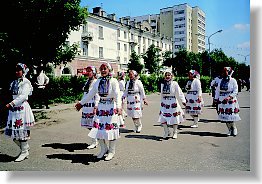
Mari, chi sono costoro? L'altro giorno il quotidiano finlandese Helsingin Sanomat ha scritto che la Federazione internazionale per i diritti dell'uomo basata a Helsinki e l'Associazione Helsinki di Mosca sono preoccupate per l'insufficiente tutela dei diritti delle popolazioni ugro-finniche della Repubblica di Mari El. Una "minoranza" piccola in senso assoluto, ma cospicua in senso relativo: il 40% di una popolazione di 730 mila persone. Come insegnano diversi secoli di lenta, ma spesso brutale russificazione di un territorio sterminato e abitato da una miriade di gruppi etnici, anche in questa piccola repubblica situata a circa mille chilometri a sud-est di Mosca, la popolazione locale, che parla una lingua imparentato col complicatissimo finlandese, deve subire le angherie di abitanti e governanti di origine russa. I mari possono guardare sempre meno programmi televisivi nella loro lingua e spesso, dice anche il giornale, sono così poveri da non potersi permettere le radio a onde corte che servono per captare le poche trasmissioni in mari.
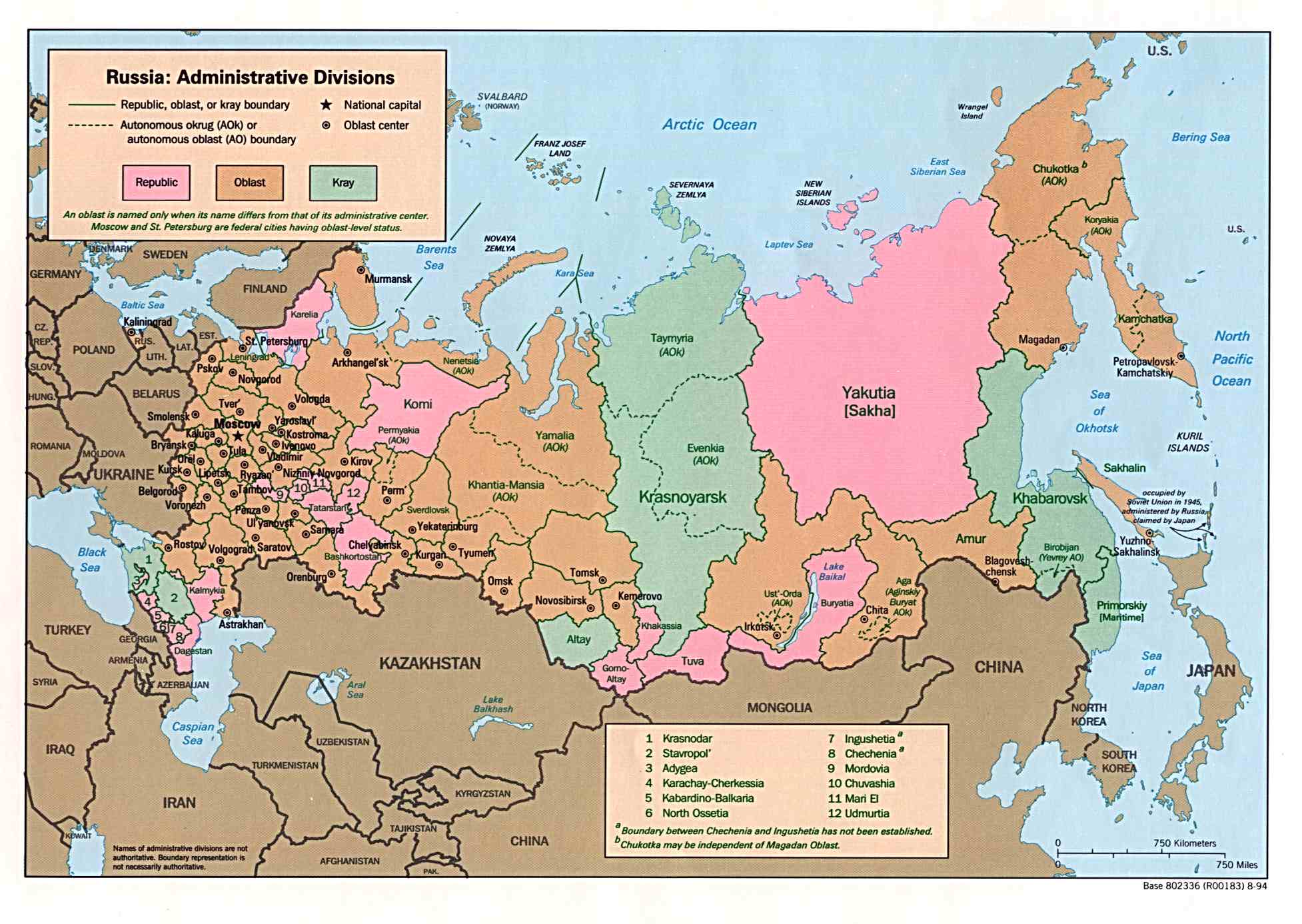
Repubblica di Mari El? Beh, esiste davvero come indicato da questa bella mappa interattiva geopolitica russa. Da sola la geografia amministrativa dell'ex impero sovietico richiederebbe un corso di laurea. La Federazione riunisce repubbliche, oblast (province), okrug (regioni, distretti) e kraj (distretti) che possono essere
avtonomny in una complessità di marca zarista che spiega moltissime cose. Senza parlare delle 14 nazioni oggi formalmente indipendenti che ad esclusione delle repubbliche baltiche e del Turkmenistan, membro associato della CSI, sono successivamente entrate a far parte, insieme alla Federazione russa, della Comunità di Stati Indipendenti.
Su questa intricata griglia si sovrappone un sistema radiofonico altrettanto complesso. Tralasciando le repubbliche indipendenti (una delle quali, l'Uzbekistan, ha appena ritirato il suo servizio per l'estero dalle onde corte, limitandosi a trasmetterlo via Internet), la sola Federazione ha secondo l'Irkutsk DX Club tre network radiofonici federali, Radio Rossii, Mayak e Yunost (il WRTH 2006 aggiunge il network di musica classica Orphei, che però dalle ricerche con Google non risulterebbe più attivo, e il network regionale Kultura, attivo sulla regione di Mosca) e una serie di centri regionali GTRK (la K sta per Kompanija) che oggi sono riuniti in una società ombrello, la VGTRK che ha preso il posto di una dozzina di compagnie separate sparse per la federazione. A queste si aggiunge la Voce della Russia (che trasmette per l'estero, anche in Italiano), e una nutrita lista di network e stazioni commerciali FM che operano attualmente su entrambi i segmenti dello spettro, quello europeo (88-108) e quello OIRT (66-72). Una risorsa Web per orientarsi in tutto questo è l'Atlas Televidenia i Radio delle stazioni russe, meraviglioso ma purtroppo rigorosamente in cirillico (l'ho sempre scritto che è un hobby bellissimo ma complicato).
Torniamo alla repubblica uralica della regione del Volga Mari El e alla sua ridente capitale Ioshkar-Ola (mentre scrivo ci sono 15 piacevolissimi gradi sottozero e nevica). Insieme alle lingue mordvin e permian, i tre dialetti mari rappresentano i tre gruppi di lingue ugro-finniche della Russia centrale. Tre gruppi parlati da quattro popolazioni in altrettante repubbliche: Mari, Mordvin, Komi e Udmurt. Per altre informazioni cliccate qui, qui e sull'interessante sito dedicato alle minoranze linguistiche russe. Sembra veramente di leggere la storia dell'Ultimo dei Vostiachi, romanzo di Diego Marani, linguista e traduttore che ha inventato l'europanto. La Repubblica di Mari El ha naturalmente la sua stazione regionale, Mariyskoye Radio, che trasmette secondo Dmitri Mezin su 900 kHz. E' la stessa frequenza di Radio 1 Milano, ce la sogniamo, la russa. In passato Ioshkar Ola trasmetteva a bassa potenza su 6125 e 7200 kHz ma tutto lascia supporre che queste due frequenze non siano più attive. Chi trasmette in Mari, allora? Secondo Radio Free Europe/Radio Liberty, il presidente Leonid Markelov avrebbe dichiarato il lancio di una programmazione in Mari da Puls Radio Ioshkar Ola, una emittente privata che secondo l'Atlas trasmette su 103.8 MHz in FM. La stessa RFE, nella sua area linguistica tatar-bashkir, avrebbe trasmesso in passato in questa lingua. Un appello per la tutela della lingua e della cultura mari è online su due siti di informazione sui popoli ugro-finnici, www.suri.ee e www.ugri.info.


Tags:

Utile, gratuito e disinteressato


Chi sceglie di praticare l'hobby dei segnali lontani sa di poter contare, soprattutto dopo l'avvento di Internet, su un gran numero di fonti informative realizzate, artigianalmente ma con passione e competenza, dai colleghi radioascoltatori. Abbiamo parlato per esempio della liste delle onde medie di Herman Boel e di altre ancora. Alcune di queste risorse si devono richiedere in cambio di una somma di denaro, quasi sempre abbordabile e nominale. Ma con il DX Handbook di Salvo Miccichè (come per le onde medie di Herman) non si deve sborsare una lira. Sono oltre cento pagine di frequenze broadcast, utility e reference assortiti che possono aiutarvi a identificare le stazioni e a conoscere meglio l'hobby. Tutto grazie al paziente lavoro di compilazione svolto da Salvo - un gran bravo ragazzo che per qualche misteriosa ragione mi onora della sua amicizia e che per colmo di misura ha scelto di impiegare un bel po' del suo prezioso tempo libero per raccogliere e selezionare, a beneficio di tutti, mucchi di segnalazioni di bollettini, gruppi di discussione e singoli collaboratori, convertendole in una "fotografia" precisa e aggiornata dello spettro compreso tra 0 e 30 MHz. Centinaia di DXer di tutto il mondo hanno scaricato dal sito di Salvo le precedenti edizioni del DX Handbook, moltissimi lo hanno apprezzato. Cercate anche voi su questa pagina, nella solita colonna a sinistra, l'icona di questo manuale e cliccate per arrivare al modulo di richiesta della nuova edizione 2006. Riceverete ulteriori istruzioni e la password per il download. Non ve ne pentirete.

Tags:

02 febbraio 2006

Il manuale del soldato propagandista

Nel confuso terreno di battaglia politico-propagandistico in cui si sta trasformando il combinato mediatico di Internet e dell'informazione radiotelevisiva rivolta verso un pubblico internazionale, assumono sempre maggiore importanza le azioni coordinate o esplicitamente dirette dai militari. Un documento segreto del pentagono oggi reso pubblico da una associazione no profit americana, la National Security Archive, descrive, nel 2003, le linee guida da adottare nella condotta della guerriglia psicologica, o psyop, psychological operations. E' un riconoscimento del ruolo dell'informazione, e della disinformazione, per il successo delle imprese militari. Niente di nuovo, da questo punto di vista. La novità è semmai rappresentata dallo scenario "convergente" in cui i militari cercano di inquadrare le loro iniziative. Uno scenario, si legge nel documento controfirmato di proprio pugno da Donald Rumsfeld, in cui è impossibile fare in modo che una informazione destinata a un pubblico non americano, venga invece letta e amplificata dai media interni. E viceversa. E' molto interessante andarsi a leggere i commenti riportati sul sito che Kim Andrew Elliott, uno specialista che analizza i target di riferimento dell'International Broadcasting Bureau (l'agenzia Usa che gestisce la Voice of America e molte altre attività giornalistiche e propagandistiche), dedica al fenomeno dell'emittenza internazionale intrecciato con quello della diplomazia pubblica, le relazioni tra governi e governati. Un commentatore della BBC evince dal documento - prelevabile da un sito della George Washington University, sede del National Security Archive l'intenzione, da parte del Pentagono, di combattere la guerra dell'informazione anche su mezzi come Internet e senza troppi complimenti e regole di trasparenza. L'interpretazione del NSA è che in base a quella che viene definita la roadmap della propaganda di Rumsfeld le azioni di guerriglia psicologica devono rispettare i limiti della distinzione tra audience interna ed esterna, ma nel momento in cui sono rivolte a quella esterna devono avere completamente mano libera. Una tesi, scrive l'Associated Press, fermamente respinta da Larry Di Rita, consigliere di Rumsfeld. Recentemente, dice anche l'agenzia, il Pentagono è stato accusato di aver usato soldi pubblici per disseminare sui giornali iraqeni notizie confezionate ad arte sullo stato di avanzamento del percorso di democratizzazione dell'Iraq. I soldi dei contribuenti americani vengono spesi anche per stazioni radio, televisioni e perfino per navi e aerei che diffondono notizie e musica nei teatri di intervento. Un caso curioso? La radio denominata Coalition Maritime Forces One che dal 2004 trasmette dal Bahrain, sede del Maritime Liaison Office (per gli amici Marlo) delle forze della coalizione in Iraq. CMF1 viene segnalata occasionalmente in Europa al pomeriggio su 9133 kHz in USB e trasmette musica e informazioni sulle azioni di pirati e terroristi nel Golfo Persico, oltre agli appelli alla cooperazione con l'iniziativa Rewards For Justice , che ricompensa le informazioni utili alla cattura dei capi del terrorismo nell'ambito della Global War on Terror. Giustamente media e analisti americani si chiedono se tali spese, gestite da una amministrazione votata dal pubblico, sono giustificate, o addirittura etiche. E' un bell'esempio di controllo democratico che i neo-cons di casa nostra farebbero bene a studiare.

Tags:

31 gennaio 2006

Gulp, DX estremo in tv!


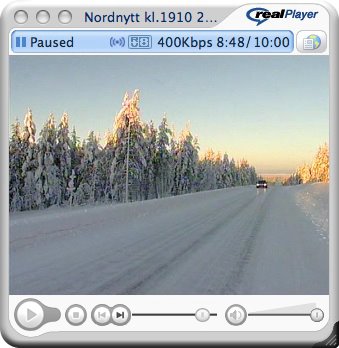
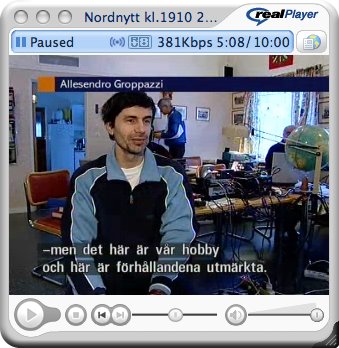
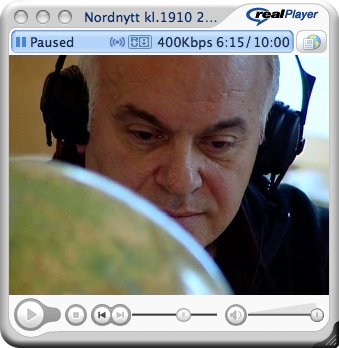
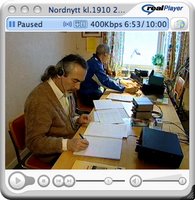
Ascoltare le stazioni radio lontane può ancora fare notizia. A patto di essere sulla tv svedese. Se ci pensiamo bene, farsi un due, tremila chilometri, di cui seicento in mezzo al permafrost, per chiudersi in un cottage in legno a quindici gradi sottozero solo per sentire le Hawaii in onde medie può sembrare un'impresa un po' pazzerella, di quelle che sembrerebbero divertenti anche ai nostri tiggì regionali. Comunque sia, i nostri colleghi Alessandro Groppazzi, Valter Comuzzi, Francesco Clemente e Elio Fior, friuliani e giuliani, sono finiti sul telegiornale regionale del nord della Svezia. Gli inviati dell'emittente hanno loro chiesto che cosa ci stessero facendo nella remota località della Lapponia svedese, Parkalompolo. E la risposta è semplice: stiamo ascoltando la radio! In inglese con sottotitoli in svedese Alessandro ammette anche che se la famiglia ha ormai dovuto rassegnarsi davanti a certe manifestazioni "estreme" del suo hobby, gli amici lo ritengono matto.
In realtà non c'è bisogno di sottoporsi a certi tour de force per fare del DX. Ma per una volta o due si può fare. Un po' perché in Lapponia, dove di inverno non c'è praticamente insolazione, si possono sentire cose che qui da noi sono semplicemente impossibili (tipo il Pacifico in onde medie). E poi perché solo in Lapponia ormai si trovano le condizioni ideali: basso rumore elettrico e spazio virtualmente infinito per il montaggio di antenne filare lunghe anche mille, millecinquecento metri.
I DXer italiani si stanno abituando alle DXpedition.
Con l'amico Renato Bruni sono stato già un paio di volte a Muhos, nei pressi di Oulu, nord della Finlandia, dove l'amico Jari Ruohomäki ci ha ospitato nel suo cottage nella foresta. Un cottage circondato da sette o otto antenne da almeno ottocento metri. La prima volta non eravamo stati fortunati con le condizioni propagative, la seconda, lo scorso dicembre, le cose sono andate molto meglio. I risultati sono stati appena pubblicati sul sito Radioascolto.org. Ancora meglio sembra siano andate le cose ai nostri amici di Parkalompolo, perché la seconda metà di gennaio è stata davvero fantastica nel nord Europa (molto meno qui al Sud) e anche grazie alla presenza di più persone. Quando il DX può essere fatto letteralmente nell'arco delle 24 ore, è essenziale poter presenziare davanti a una radio e al tempo stesso prendersi qualche ora di sonno. In Lapponia è difficile scegliere il momento giusto per andare a dormire. Quando qui ci si alza per lavorare arrivano sulle onde medie le stazioni del Messico, della California, fino alle dieci, undici del mattino, quando si può cominciare a provare il Pacifico. Le Hawaii arrivano a mezzogiorno. Poi verso le 13 comincia ad arrivare il Giappone e si va avanti fino alle 16, le 17 quando si può provare l'India. A quel punto se si e' veramente a nord, dopo le 18 si può già cominciare a sperare per l'Alaska o magari per l'Australia. Si tira fino alle 20 quando il Canada è già bello forte, o alle 21, quando si può tranquillamente scommettere su una bella daytimer (le stazioni che chiudono al tramonto) del Midwest. Poi liberi tutti dal Canada al Cile e alle sette del mattino successivo si ricomincia.
Le località veramente mitiche per le DXpedition europee sono due, Lemmenjoki in Finlandia e Kongsfjord in Norvegia, la più settentrionale di tutte.
Parkalompolo è un po' più a sud, ma non scherza affatto. Finora solo Lemmenjoki era finita in televisione, addirittura su CNN (il filmato si può ancora vedere sul sito qui linkato, l'autore è il giornalista della tv finalndese YLE, veterano di Lemmenjoki, Mika Mäkeläinen). Alessandro, Francesco, Valter, Elio e i padroni di casa svedesi Stefan Wikander e Sigvard Andersson sono ottimi secondi. Il loro imperdibile show, trasmesso il 31 gennaio, si trova sul sito di SVT. Un altro posto interessante si trova in Danimarca a Fjerritslev, nello Jutland del nord. Il proprietario della villa, l'editore tedesco Wilhelm Herbst, mette a disposizione dei colleghi una struttura molto interessante, con antenne destinate anche all'FM-DX per i mesi estivi. E in Italia? Purtroppo gli spazi, le case, i rumori elettrici non offrono molte situazioni ideali, ma prima o poi riusciremo a trovare un luogo adatto, anche senza tutto quel ghiaccio.


Tags:

La radio com'era

Ho visto segnalato su un forum radioamatoriale, eHam, un interessante fornitore di kit di automontaggio dedicati agli appassionati di radio antiche. "Christalman" o meglio Borden Radio Company, confeziona e vende kit molto interessanti, generalemente basati su cristalli, al massimo su tubi a vuoto (valvole), con grandi bobine da avvolgere a mano, venerabili condensatori ad aria, grandi manopole e basette in legno di qualità. Il costo è anche piuttosto abbordabile.
Il sito ha fatto scattare qualcosa e mi sono ricordato di un messaggio letto diverso tempo fa su una mailing list. Grazie alle sofisticate funzionalità di search integrate in Mac Os X (non utilizzate Macintosh? Peggio per voi) ho ripescato quel messaggio, per dovere di attribuzione scritto da John Bryant, grosso esperto americano di stazioni transpacifiche. Può sembrare un dettaglio detto così, pour épater, per fare lo sborone come direbbero a Cesenatico, quando devono trovare una rima per Solone (sei un solone di sborone, o sei uno sborone di solone). Invece ha un suo senso. John raccontava di avere appena acquistato un kit da Pv Scientific Instruments. La sua motivazione era duplice. A John piace infatti ricostruire radio e "atmosfere", in particolare voleva tornare agli inizi della radiofonia per capire le sensazioni provate dai primi radioascoltatori, che poi erano dei veri e propri DXer. Negli anni Venti, come si legge nel formidabile testo di Jerry Berg On The Short Waves, le emittenti sono pochissime, pochi possono permettersi ricevitori che sono ancora molto artigianali, costruiti in proprio o in serie limitate. Chi ascolta la radio non sta a distinguere troppo tra stazioni lontane e vicine, la distanza è metafisica, l'invenzione di Marconi e altri pionieri un ponte gettato per magia su qualcosa che fino a un istante prima sembrava un abisso invalicabile.
Per ritrovare quel tipo di passione, John ha costruito un ricevitore rigenerativo (non supereterodino!) con una singola valvola, un doppio triodo. Per metterlo alla prova ha provato a ricevere una stazione giapponese, sulla riva opposta del pacifico (Bryant abita nello stato di Washington). Ce l'ha fatta e ha voluto raccontare l'avvenimento ai suoi colleghi DXer, precisando che la stazione in questione è JOBB 882 kHz da Tokyo con il secondo programma di NHK. Un altro particolare curioso: in quel momento (le 5 sulla West Coast, le 20 a Tokyo) la stazione trasmetteva un corso di italiano.
I kit della Pv Scientific sono davvero splendidi, molto più evoluti di quelli della Borden. Nell'immagine che riporto qui potete vedere proprio l'esemplare realizzato da John Bryant.


Tags:

29 gennaio 2006

Dalle coste spagnole

Alcune informazioni in forma tabellare sulle stazioni costiere spagnole, gestite dall'operatore nazionale Telefonica. I dati sono riferiti alla fonia, non alla radiotelegrafia (morse e radiofax meterologici sono stati soppressi). In HF il traffico viene affidato a Madrid Radio e in MF operano dieci stazioni costiere. Quelli che seguono sono i canali di trasmissione e ascolto di Madrid Radio e delle costiere MF e gli orari (immagino locali) di trasmissione dei bollettini meteo e degli avvisi ai naviganti. Altre informazioni si trovano su http://www.navegar.com/organismos/telefonica/ e su http://www.ea1uro.com/swl.html. In giro non ho ancora trovato indicazioni recenti sulle operazioni in radiotelex da Madrid Radio, le ultime info che si trovano in giro sul Web sono estratte da una brochure di Telefonica del 1997 e non sono attendibili. Il sito di Telefonica, nonostante le ricerche, non ha ancora svelato i suoi segreti riguardo al Servicio Maritimo. Ricordiamo che una lista completa mondiale delle stazioni costiere che operano tra i 2 MHz e i 4 MHz circa si trova qui sul sito Coastalstations.org.
Ecco dunque le frequenze di Madrid Radio:

Canale trasmette riceve orario
804 8.728 8.204 0700-2300
810 8.746 8.222 2100–2300
1201 13.077 12.230 0700–2300
1234 13.176 12.329 2100–2300
1630 17.329 16.447 1800–2200
1637 17.350 16.468 0700–2200
1801 19.755 18.780 0700–1100
2229 22.780 22.084 1100–1800

E quelle delle MF:

Stazione Canale trasmette riceve orario
Palma 281 1.755 2.099 H-24
Cabo_Gata 285 1.767 2.111 H-24
Tarífa 264 1.704 2.129 H-24
Chipiona 248 1.656 2.081 H-24
Finisterre 284 1.764 2.108 H-24
Coruña 262 1.698 2.123 H-24
Cabo_Peñas 255 1.677 2.102 H-24
Machichaco 265 1.707 2.132 H-24
Arrecife 244 1.644 2.069 H-24
Las_Palmas 259 1.689 2.114 H-24

MACHICHACO 1.707 0703-1303-1903
CABO_PEÑAS 1.677 0703-1303-1903
Predicción-para-las-zonas-Atlánticas.
LACORUÑA 1.698 0703-1303-1903
FINISTERRE 1.764 0703-1303-1903
Predicción-para-las-zonas-Atlánticas.
CHIPIONA 1.656 0733-1233-1933
TARIFA 1.704 0733-1233-1933
Predicción-para-las-zonas-Atlánticas-y-Mediterráneas.
CABO_GATA 1.767 0750-1303-1950
PALMA 1.755 0750-1303-1950
Predicción-para-las-zonas-Mediterráneas..
ARRECIFE 1.644 0803-1233-1903
LAS_PALMAS 1.689 0803-1233-1903
Predicción-para-las-zonas-Atlánticas.


Tags:

28 gennaio 2006

E la radio disse l'indicibile

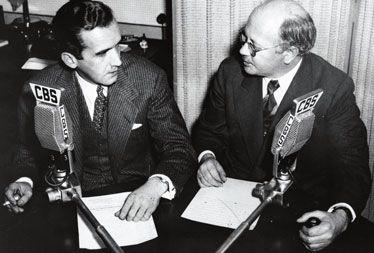
Giampaolo Galassi, quello che coltiva le onde medie giapponesi nell'orto dietro casa, ha fatto bene a segnalarmi la presenza, tra i contenuti multimediali del sito de La Repubblica, della cronaca radiofonica di Edward Murrow, tra i primi giornalisti a entrare nel campo di concentramento di Buchenwald. Una cronaca che ha fatto storia, inaugurando il concetto stesso di corrispondenza radiofonica. Lla paternità dell'invenzione è sua e del suo collega della CBS William Shirer, ma occorre in effetti retrodatarla di qualche anno, dal 1945 al 1938. Fu infatti Shirer a coinvolgere Murrow nel racconto radiofonico dell'Anschluss, l'annessione dell'Austria da parte dei nazisti. Nel '38 Shirer era il corrispondente CBS da Berlino. Il diario della sua permanenza in Germania, Qui Berlino, è stato pubblicato anche in Italiano dal Saggiatore, che recentemente lo ha riproposto nelle sue edizioni economiche Net. La rivoluzione avviata dai due giornalisti fu anche tecnica: per spedire i suoi dispacci Shirer utilizzava le onde corte, che venivano poi ripetute su onde medie dalle stazioni CBS e anche i materiali giornalistici venivano raccolti in Europa attraverso i primi ponti radio, sempre in onde corte. Il racconto di Murrow da Buchenwald può essere ascoltato nell'originale inglese sottotitolato all'indirizzo http://multimedia.repubblica.it/home/102942 in occasione della Giornata della Memoria appena conclusasi.
Io ricambio il favore di Giampaolo con questo lungo articolo pubblicato sul New Yorker del 23 gennaio (non mi fido a lasciare solo il link,troppo volatile, ma comunque è questo). E' una bella storia, quella sulla "dottrina Murrow" raccontata da Nicholas Lemann, perché le vicende che poi portarono alla corrispondenza da Buchenwald (non a caso citata da Lemann) sono molto attuali ancora oggi. Nel 1927, la prima legge americana sulle telecomunicazioni stabiliva che l'etere radiofonico doveva essere controllato dall'Amministrazione, dal governo eletto. Il quale si riservava l'opportunità di concedere delle licenze trasmissive alle imprese private, ma solo "if public convenience, interest or necessity will be served thereby", se il servizio della convenienza, l'interesse o la necessità del pubblico fosse garantito. Una formula controversa, perché sembrava lasciare troppo spazio a interpretazioni di parte. Un progetto di legge di quell'epoca, poi bocciato, proponeva anche di riservare un quarto dello spettro disponibile a trasmissioni educative, cosa che secondo alcuni avrebbe potuto rallentare o impedire lo sviluppo di un libero, anche se etico, mercato dell'informazione privata. Murrow e Shirer dimostrarono poi quale prezioso vantaggio rappresentasse per la democrazia americana un'industria mediatica indipendente da pressioni politiche o, peggio ancora, governative.

THE MURROW DOCTRINE
by NICHOLAS LEMANN
Why the life and times of the broadcast pioneer still matter.
"The New Yorker" Issue of 2006-01-23
Posted 2006-01-16

There is a memorable entry in William Shirer’s “Berlin Diary” in which he describes—as, in effect, something that happened at work one day—the birth of broadcast journalism. It was Sunday, March 13, 1938, the day after Nazi troops entered Austria. Shirer, in London, got a call from CB headquarters, in New York, asking him to put together a broadcast in which radio correspondents in the major capitals of Europe, led by Shirer’ boss, Edward R. Murrow, who was on the scene in Vienna, would offer a series of live reports on Hitler’s move and the reaction to it
Shirer had to overcome two problems: CBS had no staff in Europe except Murrow and himself, so he had to find newspaper reporters in Berlin, Paris, and Rome; and then he had to line up shortwave transmitters that could carry the reporters’ voices to the United States. Somehow, he and Murrow pulled it off. “One a.m. came,” Shirer writes, “and through my earphones I could hear on our transatlantic ‘feedback’ the smooth voice of Bob Trout announcing the broadcast from our New York studio. Our part went off all right, I think. . . . New York said on the ‘feedback’ afterwards that it was a success. They want another one tonight.”
After that, the exigencies of war in Europe turned Shirer and Murrow—and, over the next few years, a crew of additional CBS radio reporters like Howard K. Smith, Charles Collingwood, and Eric Sevareid—into unusually busy and prominent members of the working press. When Murrow returned to the United States for a home leave in the fall of 1941, at the age of thirty-three, he was more famous and celebrated than any journalist could be today. A crowd of fans and reporters met his ship at the dock. CBS gave him a banquet at the Waldorf-Astoria, with eleven hundred guests in attendance and millions more listening in via a national radio broadcast. Franklin Roosevelt sent a congratulatory telegram to be read aloud, and the poet Archibald MacLeish offered the most eloquent of many in-person encomiums, in which he said, “You burned the city of London in our houses and we felt the flames that burned it.”
It seems obvious now that the country was eager for broadcast journalism from Europe, so you wonder why CBS didn’t realize that when it sent Murrow there in the first place, in 1937. Aside from the technical difficulties of broadcasting across the ocean, and the historical indifference of Americans to news from overseas, the answer is that CBS didn’t think of itself as being in the news business. Instead, it was an entertainment company, under vague but frightening instructions (they came from the federal government, which had life-and-death power over the future of the networks) also to offer material that was uplifting and public-spirited.
The Radio Act of 1927 established a system in which the government owned the airwaves; rather than broadcast itself, however, it would grant licenses for locations on the spectrum to private companies, though only—fateful phrase—“if public convenience, interest or necessity will be served thereby.” The Communications Act of 1934, which created the Federal Communications Commission, adopted the same language. During the debate over the Communications Act, two U.S. senators (one was Robert F. Wagner, of New York) proposed that one quarter of the spectrum be given over to purely educational stations. That, as Sally Bedell Smith writes in her 1990 biography of CBS’s founder, William Paley, “would have been devastating to commercial broadcasters.” The proposal was defeated, but still, with the New Deal at its apogee and with other Western nations setting up state broadcasting systems like the BBC, CBS had reason to be vigilant about protecting its public-interest flank.
It was in the aftermath of the fight over the Communications Act that CBS hired Murrow—and the company thought it was getting an educator, not a journalist. Murrow came from a nonprofit organization called the Institute of International Education, which set up lectures and student seminars all over the world (including, as Murrow later had occasion to regret, in the Soviet Union) and helped scholars to leave Nazi Germany. Like all great stars, Murrow was complicated; he was both a rawboned son of the West—he’d grown up in Washington state, and worked in logging camps—and a rising young man of the Eastern establishment. He was elected a member of the Council on Foreign Relations while still in his mid-twenties. Murrow’s title, when he joined CBS in 1935, was Director of Talks.
CBS sent Murrow to London with the title of European Director. When Murrow hired Shirer, a wire-service reporter who’d lost his job, as CBS’s man on the Continent, Shirer was under the impression that he was leaving journalism. “Murrow will be a grand guy to work with,” he writes in his diary, less than six months before the Anschluss broadcast. “One disappointing thing about the job, though: Murrow and I are not supposed to do any talking on the radio ourselves.” By then, Murrow was breaking that rule, but still, until the war began, he and Shirer were bookers, producers, good-will ambassadors, and technology logisticians more than they were reporters. They were making sure that nobody could fairly accuse CBS of ignoring world affairs.
Seasons of retrospective Murrow-worship have come regularly since his death, in 1965, of lung cancer, at the age of fifty-seven. Usually, they coincide with a bad moment for television journalism: a reporting scandal, newsroom budget cuts, censorship, attacks from outsiders, the cancellation of a respected program, the death of a prominent broadcaster. We are in such a season now. Its most obvious manifestation is George Clooney’s black-and-white movie about Murrow’s confrontation with Senator Joseph McCarthy in 1954, “Good Night, and Good Luck.” A few months earlier, a gift box of Murrowiana called “The Edward R. Murrow Collection,” which CBS had originally produced on videocassette in 1991, was released on DVD. In 2004, Bob Edwards, the former National Public Radio host, published a short book called “Edward R. Murrow and the Birth of Broadcast Journalism.” (Anchors tend to invoke Murrow on ascending to, and on leaving, their jobs.)
Both Edwards’s book, explicitly, and “Good Night, and Good Luck,” obliquely, make it clear why this is a Murrow season. It looks as if, once again, right-wing politicians are trampling on civil liberties in the name of protecting the country from a terrifying global threat. Commercialism and superficiality seem regnant in broadcast news. Owners avoid controversy, cut budgets, and focus on producing the profits that Wall Street demands—we’re back in the fifties. Murrow represents a kind of implacable, heroic journalistic courage that could sweep away all the obstacles in its path.
Bob Edwards’s book is slight—a useful summary of Murrow’s life story, but not a real addition to our understanding of him. “Good Night, and Good Luck” is not history, exactly, but it is ambitious and stylishly done. As claustrophobic as the nineteen-fifties were in liberal memory (most of the action takes place in a few drab, crowded, smoky rooms, and most of the characters are men with white shirts and slicked-down hair), the film makes you feel trapped inside a culture intolerant of dissent and worshipful of normalcy and prosperity, being subjected to a relentless onslaught by McCarthy and his allies that nobody had the courage to resist. Clooney and his star, David Strathairn, elected to portray Murrow as a grim, tight-lipped cipher who never ingratiates himself or even smiles, and laughs only mirthlessly, as a way of indicating how bad things are. He’s a martyr who seems to be in constant torment. The movie briefly shows Murrow hosting his celebrity-interview show, “Person to Person,” but presents him as suffering through it.
Clooney’s film takes great pains to be accurate about all the specifics. It isn’t just the way people dressed and carried themselves; every word Strathairn says on the air, Murrow said on the air. Those Murrow shortcomings (by today’s lights) that pertain to the McCarthy story, such as his having voluntarily signed the CBS loyalty oath, are duly inserted somewhere or other in the screenplay. Still, without ever misstating anything, “Good Night, and Good Luck” leaves you with the impression that Murrow was an early, and the dispositive, attacker of McCarthy, and that isn’t exactly the case. Murrow was genuinely courageous, and not just in this instance, but the real story is more complicated.

The part of Murrow’s journalistic career that was most glorious and least difficult was his radio reporting during the Second World War—especially during the Battle of Britain. One can imagine Murrow’s sudden appearance generating some harrumphing today, since he’d neve worked as a reporter before, but he was immediately terrific at it. He had a great story to cover, but it’s a journalistic skill to maneuver oneself int that situation; he could easily have remained in New York in the late thirties. Murrow’s reporting conveyed the feeling of a correspondent who’s al over his story, who goes everywhere and knows everybody. He seemed to experience life with a special intensity and empathy, and he coul capture those qualities in his reports
In broadcasting from a London rooftop while German bombers were overhead, Murrow was among the first to use ambient sound in radio journalism, and he also called more vivid attention to the plight of Londoners, as well as to himself. He spoke to the listener as a friend. Bob Edwards quotes in entirety a couple of Murrow’s most famous radio broadcasts: one from a bombing run from England to Berlin and back (Murrow made twenty-five of these trips, which were so dangerous that some of the people around him thought he had a death wish), the other from the liberation of Buchenwald. Here is a passage from the first:

The clouds were gone and the sticks of incendiaries from the preceding waves made the place look like a badly laid out city with the streetlights on. The small incendiaries were going down like a fistful of white rice thrown on a piece of black velvet. As Jock hauled the Dog up again, I was thrown to the other side of the cockpit, and there below were more incendiaries, glowing white and then turning red. The cookies—the four-thousand-pound high explosives—were bursting below like great sunflowers gone mad. And then, as we started down again, still held in the lights, I remembered the Dog still had one of those cookies and a whole basket of incendiaries in its belly, and the lights still held us. And I was very frightened.

And here is one from the second:

In another part of the camp they showed me the children, hundreds of them. Some were only six. One rolled up his sleeve, showed me his number. It was tattooed on his arm. D-6030, it was. The others showed me their numbers; they will carry them until they die.

During the war, Murrow never had to play the role of the dispassionate reporter. He was an important player in the Allied war effort, and, unde the circumstances, that did not conflict with his journalistic role. Murrow’s special significance was in making Americans see, through hi broadcasts about the Blitz, that the European war was not something faraway and irrelevant. When Harry Hopkins, F.D.R.’s right-hand man, cam to London for a visit, eleven months before Pearl Harbor, he met with three people on his first day in town: Anthony Eden, Winston Churchill, an Murrow. Churchill was a personal friend as well as a journalistic subject, and Murrow had a wartime affair with Churchill’s daughter-in-law Pamela Digby Churchill, who later married Averell Harriman. On Pearl Harbor day, Murrow was in the White House for a long-planned privat dinner with the Roosevelts, who, despite the distraction, didn’t cancel the appointment. (F.D.R. understood the power of radio as well as an politician.) In 1956, Murrow briefly and quietly advised Adlai Stevenson on how to use television in his Presidential campaign. In 1958, thinkin seriously about running for the Senate from New York as a Democrat, he consulted privately with both Paley and Harry Truman.
After the war, Murrow never found a role at CBS that was as perfect a fit as his post in London had been. He first took up an executive position, called Director of Public Affairs. It may not comport with the Murrow we think we know—the man who always called himself “this reporter” in public and who made no secret of his disdain for network suits—but he was in fact a gifted spotter and manager of journalistic talent. In any case, Murrow didn’t last long in that job. The advent of television found him as, once again, America’s best-known broadcast journalist, and, though he grumbled about the new medium, he soon became America’s top television newsman. By dint of trial and error, and of inspired hiring, Murrow wound up as a pioneer of virtually every variety of television journalism except evening-news anchoring: the documentary, the celebrity interview, the prosecutorial investigative piece, the on-the-scene sociological report, the expert-rich treatment of an “issue,” the gee-whiz account of one of the world’s wonders, the scary, exciting bout with danger.
But what looks now like a string of triumphs was accompanied by tension and agony on all sides. A. M. Sperber’s extensively researched 1986 biography of Murrow presents him as one of the great troubled souls. He regularly worked himself into a state of exhausted collapse. He was moody to the point of clinical depression. He was literally smoking himself to death, even as he gave on-air reports on the dangers of cigarettes. At fifty, he had the look and the elegiac attitudes of an old man, and his important work was behind him. He fought constantly with his superiors—though not in the straightforward manner of the pain-in-the-ass reporter in a newsroom. He served on CBS’s corporate board of directors and, despite everything, maintained a workable personal friendship with Paley. As is true of his successors at the pinnacle of television news today, he was one of the highest-paid people in the country. He lived in a Park Avenue apartment during the week and a Dutchess County estate on weekends. Somehow, it never impaired his connection with middle-class Americans that he was always impeccably turned out in elegant suits, suspenders, shirts with cufflinks, and (his everpresent and most vivid physical prop) a perfectly cupped cigarette.
Almost as soon as the Cold War began, with President Truman’s intervention on behalf of the antiCommunist regime in Greece, in 1947, CBS and, in particular, Murrow were struggling with the question of how to respond to the excesses of American antiCommunists. Murrow’s personal position was always clear—anti-Communist but, domestically, opposed to the antiCommunists of the Republican right—yet he was a public figure who was called upon to take stands, and in that regard he vacillated between boldness and caution. He had a falling out with William Shirer in 1947, after the shaving-cream company that sponsored Shirer’s regular radio broadcast pulled out and CBS killed the program. Shirer said that the sponsor had dropped him because he was too liberal, especially in questioning Truman’s support for the regime in Greece; he left CBS and for years didn’t speak to Murrow, whom he blamed for not protecting him. But after CBS’s correspondent in Greece, George Polk, was assassinated, in 1948, Murrow went on the air and criticized America’s ally in the dawning global struggle, by saying, “Greece is in the grip of politicians who are amazingly unwilling to serve anybody except themselves.” And when Senator McCarthy made his first sensational accusations, in early 1950, Murrow said on the air, “If the weight of the public testimony has tended to show that so far, Senator McCarthy’s charges are unproven, that is not my responsibility.”
Then Murrow seemed to pull back. In late 1950, he signed the CBS loyalty oath without evident protest, and he elected not to crusade against McCarthy, despite occasional entreaties from friends, during the next three years. It isn’t clear why Murrow held fire for as long as he did. He’d lost a sponsor, Campbell’s Soup, and that may have made him circumspect. Sperber’s view is that he was just weary and not in the mood for a fight. He had a master politician’s sense of timing, and he may have sensed that, with the war being fought in Korea, the moment wasn’t right for an attack on anti-Communism. Also, the political pressure on the broadcast networks, which during the New Deal came from the left, had moved to the right. Senator John Bricker, of Ohio, an ally of McCarthy’s, had proposed federal legislation to regulate the networks (then as now, individual stations were federally regulated, but not the networks themselves). Sponsors didn’t like political controversy, either; CBS had a business interest in trying to ride out the McCarthy period.
During the nineteen-forties, the networks, under an agreement they’d made with the F.C.C. called the Mayflower Doctrine, were prohibited from editorializing on the air. Murrow was always an opponent of that policy. During his time as an executive, he drafted and presented to Paley an alternative, in which broadcasters could express opinions and those who disagreed would be given the opportunity to respond on the air. In 1949, the F.C.C. rescinded the Mayflower Doctrine and replaced it with the Fairness Doctrine, which was similar to Murrow’s suggestion. It made more explicit the requirement that broadcasters air public-affairs programming, and lifted the ban on editorializing in exchange for a requirement to provide equal time to opposing views. (Just a few years earlier, the federal government had forced the breakup of NBC—that’s where ABC came from—so broadcasters had reason to take Washington’s wishes very seriously.) When, eventually, Murrow did take on McCarthy, it was the Fairness Doctrine that made it possible, and that mandated McCarthy’s disastrous reply.

The run-up to Murrow’s McCarthy broadcast began with a program in the fall of 1953 on Milo Radulovich, an Air Force Reserve lieutenant fro Michigan who had been dismissed from the service because his father and sister had unspecified Communist affiliations. McCarthy himself was no involved, but Murrow saw something in the case, which involved a blue-collar Midwestern immigrant’s son, rather than a tweedy-diplomat typ like Alger Hiss. The broadcast led to the Air Force’s reversing its decision. In November of 1953, McCarthy’s menacing chief investigator, Donal Surine, buttonholed one of Murrow’s reporters, Joseph Wershba, in a Washington corridor, complained about the Radulovich program, an showed Wershba some news clips from the thirties about the Moscow Summer School, which Murrow had helped run when he was with th Institute of International Education. This added a new note—a direct personal threat to Murrow that he’d better shut up, or McCarthy would tak him down—and, along with the success of the Radulovich program, overcame any remaining hesitancy that Murrow may have had about attackin McCarthy
By the time the first “See It Now” program on McCarthy aired, on March 9, 1954, McCarthy was past the height of his powers. Just a few weeks earlier, he had picked a fight with the Army, an overreach that led to his Waterloo, the Army-McCarthy hearings. At that point, the most powerful press baron in the country was Henry Luce, and his magazines had been intermittently critical of McCarthy for years. Of the major news organizations, only Hearst was ardently pro-McCarthy. (In the original McCarthy show, Murrow gestures to a large stack of leading newspapers—the Times, the Herald Tribune, the St. Louis Post-Dispatch, the Chicago Tribune, and many more—that opposed McCarthy.) President Eisenhower, who had disappointed Murrow and other liberals by campaigning with McCarthy in 1952, made an unspecific speech about the importance of civil liberties in the fall of 1953. Murrow picked an opportune moment to strike; if he’d waited even two more months, it would have been difficult to present him now as the man who discredited McCarthy.
The broadcast itself, which was the first of four—two “See It Now”s on McCarthy, McCarthy’s reply, and Murrow’s reply-to-the-reply—uses the national disenchantment with McCarthy to full advantage. Murrow took pains to put onscreen McCarthy’s most plainspoken, all-American opponents, like Senator John McClellan, of Arkansas. Murrow’s other main weapon was McCarthy himself. The Senator was awful on-camera, and the program catches him scratching, pulling at his ear, gesticulating purposelessly, giggling, and fiddling with his hair. To see him in action is to understand instantly what was most chilling about him: he would accuse just about anybody (including, in his rebuttal, Murrow) of being a Communist, without offering any solid evidence. Murrow, on the other hand, spends the first program in a magnificent controlled fury, handsome and composed—an attitude all the more effective because the public knew that he could be genial and easygoing on-camera.
It is impossible to imagine the McCarthy broadcasts happening today. Although there is some dispute over whether Paley asked Murrow not to do the first show, everybody agrees that Murrow and his exuberant producer, Fred Friendly, decided to go ahead on their own, without asking anyone’s permission, and informed only Paley himself in advance, the day before it aired. But no problem: they got half an hour of prime time on a Tuesday night. The program ended with Murrow looking straight into the camera and saying, “The actions of the Junior Senator from Wisconsin have caused alarm and dismay amongst our allies abroad and given considerable comfort to our enemies.” He responded to McCarthy by saying that the American public would have to decide “who has served his country better, Senator McCarthy, or I.” (Newsweek ran a cover story not on McCarthy but on whether journalists should editorialize.) It was great television, because it was a showdown between a journalist and a politician, but the days when a major figure on network television can pick that kind of fight, and openly state political opinions on prime time, are long gone. Today, famous broadcast journalists are far more likely to battle each other than Washington officials. Murrow’s McCarthy shows make an absurdity of the modern-day conservative accusation that, say, Dan Rather represents the introduction of a heretofore unknown ideological strain into broadcast journalism. The Murrow broadcasts were far more nakedly political than anything on network television today, and came from a source with a much bigger share of—and more adoration from—the audience than anybody has now.
Although the forms of broadcast journalism on the McCarthy broadcasts are recognizable, the style, including Murrow’s intensity and earnestness, seems antiquated. Murrow and Friendly used long, long takes—four, five, six minutes of footage at a time, on a half-hour program—that feel as stately as a daguerreotype. Onscreen, Murrow was perfectly capable of being reverential, or amused, with powerful and celebrated people, as well as tough; what’s striking now is how unhip and unironic he was. For arts coverage, the DVD boxed set gives us Murrow interviewing Grandma Moses and Louis Armstrong—when the real story was Miles Davis and Thelonious Monk and the Abstract Expressionists. “Harvest of Shame,” the great “CBS Reports” documentary on migrant farmworkers, which represented Murrow’s last major appearance on television, is also impossible to imagine on network television today—one hour, the day after Thanksgiving, 1960, of horrifyingly unpleasant images of poverty and hunger—and its aesthetic is straight out of the socialist-realist Depression-era work of Dorothea Lange and Pare Lorentz and Russell Lee. It’s worth remembering that the first news star to outshine Murrow was not one of his CBS colleagues, the more neutral and calming Walter Cronkite, but the very young David Brinkley, of NBC, who created a sensation during the 1956 political Conventions with a dry-Martini on-air style meant to communicate that he found politicians and public affairs amusing. That was a note that Murrow could not strike. He wasn’t anti-authority, he was authority.

“Good Night, and Good Luck” begins and ends with another famous Murrow moment, a speech to the broadcasters’ trade-associati n convention in 1958 in which he blasted television for being frivolous and too timid. It was probably a conscious parting shot: the president of CB , Frank Stanton, fired back (by telling th Times’ television critic that the questions on “Person to Person” were shown to guests in advance), and Murrow took a year’s leave of absence, returning to CBS only briefly before accepting a job from President Kennedy as director of the United States Information Agency—as, in effect, the chief propagandist for an American government he admired. We’re meant to think that Murrow’s dire predictions of television’s descent into profitable meaninglessness have come true.
But the outlines of his critique have been around since the dawn of American broadcasting. The best journalists, like Murrow, are often sentimentalists who subscribe to the great-man theory of history and see public affairs as a titanic struggle between heroes and villains. It shouldn’t be surprising that, half a century later, the standard answer among journalists to the problems Murrow saw in broadcasting is, in effect, “Bring back Murrow!” Nostalgia has even set in about the old press barons, whom journalists took pleasure in detesting back in Murrow’s day—better to have a Paley or a Luce, or even a William Randolph Hearst or a Roy Howard, calling the shots than hedge-fund managers. The formula is a kind of romantic dream: larger-than-life news heroes, backed by public-spirited owners whose primary consideration is not profit.
The better way to insure good results, in any realm of society, is to set up a structure that encourages them; we can’t rely on heroes coming along to rescue journalism. The structure that encouraged Murrow, uncomfortable as it may be to admit, was federal regulation of broadcasting. CBS, in Murrow’s heyday, felt that its prosperity, even its survival, depended on demonstrating to Washington its deep commitment to public affairs. The price of not doing so could be regulation, breakup, the loss of a part of the spectrum, or license revocation. Those dire possibilities would cause a corporation to err on the side of too much “See It Now” and “CBS Reports.” In parts of the speech which aren’t in the movie, Murrow made it clear that the main pressure on broadcasting to do what he considered the right thing came from the F.C.C. The idea that, in taking on McCarthy, Murrow was “standing up to government” greatly oversimplifies the issue. He was able to stand up to a Senate committee chairman because a federal regulatory agency had pushed CBS and other broadcasters to organize themselves so that Murrow’s doing so was possible.
It isn’t possible anymore—not because timid people have risen to power in journalism but because the government, in steady increments over the past generation, has deregulated broadcasting. The Fairness Doctrine no longer exists. Regulation, license revocation, or reallocation of the spectrum are no longer meaningful possibilities. The advent of cable television brought a new round of debates over government-mandated public-affairs programming, with the result that private companies were granted valuable monopoly franchises in local markets; in return, they were required only to provide channels for public affairs, not to create programming. That’s why cable is home to super-low-cost varieties of broadcast news, such as C-SPAN, local publicaccess channels, and national cable-news shout-fests, rather than to reincarnations of the elaborately reported Murrow shows from the fifties. The rise of public broadcasting has freed the networks to be even more commercial.
On network television, no news star would openly disavow Murrow’s legacy. The standard today is to have smart, competent, physically magnetic people who do straight news gravely and celebrity interviews empathetically, and who occasionally, strategically, display moral passion and then retreat, as Anderson Cooper, of CNN, did during Hurricane Katrina. Everyone suspects them of being lightweights when they first ascend, and then, when they retire, wonders if we’ll ever see their like again. If being in the Murrow mold entails occasionally editorializing on the air, and letting it be known that you aren’t getting along very well with your superiors, there are only a very few Murrow legatees—Ted Koppel and Bill Moyers come to mind, and they’ve left network television.
News that makes money is alive and well; the incentive to present news that doesn’t, like all of Murrow’s great work, is gone. It is difficult for journalists to grapple with the idea that outside pressure—from government officials!—could have been responsible for the creation of the superior and memorable journalism whose passing we all mourn. But look what has happened since it went away.


Tags:

Capirci un Corno: la radio tra Somalia, Etiopia, Eritrea

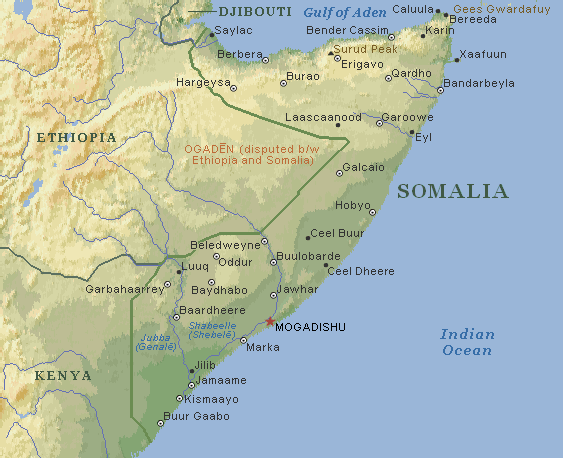
L'Africa è un continente alquanto complesso e la radiofonia riflette una situazione che definire frammentata è eufemistico. Tra le regioni più travagliate, forse perché ci sono passati anche gli italiani, c'è il Corno d'Africa, dove la situazione di costante guerra tra Etiopia, Eritrea e Somalia genera vittime, scontri e povertà. A parte qualche eccezione, come quella di Radio Ethiopia, che si ascolta con relativa regolarità ma non proprio facilmente intorno ai 9560 kHz del servizio esterno (alle 16 UTC in inglese), è difficile da quelle parti tracciare il confine tra radio ufficiali e clandestine, semplicemente perché non c'è mai molto di ufficiale tra governi tribali e temporanei, improbabili mandati Onu e occasionali sbarchi democratici americani, come quello che secondo Bush padre nel 1992 doveva "riportare la speranza".
L'altro giorno ho intercettato in rete una notizia relativa al lancio, il prossimo primo febbraio, di una nuova stazione clandestina rivolta alla popolazione di lingua somala che abita nellla regione etiope dell'Ogaden, ai confini con la Somalia.
This is to notify all Somali speaking people that a new Somali radio station will be opened. The new radio station, called Voice of the Somali People, will start broadcasting on 1 February 2006.

Voice of the Somali People will broadcast twice a week - Wednesdays at 1 pm east African time [1000 GMT] and Saturdays at 8:30 pm east African time [1730 GMT]. Voice of the Somali People can be heard on 8037 kHz, 41 meter band short wave and 7175 kHz.
Dico "regione etiope" per semplificare, in realtà si tratta di un territorio rivendicato da una popolazione locale che dell'Etiopia di oggi e dell'Abissinia di un tempo (e vari colonizzatori) non ne vuole proprio sentir parlare. L'Ogaden ha un suo sito Web informativo, e una stazione, Radio Xoriyo o Freedom, Libertà che secondo Clandestine Radio viene ritrasmessa da Jülich in Germania, attraverso le facilities di T-Systems di Deutsche Telekom (DTK). Nella schedule aggiornata di questo broker Radio Xoriyo non viene riportata, ma in passato utilizzava le frequenze di 9820 e 15670 kHz. E' proprio Radio Xoriyo a dare la notizia del'apertura della nuova emittente.
Voice of Somali People potrebbe operare attraverso le stesse strutture, ma non è detto. La frequenza di 7175 kHz è vicina ai 7165 che l'ultimo Domestic Band Survey del Danish Shortwave Club International attribuisce alla Voice of Democratic Alliance etiope (sito trasmissivo di Gedja Jewe in Etiopia). Per non parlare dei 7175 kHz che il WRTH o la African Station On SW del British DX Club attribuiscono invece ad Asmara, con l'ufficiale Voice of the broad masses of Eritrea. Gli 8037 kHz invece ricordano tanto le frequenze off band utilizzate irregolarmente da stazioni somale, etiopi ed eritree.
[Dave Kernick, sull'ultimo DXLD, sostiene che VSP trasmetter
à proprio da Asmara, su 7175 kHz e su 837 kHz in onde medie, supposizione che ci aiuta a risolvere l'anomalia degli 8037 kHz, un chiaro refuso.]
Che c'entra Asmara? Beh, tanto per dirne una, VOBME trasmette anche in oromiffa, la lingua degli Oromo, abitanti dell'omonima vasta regione etiope che tanto per cambiare vuole staccarsi da Addis Ababa (complicato a farsi, visto che la regione comprende Addis Ababa). In Oromo agisce un fronte di liberazione nazionale con la sua brava stazione radio, la quale trasmette secondo EiBi attraverso la solita Jülich (DTK) sui 9820 kHz dalle 17 alle 17.30 da martedì a domenica e dalle antenna di Samara (Russia), 7590 kHz il lunedì e giovedì.
Tanto per aggiungere un po' di chiarezza a questa situazione, riportiamo le frequenze tra 7 e 8 MHz, probabilmente gestite con trasmettitori trafugati da navi o aeroporti e riportate dalla stessa lista africana del BDXC dalla regione del Corno. Non tutte le stazioni trasmettono o trasmettevano effettivamente dalla regione. In diversi casi il programma viene prodotto chissà dove, magari a Londra, e irradiato attraverso un'antenna affittata o subaffittata da qualche organizzazione, come la già citata DTK, o la belga TDP, che a sua volta utilizza trasmettitori russi e via dicendo. Le stazioni riportate potrebbero essere inattive e anche qualora fossero attive non è per niente scontato riuscire a sentirle. In genere, la regione del Corno offre migliori chance di ricezione nel tardo pomeriggio autunnale-invernale, dopo le 16.30 UTC. Ultimamente, nella stessa area ha ripreso a trasmettere su 4780 kHz da Djbouti, ex territorio francese degli Afars et Issas, Radio Djbouti. E il suo segnale arriva a essere molto forte, anche se spesso disturbato da stazioni radiotelegrafiche e radiofax.

6940 10 ETH R Fana, Addis Ababa 0330-0530, 0530-0730sa/su, 0900-1100, 1200-1400sa/su, 1500-1800, 1800-1900mo-fr Amharic/Oromo; cf 6210
6960v 1 SOM R Shabelle, Mogadishu 0300-0600, 0900-2100 Somali
6980v 0.1 SOM R Galkacyo, Galkacyo 1000-1230, 1600-1730 Somali
7100v 100 ERI VOBME, Asmara 0330-0630, 0930-1030, 1400-1830 Tigrigna/local languages
7110v 100 ETH R Ethiopia, Addis Ababa 0300-1100, 1100-1400sa/su, 1500-2000 domestic service in Amharic/local langs (news in English at 1030-1100mo-fr); cf 5990v, 9704v
7165v 100 ETH R Ethiopia - External Service 1200-1300 Somali, 1300-1400 Afar, 1400-1500 Arabic, 1500-1530 Eritrean opposition prgm (see below), 1600-1700 English, 1700-1800 French; cf 9560v
7165v 100 ERI V of Dem Alliance via R Ethiopia 1500-1530 Multilingual (opposition radio); cf 9560v
7175v 100 ERI VOBME, Asmara 0330-0700, 0930-1100, 1700-1800
7530v 1 SOM R Hargeisa, Somaliland 0300-0600, 0900-1200, 1500-1900 Somali
7560 100 SOM R Horyaal via Armavir 1730-1800sa-th Somali (opposition radio)
7590 250 ETH R Voice of Oromo Liberation 1700-1730mo/th Oromo (opposition radio) via Samara
7590 250 ETH Radio Voice of ENUF via Armavir 1700-1800fr/su Amharic (opposition radio)


Tags:

27 gennaio 2006

Il fascino della zitella

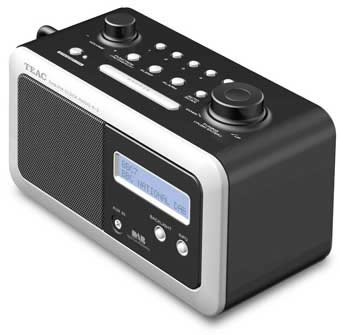
La radio, si sa, gode in genere di ottima stampa. Nòva, il nuovo supplemento tecnologico del Sole 24 Ore, magnifico prodotto editoriale, ha dedicato ieri, giovedì 26, quasi una pagina intera al tema delle stazioni radiofoniche "sintonizzabili" via Internet e a una lunga recensione di tre nuovi modelli di apparecchi radiofonici. Mi spiace segnalare solo adesso questa iniziativa di Nòva, quando è tardi per trovare il Sole in edicola. Purtroppo ieri Blogger ha avuto una lunga pausa di manutenzione notturna, ma la notte era quella Californiana e qui è rimasto tutto bloccato in ore molto utili. Per fortuna è abbastanza facile ordinare l'arretrato di un quotidiano al proprio edicolante, sempre che non sia stato sommerso dai supplementi più voluminosi. Per la precisione le radio recensite sono la Etòn e10, la cui sezione onde corte viene messa in bella evidenza, proprio a beneficio dei cacciatori di segnali lontani, come scrive puntualmente l'autore del paginone; la Teac R-3 (che è una radio FM-DAB banda III e L, interessante); e la Tivoli Audio SongBook, una portatile AM/FM di qualità, ma dal prezzo parecchio esoso.
Che dire, fa sempre piacere vedere quanto interesse viene manifestato nei confronti della sorella maggiore e minore della tivvù. Il problema è che di solito la tivvù è sempre in prima e la radio finisce in quelle belle doppie pagine centrali dei supplementi, ottime per il pesce, o in venticinquesima dopo la cronaca nazionale e prima dello sport... Insomma è sempre lì che fa la figura della sorella che non si è mai sposata, non perché non fosse graziosa, elegante o fornita di una buona dote, ma per il suo carattere così discreto, demodé, sempre un po' ritroso. Quella che conta davvero, in famiglia, è la sorella più giovane e caciarona, aggressiva, che può anche sposarsi più volte. E lo fa.


Tags: