Uno dei "2012 Pick" i premi annuali che Radio Magazine assegna alle tecnologie radiofoniche per alta o bassa frequenza è andato a Proteus-1 un simpatico analizzatore portatile di segnali RDS. Sviluppato da Dan Stofer (che lo presenta in questo video), Proteus è un ricevitore FM tascabile, in grado di fornire una dettagliata fotografia del bit stream veicolato attraverso la sottoportante del sistema RDS e verificarne l'integrità. Ho il sospetto che il dispositivo utilizzi uno dei System on Chip di SiLabs con decoder RDS integrato e in questo caso potrebbe anche comportarsi discretamente come ricevitore da campo su segnali molto deboli. Cercherò di approfondire i dettagli sull'eventuale disponibilità di questo strumento anche in Europa.
Visualizzazione post con etichetta rds. Mostra tutti i post
Visualizzazione post con etichetta rds. Mostra tutti i post

06 dicembre 2011
Radiotext "+" per l'RDS di RTL: informazioni dinamiche "compliant"
Gli amici di RTL102.5 mi comunicano di aver attivato il servizio RDS RT+ che ora trasmette informazioni dinamiche come il titolo del brano musicale trasmesso al momento. La foto che vedete mi è stata gentilmente fornita da Marco Cavestro ed è stata ripresa dal display di Pure Sensia:

A parte ho realizzato un breve filmato sulla mia piccola Pure ONEmini, FM/DAB:
In questo modo, RTL può trasmettere una serie di dati e metadati per implementare servizi come l'invio di informazioni sul brano in onda (Titolo, Autore), indirizzo email, sito web, numero SMS, (tramite il RT, ricevibile dalla maggior parte dei ricevitori). E' anche possibile inviare i TAG che consentono di aquistare il brano, inviare SMS, visitare il sito della radio, inviare email, tramite il RT+ (ricevibile con appositi ricevitori, Ipod nano, Ipod Touch, telefoni Nokia nuova serie, telefoni Samsung Galaxy, etc). E last but not least l'uso dell'RT+ consente di rispettare la norma IEC 62106, relativa all'utilizzo improprio del campo RDS "PS" che deve rimanere fisso e visualizzare solo gli 8 caratteri che identificano la stazione. In Italia molto spesso questa direttiva viene ignorata e può dar luogo a effetti collaterali spiacevoli quando si è alla guida e si viene distratti da un display che si modifica continuamente.
Il discorso delle informazioni dinamiche e dei metadati si può trasferire ovviamente anche sul DAB, per cui è previsto il servizio Dynamic Label Plus (DL+). E' una modalità ancora più estesa perché consente all'ascoltatore di scegliere quali informazioni dinamiche visualizzare in base a una serie di TAG definite dall'emittente. Il DL+ deve però essere supportato a livello di software operativo dei chipset che rielaborano le informazioni del DAB.
14 marzo 2011
FM RDS su Android: una app ancora più estesa

La canadese CRC ha aggiunto una tessera molto interessante al suo mosaico di soluzioni per la radio "software defined". Dopo gli MMBtools, suite di prodotti di modulazione e codifica per la trasmissione digitale DAB+ ecco una "app" rivolta agli utenti degli smartphone Android della Samsung, in particolare il Galaxy S. Questo telefonino include un chip Silicon Labs per la ricezione dell'FM con RDS e una applicazione Samsung per la gestione di questo ricevitore "system on chip". Ma la nuova app firmata CRC, chiamata "FM TwoO" (come in FM 2.0), supporta un numero di funzioni più esteso, sfruttando ancora meglio le capacità RDS del chip Silicon Labs. Guardate la tabella qui inclusa.

CRC FM TwoO (pronounce: two "O", like in Web 2.0) receives real-time FM radio and RDS data currently on the Samsung Galaxy S family of devices.FM TwoO uses our CRC FM-RDS Android Library to access the embedded FM receiver. The CRC FM-RDS Android Library is available free of charge to third party developers. FM TwoO can be tuned to any station manually or by seeking through usual FM frequency bands. RDS data is displayed on the main screen of the application as soon as the radio is in playing mode.FM TwoO decodes and presents the basic data fields: program identification (PI), program service (PS) and Radio Text (RT). In addition to that, FM TwoO also supports the more advanced RT+ Open Data Applications (ODA) (where available). RT+ can carry additional data "services" associated or not with the audio program.
Ulteriori dettagli si possono leggere su questa pagina del sito CRC dove si trovano schemi a blocchi e questo video dimostrativo. Per chi mastica di queste cose vale la pena specificare che FM TwoO può riportare sul display il PI CODE, molto utile per identificare le stazioni quando il segnale è debole e non permette di visualizzare il nome della stazione (PS CODE).
Personalmente non ho un Samsung Galaxy S, ma credo che il mio Smartphone Samsung Corby i5500 possa verosimilmente montare lo stesso chip Si4709 per il quale è stata sviluppata la app. Purtroppo non sono ancora riuscito a scaricarlo dal Market, vi terrò aggiornati. [Aggiunta: niente da fare, l'installazione di FM TwoO ha avuto esiti negativi: il Samsung Corby *non* monta un chip si4709 e il software non è in grado di riconoscere l'hardware residente. Se qualcuno dei miei lettori munito di Galaxy S è in grado di svolgere qualche prova sarei felice di ospitarne il resoconto. Grazie!]
30 gennaio 2011
RDS Spy, decodifica RDS su Windows (con decoder chip)

Con l'arrivo dei programmi per la demodulazione SDR dell'FM "larga" la decodifica delle informazioni RDS - una funzione fondamentale per l'identificazione delle stazioni ricevute a grande distanza dai DXer - si sposta nel dominio del software, come dimostra la recente integrazione in WRPlus (uno dei derivati più interessanti del sorgente di Winrad) degli algoritmi di decodifica RDS sviluppati da Michael Feilen.
Questa nuova opportunità non esclude però la possibilità di continuare a decodificare l'RDS con l'aiuto di appositi chip demodulatori, utilizzati finora dagli stessi DXer per abilitare i loro ricevitori analogici alla funzionalità RDS e soprattutto alla lettura di informazioni RDS normalmente non accessibili. Questi chip - i più diffusi sono sviluppati da STMicro e Philips - si possono facilmente assemblare in piccoli decoder, che poi vengono interfacciati a un pc con installato un opportunto programma. E' incredibile vedere che questi programmi continuano a essere sviluppati dalla comunità hobbystica. Da pochi mesi per esempio è disponibile RDS Spy, un programma di decodifica RDS per Windows scritto da un vero esperto in materia, il ceco Jan Kolar, che da anni commercializza economici RDS encoder destinati al mercato delle emittenti commerciali. RDS Spy richiede per funzionare un segnale generato da un chip di demodulazione RDS, che a sua volta estrae il bitstream dalla sottoportante RDS a 57 kHz nascosta nel segnale FM. La praticità di questa nuova applicazione è data dalla sua grande flessibilità, oltre che dalle funzioni analitiche. Il segnale "data/clock" che trasporta le informazioni RDS può essere acquisito attraverso la porta seriale del computer (una interfaccia un po' fuori moda) o dalla scheda audio.
16 gennaio 2011
Spinoff di Winrad: una rivoluzione per l'FM DX?
Continua l'evoluzione dei programmi nati come spin-off di Winrad, il demoduladore SDR di Alberto Di Bene il cui codice è ormai rilasciato nel public domain. Il primo a essersi imposto all'attenzione della comunità radioamatoriale è WinradHD, del tedesco Mariu Tnubel DG0JBJ. Ultimamente, con la versione 1.0, il software è stato ribattezzato HDSDR.
Lo spin-off che sta riscuotendo il maggior successo è arrivato tuttavia dall'italiano Sandro Sfregola con WRPlus, che ha saputo raccogliere l'input di tanti ascoltatori SDR interessati alla demodulazione WideFM. Con la versione 1.04, rilasciata pochi giorni fa, WRPlus subisce ulteriori importanti modifiche, inclusa la correzione di un collo di bottiglia nel codice originale di Winrad. Con la rimozione di questa strettoria sembra che il carico sulla CPU di WRPlus diminuisca drasticamente. Tutto questo in un software che spinge al massimo la qualità della demodulazione e dell'audio generato dal vecchio Winrad. E che soprattutto è capace di demodulare le stazioni FM e persino di decodificare le informazioni RDS!
Ma ecco le note al rilascio della versione 1.04(4) formulate dall'autore di questo pregevole pezzo di software:
Discovered and fixed a serious (and unexpected) performance "bottleneck" in the original Winrad code; the improvement in terms of less used CPU resources is dramatic: as I previously stated in the User Guide Update, with the implementation of the new DSP core I had on my reference system (an "old" Pentium 4 HT @ 3 GHz) a CPU usage of around 20 – 25% while playing a 500KS file. The maximum sample rate that my system handled was 1000KS: at 2000KS I experienced continuous "stuttering". Now with release 1.04 I have around 25% CPU usage while playing a 2000KS file at maximum SP1/WF1 zoom factor (RBW 122 Hz); at RBW = 244 Hz CPU usage is about 15%! Furthermore, I'm able to play a 2000KS file in Stereo WFM mode (RDS enabled, Mode 1) with a CPU load of about 30% at RBW = 1953.This great improvement means that users will be able, in several cases, to exploit the highest input sample rates without being forced to upgrade their PCs.•New NCO: WRplus 1.04 features a redesigned Numerically Controlled Oscillator with a very high spectral purity. Together with the already renewed anti-alias filters, this feature has eliminated every residual alias or other spurious products; you will notice a quieter background especially with large input SR.Do yourself a test using the file that Leif Asbrink has kindly provided; it is available here: http://sm5bsz.com/lir/sim1/sim1.zipCheck also the tests performed by Leif here:Soon the above page will be updated with the test of WRplus 1.04.•Radio Data System: thanks to Michael Feilen, which kindly agreed to use the RDS decoding core of his FMstack software in WRplus, I have been able to implement RDS reception in a restricted time. Unlike other decoders, Michael's code makes full use of the Forward Error Correction feature built in the RDS protocol: this means that data blocks containing errors are not simply discarded but errors are corrected(when possible) using CRC.•Demodulation of the RDS bit-stream and clock recovery are brand new instead: WRplus uses a complex multi-PLL implementation in order to extract the RDS information even in critical conditions. WRplus is capable of extracting the RDS even from mono signals, like the stand-alone hardware demodulators/decoders.See the user guide for details.
In questo filmato YT vediamo WRPLUS alle prese con un debole segnale transatlantico nelle onde medie.
WRPlus può essere utlizzato con il Perseus grazie ad apposite DLL, ma può essere sperimentato con qualsiasi front end SDR a conversione non diretta, stile SoftRock per intendersi. Alcuni lo utilizzano con il PMSDR di Martin Pernter.
Ecco le prove che Martin in persona ha effettuato con WRPlus nella banda FM. I risultati mi sembrano assolutamente strepitosi:
Un altro front end SDR proposto in questi ultimi mesi arriva dagli Stati Uniti e può essere ordinato in un kit già assemblato dalla Lazy Dog Engineering di Peter Goodman, modello LD-1 (da poco nella versione 1B)
Per la sintonia delle frequenze sopra gli 88 MHz occorre in ogni caso un downconverter, visto che né il Perseus né i front end a media frequenza "near zero" coprono lo spettro superiore ai 30-35 MHz. Martin stesso propone un downconverter molto interessante per il suo PMSDR, un modulo aggiuntivo che copre senza fatica la gamma da circa 90 a 500 MHz. Un altro convertitore di alta qualità è prodotto dalla tedesca NTI (che propone anche il front end 0-30 MHz DiraBox) ed è siglato FMC-108 28. Questo scatolotto "ribalta" lo spettro compreso tra 87,5 e 108 MHz nella finestra HF tra 7,5 e 28,5 MHz. Le prove svolte con un setup costituito da PMSDR, FMC-108 28 e WRPlus dall'amico Francesco a Roma, dicono che il software di Sandro Sfregola potrebbe portare a una rivoluzione nel settore dell'ascolto a lunga distanza dell'FM in virtù delle sue doti di sensibilità e selettività, senza parlare della velocità di decodifica "software based" delle informazioni RDS (una nota fondamentale per l'autore di WRPlus: E' vitale che il programma visualizzi le informazioni del PI Code *anche* in modalità esadecima
le e non nella conversione in decimale. Le quattro cifre esadecimali dela PI Code sono lo standard de facto nel mondo dell'FM DXing e la conversione renderebbe inutilizzabili tutte le liste oggi esistenti).
Questa di seguito è invece una immagine di WRPlus "scattata" da Fabrizio Magrone, che mi scrive:
E' davvero molto probabile che, così come le SDR (il Perseus nel mio caso) stanno rivoluzionando il DX così come lo abbiamo conosciuto fino a pochi anni fa, anche il DX in gamma FM muterà in modo importante, anche se magari non altrettanto rivoluzionario. Già il fatto di avere la selettività variabile è un'evoluzione importante: oltre ai valori selezionabili dal menù a tendina, è possibile scrivere e ottenere qualsiasi altro valore intermedio a piacere. La decodifica RDS, se le interferenze e la selettività non lo impediscono, è veloce e completa, includendo anche i messaggi che finora, salvo eccezioni, i nostri apparecchi non vedevano. E sono curioso di provare i nuovi apparecchi che, come il Gemini venturo, comprendono la gamma FM senza necessità di convertitori esterni.Ti allego la schermata del segnale del canale RAI Radio 1 locale di Bertinoro su 90,800 MHz (convertito a 10,800 MHz). Il PI code 20993 è in formato decimale, corrispondente all'hex 5201. Si legge anche uno dei messaggi RDS di testo e, nella schermata inferiore, si nota distintamente il tono pilota di 19 kHz del segnale stereo. Il convertitore ha dimensioni poco superiori a un pacchetto di sigarette, ha peso trascurabile e richiede un'alimentazione tra 7 e 15 volt: è quindi perfetto anche per l'uso portatile.

21 dicembre 2010
Ibiquity (re)inventa l'RDS per le stazioni AM

La National Association of Broadcasters americana ha contribuito a finanziare una ricerca di Ibiquity, l'inventore del sistema di radio digitale HD Radio, con l'obiettivo di escogitare una tecnica di trasmissione dati da associare alla portante di un segnale radio modulato in ampiezza. Questa forma di RDS per le onde medie potrebbe essere utilizzata dalle stazioni locali in onde medie per offrire ai loro ascoltatori analoghi servizi informativi, dal nome della stazione al titolo dei brani trasmessi. Il sistema, AM Digital Data Service (ADDS) si basa sull'impiego di un ristretto numero di sottoportanti modulate come nelle trasmissioni HD Radio, ma a differenza di quest'ultimo la banda occupata è molto limitata e consente di trasmettere i dati a un rate compreso tra i 90 e i 1.000 bit al secondo (contro gli 1,2 kilobit di RDS).
E' davvero possibile che una tecnologia del genere possa essere utilizzata per estendere le capacità delle trasmissioni in AM? Potrebbe essere accettata su vasta scala? Nutro parecchi dubbi al proposito, ma il mio punto di vista è molto europeo e diversamente dagli Stati Uniti, dove esistono ancora migliaia di stazioni in onde medie che potrebbero trovare interesse nello sperimentare nuove opportunità di svecchiamento del medium, qui in Europa le onde medie sono apertamente in via di progressiva estinzione. Sono in pochi - a parte forse i lettori di questo blog - a conoscere l'esistenza di una tecnica ETSI molto simile concettualmente all'ADDS proposto oggi da Ibiquity. Si chiama AM Signalling System e funziona in base a un meccanismo di modulazione in fase della portante di un segnale AM. AMSS, sviluppato cinque anni fa, supporta una velocità di trasferimento dati di circa 48 bit al secondo. A parte qualche trasmissione sperimentale della BBC, decodificabile con il software per DRM DReAM, non c'è stato alcun seguito alla cosa.
Lo studio americano proseguirà, avvertono quelli del NAB, solo se ci sarà una adesione da parte del mercato. In teoria, sviluppare i componenti e il software per decodificare le informazioni ADDS non dovrebbe essere complicato e neppure aggiungere questa funzione agli attuali ricevitori analogici. Da a qui ad aver voglia di farlo, ci passa. Ma tutto questo è interessante perché dimostra che se si vuole integrare un contenuto audio distribuito con tecniche analogiche, è possibile pensare di accompagnare tali flussi con metadati che aprono la strade a servizi e forme di integrazione di tipo digitale. L'obsolescenza della radio analogica soprattutto nelle onde medie è ovviamente legata al comportamento degli ascoltatori, dei consumatori. Ma tale comportamento è inevitabilmente condizionato dalle tecnologie, dai quadri normativi, dalle scelte industriali, dalle iniziative degli editori. Che succederebbe, ipotizziamo, se le onde medie fossero destinate, chessò, alla copertura di eventi sportivi di forte interesse locale, come le partite di calcio, con l'audio del commento e dell'interno dello stadio radiodiffuso e le informazioni di corredo visibili via Internet? O per applicazioni a carattere turistico, come le audioguide? Forse non tutte le idee sarebbero commercializzabili, ma perché negarsi l'opportunità di esplorarle? In ogni caso, potete leggere il documento tecnico relativo al sistema AM Digital Data Service scaricando questo pdf.
iBiquity Develops New AM Radio Data Service ConceptNAB FASTROAD (www.nabfastroad.org) last week announced the release of a report on a new AM radio data service concept, with the potential to provide AM broadcasters the ability to transmit low-rate data similar to what analog FM broadcasters can provide using the Radio Data System (RDS) subcarrier. This work was undertaken by iBiquity Digital Corporation (Columbia, Md, www.iBiquity.com), developers of the HD Radio IBOC system used by U.S. broadcasters to transition to digital radio, and was co-funded by iBiquity and NAB FASTROAD.Called the AM Digital Data Service (ADDS), this new technology would utilize a small number of IBOC digital subcarriers (either two, four or six) to provide a data capability (but no digital audio) similar to RDS for analog FM. Because analog AM radio stations have no method for transmitting data such as song title and artist, there is a need for an AM data transmission service that provides capabilities similar to FM RDS and can support delivery of low data-rate text. This technology could be easily and affordably integrated into future versions of IBOC receivers but existing IBOC receivers (and analog-only receivers) would not be able to decode the ADDS signal.As described in the report, from one to three digital subcarrier pairs would be used to transmit digital data, as shown in the figure. These subcarriers would reside “underneath” the existing analog AM audio signal, which is represented in the figure by the trapezoidal shape which extends symmetrically about the channel center out to approximately ±10 kHz.Each subcarrier’s power level is set to ensure robust reception of the digital data, while minimizing interference to the host analog audio. The levels shown in the figure are based upon an analytical study which is summarized in the report, and would, in a future phase of the program (not currently planned), be verified in laboratory and field testing of the system. The ADDS system borrows heavily from the digital broadcast design defined for HD Radio AM Hybrid transmission. The design establishes symbol durations, subcarrier spacing, and sample rates consistent with HD Radio broadcasts. These design requirements ensure robust reception and allow for compatibility with existing HD Radio receiver applications.Depending upon the number of subcarriers and the type of modulation, data rates from approximately 90 to 1000 bits per second would be supported by ADDS. By comparison, the RDS signal has a bit rate of approximately 1,200 bits per second. ADDS is designed to support text messaging and data transmission associated with audio program content. Proposed “use cases” include station service messages, alert messages, and program service messages. These system definitions are identical to the corresponding definitions in the HD Radio system standard; additional information on two of these use cases is provided here:Station Message Service (SMS) – the station message service is intended to identify station-related configuration and important messages to the listener. The station message service provides, but is not limited to, the following: station call letters, station message (examples include public service announcements, weather reports or telephone call-in numbers). This service borrows definitions from the HD Radio Station Information Service (SIS);Program Service Data (PSD) – the program service data is intended to describe the content of the current audio program. The PSD service provides, but is not limited to, the following messages: title, artist, album, genre, content, commercial. This service borrows definitions from the HD Radio Program Service Data (PSD).One of the benefits of ADDS is that it would offer AM broadcasters a simpler and less-expensive way to provide a (limited) digital service compared to a full AM IBOC installation which at present is the only option. Also, the requirements on the antenna system for ADDS would be the same as for analog AM and not the more stringent requirements of AM IBOC. This is important because antenna tuning (usually necessary when upgrading existing AM broadcast facilities from analog AM to HD Radio specifications) has been one of the major tasks needed to get AM IBOC stations functioning and on-the-air.The full text of the ADDS report and information on the NAB FASTROAD technology advocacy program are available at www.nabfastroad.org. Future work on this project will depend upon a number of factors including whether the broadcasting and receiver manufacturing industries embrace this concept.
22 novembre 2010
DE1106 con synchro-AM e RDS vista da Christian

Christian Diemoz ha fatto un gran bel lavoro sottoponendo la sua nuova "ultralight" cinese Degen DE1106, fresca fresca di eBay, a tre giorni di prove intensive e scrivendo, da cronista di razza qual è, una recensione che non potrebbe essere più esauriente e articolata. Lo ringrazio di cuore per aver voluto che la sua recensione del ricevitore portatile apparisse per la prima volta su Radiopassioni.
Da qualche settimana sugli eBay shop del mainland del transistor è apparsa la versione "brandizzata" Degen di un apparecchio già commercializzato recentemente sotto il marchio Grundig G3. Se la ricostruzione mi è riuscita correttamente mi sembra di aver capito che in origine il design della Degen 1106 era stato "ceduto" ai marchi Eton e a Grundig, che avevano sfornato due versioni gemelle E5 e G5. In seguito, al design originale è stata aggiunta la demodulazione AM sincrona e la radiolina si è ripresentata come Degen DE1106 e come Grundig G3. Ancora una volta siamo davanti a un ricevitore 0-30 MHz con FM/RDS e con l'aggiunta della banda areonautica 117-135 MHz in AM. Rispetto alla gloriosa DE1103, la 1106 vanta, oltre all'RDS in FM, la ricezione SSB-synchro in AM e, appunto, la banda areonautica (che purtroppo per gli appassionati di air traffic control sembra piuttosto sorda)
Durante la sua prova Christian ha fatto fare veramente di tutto alla nuova Degen, inclusa la ricezione dei radiofax meteorologici e della televisione a scansione lenta in banda radioamatoriale. Ne sono venute fuori sei fitte pagine di valutazioni e confronti, accompagnate da miriade di foto e filmati YouTube, che potete scaricare da questo indirizzo. Non una recensione strumentale, ma quella, ragionatissima, di uno che con la cuffia in testa e il dial sintonizzato sulle onde medie e corte sa il fatto suo.
Insomma, come funziona l'ultimo nato della mamma di tutti i 1103?
«A parte - conclude Christian - la debolezza sulle lunghe e medie, che fa sfumare, per il DE1106, una valutazione complessiva più elevata di quella attribuita a suo tempo al DE1103, si tratta di una radio in grado di offrire una gamma di possibilità ricettive particolarmente estesa, anzi meravigliosamente estesa in relazione al prezzo. Il nuovo frutto dei cervelloni Degen non solo rappresenta un ottimo approccio per chi volesse avvicinarsi al radioascolto, ma incarna anche un oggetto stimolante per il DXer con già dell’esperienza all’attivo. Come in altre discipline, una volta che si è sviluppata qualche capacità, la vera sfida è ottenere risultati migliori, o uguali al passato, riducendo l’attrezzatura utilizzata. Questo, con il DE1106 si può fare, come si è visto sinora, e il rischio è solo quello di trascorrere qualche ora piacevole. A questo punto, tutti a sgommare su quel dial, un Degen nuovo non è cosa da ogni giorno!»
20 novembre 2010
Il promettente connubio tra analogico e digitale
Arrivano altre novità dall'amico Cédric e dal suo blog DxFm & DxTv, dove vengono periodicamente pubblicati filmati e snippet sulla sperimentazione di radio-on-chip come la Silicon Labs Si4735 e microcontrollori come Arduino. Recentemente Cédric è riuscito a collegare il 4735 a una scheda Seeeduino e in questo filmato YouTube c'è un esempio di semplice interfaccia grafica che permette di pilotare la sintonia del chip in banda FM e visualizzare le informazioni RDS.
Ha ancora senso impegnare tante energie su trasmissioni analogiche in questa fase di evidente ridiscussione della tecnologia su cui si sono basati circa 60 anni di radiofonia? Al di là degli aspetti hobbystici che dominano in questo tipo di esperimenti, sono convinto di sì. Se ammettiamo che la radio via etere, il modello radiofonico diffusivo ha ancora un ruolo, uno dei modi per affrontare gli evidenti limiti della modulazione analogica FM agendo da entrambi i lati. Sul fronte trasmissivo le sottoportanti RDS possono diventare un mezzo ancora più efficace per stabilire delle connessioni crossmediali tra le emissioni FM e i contenuti di Internet. Sul versante della ricezione mi sembra ci sia ancora molto spazio per ricevitori più evoluti, capaci di sfruttare meglio la qualità intrinseca della modulazione FM e ridurre gli effetti negativi dell'affollamento dell'etere o della rumorosità ambientale. Dentro al chip Silicon Labs sono in funzione gli stessi principi software defined radio che caratterizzano prodotti molto più evoluti ma a un costo assai più contenuto. L'abbinamento tra questa tecnologia, che ingloba di suo parecchio DSP e il microcontrollo, può sfociare in ricevitori molto più smart dal punto di vista delle interfacce utente e molto più robusti sul piano della fedeltà dell'audio.

Una piccola parentesi sulla scheda Seeeduino, che viene dal costruttore cinese Seeed Studio, di Shenzhen. Il suo catalogo prodotti è sorprendente, pieno di controller, sensori, strumenti di misura. C'è persino la possibilità di ordinare per 89 dollari il DSO Nano v2 un oscilloscopio 0-1 MHz poco più grande di una carta di credito, costruito intorno a un microchip ARM Cortex. A seconda delle versioni, con chip Atmega 328 o 328P, i prezzi di Seeeduino sono compresi tra i 22 e i 40 dollari. Ovviamente si parla di elettronica digitale da hobbysti, non di strumentazione o hardware professionale. Ma il potenziale esprimibile, anche in termini di apprendimento, mi sembra enorme.
05 ottobre 2010
Quintic, il silicio fabless che mette l'FM ovunque

La radio FM può essere considerata un medium in via di espansione, ma intanto gli sviluppatori di silicio continuano a essere finanziati per produrre componentistica destinata a integrarne la ricezione su ogni tipo di dispositivo, dai lettori multimediali ai telefonini. Uno di questi produttori è la piccola Quintic, di Santa Clara, che ha appena annunciato di aver raccolto 4 milioni di dollari in una tornata di finanziamenti, dopo aver incamerato 2 milioni lo scorso luglio. Quintic, fondata nel 2005, è un produttore fabless: disegna i suoi circuiti low power e low cost e li fa produrre da altri. Ha in portafoglio tutta una serie di chip che implementano ricevitori (con RDS) e trasmettitori FM (per la riproduzione della musica in autoradio) che finiscono un po' dappertutto. Ha firmato anche una di quelle antenne FM "embedded" di cui ho parlato poco fa (QAF2405).
22 settembre 2010
Degen 1106: SSB/AM sincrona, FM/RDS, air band

Grazie a Chris, della redazione distaccata (dove tra parentesi si produce anche il pregevole osservatorio librario regionale in onda su Caleidoscopio, la trasmissione in onda su RAI Val d'Aosta - archivio su YT) per aver beccato la notizia della messa in commercio su eBay del Degen 1106, radiolina cinese di cui si parla da parecchio e che era stata anticipata un annetto fa da Huangshan Radio Space, mitico blog di gossip radiopaccottigliaro.
Il fattore di forma del 1106 è tanto per cambiare ultraleggero, ma le caratteristiche hanno sempre promesso molto più della solita Resun: copertura continua onde corte con SSB e AM sincrona, FM stereo con RDS e passo da 10 kHz, air band per ascoltare gli aerei, 700 memorie. Bisognerà vedere se le promesse verranno mantenute.
Il prezzo della scatoletta, circa 120 dollari spese di spedizione escluse, potrebbe essere il sintomo di una certa affidabilità (i cinesi in genere sono onesti). Da esso si intuisce che il 1106 non vuole essere proprio la solita scatoletta. Mi piacerebbe conoscere qualche dettaglio dell'elettronica, che non mi sembra di tipo DSP, anche se la demodulazione sincrona - una tecnica che offre la possibilità di selezionare la banda laterale della modulazione di ampiezza per ridurre le interferenze e assicura una maggiore stabilità del segnale in caso di evanescenza - fa pensare che siano stati utilizzati chip interessanti a questo livello di integrazione.
Quanto al motivo per cui l'industria cinese continui a sfornare questi apparecchietti low cost o midprice nell'epoca del totale declino delle onde corte è un mezzo mistero. Non potendo pensare che lo stiano facendo per accontentare noi hobbysti occidentali (siamo troppo pochi, anche se possediamo in media 25 radio), resta solo l'ipotesi del grande mercato interno e asiatico in generale, a testimonianza del favore di cui l'ascolto della radio continua a godere nelle brulicanti economie del mondo in crescita.
01 settembre 2010
iPod e radio: Touch no, Nano sì. Ma il tagging?

No, ancora nessuna traccia di una radio FM sul nuovo Apple iPod Touch presentato poche ore fa a San Francisco, iPod peraltro identico a un iPhone 4 senza telefonia 3G. Se questa somiglianza include il famoso, presunto chip Broadcom che include un ricevitore FM - a questo punto mi chiedo se è vero, se questo benedetto chip è davvero inserito nell'iPhone - la sua funzione radio non è stata attivata, neppure questa volta.
In compenso, la radio FM rimane nella nuova versione di iPod Nano con display multitouch (si può cambiare la frequenza sfiorando lo schermo). Eppure c'è un fatto sorprendente: nelle specifiche si parla di funzione Live Pause, quella che permette di sospendere e riprendere l'ascolto, ma non si trova assolutamente menzione del tagging, che nel precedente iPod Nano consentiva di marcare una canzone ascoltata via radio e di acquistarla successivamente su iTunes. Questo mi fa pensare. Il tagging era stato implementato grazie al supporto di RDS e di alcune sue nuove estensioni (RDS-ODA). Ora, se il tagging non c'è più, significa forse che anche l'RDS è sparito? Non sembrerebbe, perché il sito Apple indica che sul nuovo Nano il display visualizza i nomi dei brani e dei programmi ascoltati (come, se l'RDS non ci fosse?). Possibile che il tagging sia stato silenziosamente messo da parte perché nessuna stazione lo utilizzava? In ogni caso la notizia merita un approfondimento.
La storia d'amore tra Apple (almeno per uno dei suoi prodotti) e la radio FM continua, mi pare positivo. Tra l'altro continua nel segno dell'analogico, visto che Apple continua a ignorare il DAB europeo/australiano, ma soprattutto l'americanissimo HD Radio di Ibiquity, per il quale probabilmente non sono disponibili chipset sufficientemente miniaturizzati e a basso consumo. Il nuovo iPod Nano è veramente minuscolo e la conferma della sezione FM, anche se un po' monca, dimostra che gli acquirenti apprezzano questa feature.
Prezzi a partire da 149 dollari. Certo, le radioline cinesi costano meno, ma credo che il display a sfioramento e tutto il resto possano valere la spesa.
Radio nano.Ride the airwaves on iPod nano. The FM tuner shows the artist, song, or program you’re listening to. Just tap to see the radio controls, flick the radio dial to change stations, and tap to set your favorites.Live Pause.If you need to take a break from listening, don’t miss a minute of radio time with Live Pause. Tap to pause a song or show, then tap again to continue where you left off. You can rewind as far back as 15 minutes or fast-forward to catch up to the live broadcast.
06 maggio 2010
Integrazione FM-WEB, chip e software da sperimentare
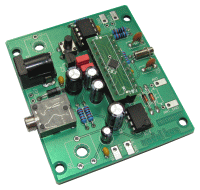
Continuano le sperimentazioni dell'amico Cédric, sul suo blog dedicato al DX in FM pieno di progetti di circuiti e componenti per l'estrazione delle informazioni RDS dal segnale FM. I suoi ultimi esperimenti riguardano il receiver on chip di SiliconLabs, l'SI4735, un ricevitore AM-SW-FM con decoder RDS integrato. Cédric ha aperto un Google Group per gli interessati alle sperimentazioni, che nel suo caso si basano su una evaluation board tedesca che integra il magico chip Silicon Labs e un controller. Il costo di questa schedina è inferiore ai 60 euro, ma ci sono altre possibilità di sperimentazione con una evaluation board messa a punto dalla stessa Silicon e commercializzata (al doppio del prezzo) da Mouser.
Ha ancora senso parlare di questi esperimenti hobbystici in un momento in cui la radio analogica sembra avviata a un inesorabile tramonto? A mio modesto parere sì. La radio FM ha davanti a sé un futuro ancora relativamente lungo e la possibilità di integrare nei suoi segnali dei metadati in formato digitale rappresenta una piccola ma formidabile opportunità di aggancio dei suoi contenuti con servizi di directory e distribuzione di contenuti basati su Web, una specie di interfaccia programmabile che permette di inserire la modulazione analogica in un contesto Web-digitale. Il sistema RadioDNS è un esempio molto eloquente di come sfruttare questa opportunità e se aziende come Apple hanno capito il meccanismo con dispositivi come l'iPod Nano e il suo sistema di tagging sul ricevitore FM (analogico) integrato, vuol dire che si possono immaginare scenari e applicazioni molto interessanti.
Il lavoro svolto da programmatori amatoriali come Cédric può diventare prezioso per tutti, anche perché non è certo un caso isolato. Il tedesco Michael Feilen ha per esempio rilasciato in questi mesi un decoder software per "Wide" FM che estrae l'audio stereofonico e in parallelo il bit stream dell'RDS. Il progetto di Michael si chiama FMStack e si trova su Sourceforge , una versione aggiornata realizzata appositamente per il ricevitore SDR Perseus si trova qui: http://www.drm-sender.de/fmstereodemod_v0_3.zip
FMStack può essere adattato anche ad altre SDR. Tutto quello che serve, come del resto per il Perseus, è un convertitore che trasferisca la porzione di banda da 88 a 108 MHz nella finestra ricevibile con i vari ricevitori SDR per HF. Uno di questi down converter è l'FMC108-28 della tedesca NTI (conversione nella porzione 7-28 MHz) ma anche il bravissimo Martin Pernter, lo sviluppatore del ricevitore SDR PMSDR , ha annunciato l'arrivo di un converter opzionale per l'FM. Lo stesso Nico Palermo sta pensando a qualcosa per la decodifica della WFM anche se non con il software del Perseus (non ottimizzato per questa modulazione).
10 aprile 2010
RDS, AIS, Inmarsat, un piccolo scrigno di decoder

E' circolato in questi giorni su UDXF lista di discussione sulle stazioni utilitarie (traffico aereo, stazioni marine, militari e quant'altro) il riferimento a un interessante sito curato da Alex Scafidas, aka Geraki. Vi si trovano le descrizioni di almeno quattro progetti relativi alla decodifica di segnali numerici e modalità trasmissive non-voce: AIS decoder, RDS decoder, SelCall decoder e Inmarsat std-C EGC decoder.
L'AIS è un sistema di posizionamento molto utilizzato per il traffico marittimo portuale e consente il tracking geografico di una nave tramite la trasmissione continua di segnali codificati, un po' come l'ACARS degli aerei.
L'RDS lo conosciamo tutti e Geraki fornisce oltre allo schema di un decoder basato sui classici integrati STM e NXP, anche due alternative software alla gestione delle informazioni estratte da questi chip, una basata su pc, l'altra su microcontroller Atmel. SelCall decoder permette di districarsi tra diversi standard per la chiamata selettiva (CCIR, ZVEI, EEA, EIA e NATEL). Infine il progetto Inmarsat è centrato sulla decodifica con scheda audio del sistema di messaggistica numerica dei satelliti Inmarsat.
Il sito contiene anche altre informazioni, sui satelliti meteo, il radio-fax. Merita davvero un'occhiata approfondita.
12 marzo 2010
RDS RT+, metadati per la radio (e iPod Nano)
Una interessantissima recensione di Alan Jurison su RadioWorld svela molti particolari tecnici della funzionalità di tagging integrata dal nuovo Apple iPod Nano nel suo ricevitore FM/RDS. Per implementare la funzione - che permette di marcare i brani ricevuti via radio e successivamente collegarsi all'iTunes Store per eventualmente acquistare questi brani - Apple ha utilizzato una parte dello standard RDS introdotta già da qualche anno, il Radiotext Plus o RT+.
E' veramente incredibile pensare a quante cose sono possibili già oggi con la radio analogica e una manciata di metadati. Cose che chissà perché nessuno si immagina di utilizzare. Le specifiche RT+ hanno introdotto, grazie ai campi delle Open Data Application previste dalla normativa che regola questa codifica, un discreto grado di informazione all'utente e interattività. Sto parlando in questi giorni del nuovo sistema RadioDNS, proposto per ovviare ai "limiti" dei metadati trasmessi con i segnali della radio analogica e digitale. RadioDNS è stato definito alla fine del 2009 ma già nel 2006 la rivista tecnica dell'EBU di Ginevra pubblicava un breve ma dettagliato articolo che spiegava che cosa era possibile fare con RT+ (l'articolo si può prelevare qui). Il sistema, sviluppato guarda caso da Westdeutscher Rundfunk (WDR), Nokia e Institut für Rundfunktechnik (IRT), consente di inserire nel flusso informativo RDS dati relativi al TMC, al tagging, alle emergenze e può consentire un certo grado di interattività con l'inserimento di informazioni come numeri di telefono e URL. Tra le aziende che producono encoder RDS che offrono questa opportunità c'è per esempio l'americana Audemat con il modello FMB80. Lato ricevitore, è semplicemente questione di programmare la decodifica a valle dei componenti che già oggi demodulano la sottoportante RDS (o RDBS negli USA, che con l'avvento di ricevitori come iPod Nano e lo stesso Microsoft Zune HD, che supporta RT+ nella parte analogica, sta scoprendo un sistema finora diffuso principalmente in Europa), una semplice questione di software. Eppure siamo qui a lamentarci per una radio che non riesce a stare al passo di Internet. Ma chi l'ha detto?
L'articolo di Jurison è chiaramente rivolto ai tecnici delle stazioni radio interessate a sfruttare la funzione di tagging dell'iPod Nano. L'autore osserva giustamente che maggiore è il numero di stazioni impegnate a diffondere questi metadati, maggiore sarà l'interesse da parte dei costruttori di ricevitori, nell'eterno gioco uovo-gallina che caratterizza l'industria. Certo che appare francamente stupido il clima di attesa che inevitabilmente trasforma ogni nuovo standard tecnico in una possibile "rivoluzione", quando i primi a non accorgersi delle rivoluzioni possibili con gli standard precedenti sono proprio i tecnici.
E' veramente incredibile pensare a quante cose sono possibili già oggi con la radio analogica e una manciata di metadati. Cose che chissà perché nessuno si immagina di utilizzare. Le specifiche RT+ hanno introdotto, grazie ai campi delle Open Data Application previste dalla normativa che regola questa codifica, un discreto grado di informazione all'utente e interattività. Sto parlando in questi giorni del nuovo sistema RadioDNS, proposto per ovviare ai "limiti" dei metadati trasmessi con i segnali della radio analogica e digitale. RadioDNS è stato definito alla fine del 2009 ma già nel 2006 la rivista tecnica dell'EBU di Ginevra pubblicava un breve ma dettagliato articolo che spiegava che cosa era possibile fare con RT+ (l'articolo si può prelevare qui). Il sistema, sviluppato guarda caso da Westdeutscher Rundfunk (WDR), Nokia e Institut für Rundfunktechnik (IRT), consente di inserire nel flusso informativo RDS dati relativi al TMC, al tagging, alle emergenze e può consentire un certo grado di interattività con l'inserimento di informazioni come numeri di telefono e URL. Tra le aziende che producono encoder RDS che offrono questa opportunità c'è per esempio l'americana Audemat con il modello FMB80. Lato ricevitore, è semplicemente questione di programmare la decodifica a valle dei componenti che già oggi demodulano la sottoportante RDS (o RDBS negli USA, che con l'avvento di ricevitori come iPod Nano e lo stesso Microsoft Zune HD, che supporta RT+ nella parte analogica, sta scoprendo un sistema finora diffuso principalmente in Europa), una semplice questione di software. Eppure siamo qui a lamentarci per una radio che non riesce a stare al passo di Internet. Ma chi l'ha detto?
L'articolo di Jurison è chiaramente rivolto ai tecnici delle stazioni radio interessate a sfruttare la funzione di tagging dell'iPod Nano. L'autore osserva giustamente che maggiore è il numero di stazioni impegnate a diffondere questi metadati, maggiore sarà l'interesse da parte dei costruttori di ricevitori, nell'eterno gioco uovo-gallina che caratterizza l'industria. Certo che appare francamente stupido il clima di attesa che inevitabilmente trasforma ogni nuovo standard tecnico in una possibile "rivoluzione", quando i primi a non accorgersi delle rivoluzioni possibili con gli standard precedenti sono proprio i tecnici.
(...)
FM radio review
If you have used the classic iPod user interface, you’ll be right at home. For those new to the iPod, the wheel user interface may take a little time to get used to. Apple also does a great job with its music playing, display, interface and organization on this device. Seeing album art when playing a stored song is a cool and slick feature, and the buttons and controls within the Music, Video and Photos section are intuitive.
The radio, though, is why I ran out and bought one. (Note that we’re talking about only analog FM here; there’s no HD Radio and no AM capability.) The FM tuner works internationally. When you launch the radio for the first time, it asks what region you’re in (Americas, Europe, Japan, etc.). You can then select “Play Radio” and you’re ready to scan the dial. You can use the outer “wheel” or circle of the control pad to scan the virtual radio dial at the bottom of the screen. Clockwise moves the frequency up in the FM band, counterclockwise moves down.
Once you’ve tuned to a station, or after a period of inactivity, the virtual radio dial display goes away and the functionality of the outer wheel changes to become your volume control. Again, for the non-Apple person, this can take time to get used to. At first, I found myself inadvertently changing the volume when wanting to change the station.
If the virtual radio dial has disappeared and you want to change the station, lightly tap the center button; the dial will return. If you’ve come across a station you like, hold the center dial position for about a second and you can select “Add to Favorites.” Once you’ve added several stations to favorites, use the left/right “Last Track/Next Track” buttons to navigate to your presets. This will navigate the stations in order by frequency, from the bottom of the band to the top. There’s no way to have your own preferred sort order, or to position your most favorite stations first, which could be an improvement.
The sensitivity of the receiver is excellent; even with the supplied earbuds, the radio works as well as you’d expect any portable. I’ve used it indoors in many occasions, especially in larger business structures, and it performs well. The Nano seems to do a great job at decoding RDS even on stations that have a low RDS injection rate.
Radio Live Pause
By default, the radio “Live Pause” feature is turned off; as far as the user interface is concerned that’s probably a good thing because when you turn it on, it does make navigating the iPod a little more difficult. That’s because the center tap and next track/previous track/volume buttons now serve three purposes: to turn up the volume, change the station and fast forward/rewind the recorded audio from the station.
This gets a little tricky and at times annoying, so it has been my preference to turn off the Live Pause function unless I want to use it. I would suggest that Apple add another physical button or two in future models to reduce the many functions of the center button. Perhaps moving the volume controls to dedicated buttons like on the iPhone and Touch models would be the best way to handle this.
The radio “Live Pause” feature is neat. Once you turn it on, it continuously records the station to which you are tuned. It even caches the RDS messages the station sent in real time with the audio and displays a little marker of the time of the event; e.g., if you go back at noon through five minutes of recordings, it shows 11:55 a.m. as the time of recording.
You can use the left/right “Last Track/Next Track” buttons to jump one minute behind or ahead, or you can use the wheel “circular” control for precise fast forward/rewinding. Keep in mind that you cannot store the recordings. This feature is just a way to pause 15 minutes of live radio; the content is lost as soon as you tune away from the station.
While this is an interesting feature, I’m not sure of the usefulness for consumers other than to pause something they are enjoying if they are interrupted and need to attend to something else, or to “rewind” something they just heard that they wanted to hear again.
For some, however, this will be a noteworthy addition. It means that if you are listening to a station and you have “Live Pause” activated, you can go back at any time to re-hear the last 15 minutes of radio content. This “radio rewind” lets you go back for a phone number, or the name of a song that the DJ gave at the top of the song but not at the end; or to listen to what a fast-talking traffic reporter just said about the backup on I-81. A user can now catch anything that normally goes by too fast on the radio.
RDS supportWhen you tune to an FM station that has RDS, the Nano immediately resolves the short, eight-character PS field. If the station also transmits the longer RadioText (RT), or the 64-character field, it will replace the short PS with the full RT. The Nano does a great job displaying your RadioText, and will scroll it if it’s too long for the display. It’s important for stations that have RDS to make sure their PS and RT are correct. I know of stations that have focused on the short eight-character PS because many car receivers only support that field or only display that field automatically. More radios are supporting RT and more radios are now displaying it prominently, so make sure your station’s PS and RT have the station name, song information and other information you want conveyed in the RadioText. If your station doesn’t do RadioText right, your listeners will miss out on what you want them to see.
The Nano also supports RT+, which is the internationally recognized RDS standard to allow you to denote where the Artist and Title reside in the long 64-character RadioText field. With stations that support RT+, this gives a listener with the Nano an “MP3 Player Feel” while listening to your station.
As soon as the Nano decodes the RT, and if the station has RT+ tagging packets, it will copy the Artist and Title out of your RadioText and display the Artist and Title in a separate section of the screen. Kudos to Apple for keeping the original RadioText on the screen, as this allows people to see other promotional messages and station branding still while tuned into the station. It’s quite a handsome display.
If the station you’re tuned to has RT+ encoding, you’ll also note that, next to the title, is a paper clip icon; this denotes that you can “tag” the song. Hold the center button of the Nano when you see this for about two seconds, and a menu will pop up that allows you to “tag” the song for later purchase. This is a great way to enable listeners who like the song you’re playing to purchase it later when they connect their Apple Nano to their computer with iTunes. Here in Syracuse, Citadel (my employer) and Clear Channel stations are encoding; other stations are not.
In future versions, Apple should explore integrating Wi-Fi (802.11) connectivity so you wouldn’t need to hook it to a computer to purchase a song.
The Nano supports Apple’s proprietary iTunes Tagging RDS protocol as well, which allows encoding stations to send the specific Apple ID of a song to allow the listener who tags a song to download the exact version of the song you played. This is particularly helpful for songs that might have various different versions, which will provide a better user experience.
It also allows you to transmit a unique identifier so your station can get credit for a song purchased through iTunes and allows the station to get a commission from Apple if you participate. Luckily, Apple does not require this in order for the Nano to do tagging, so stations that just encode with the international RT+ standard don’t appear to be much different than those who use Apple’s proprietary iTunes Tagging protocol. The next time you attach the Nano to your computer and it synchronizes, any tagged songs show up in iTunes for download. You can click on the tag and look at the song, preview it again, and look at the album art and other songs on the album. If you already have your iTunes associated with an account, you can buy the song with one click.
While some critics have questioned the usefulness of this feature, I think this is an important way to stay relevant with our listeners. Now, when they hear songs our stations play, they can tag them for later purchase. The “killer app” will be when Apple develops a device using this technology that has a Wi-Fi or 3G/4G connection, which is probably not far from happening. Once the music player is connected to the Internet directly, the listener would be able to tag and download that song to their personal connection immediately.
RDS issues
On the whole, Apple did a great job for its first attempt at an FM receiver with RDS support. I did discover a few issues related to the RDS RT+ support. I found that the Nano initially had a problem in its software and would not decode RT+ packets that are placed in a station’s Open Data Application (ODA) groups of 8A or 9A. There was also an issue where the Nano was using the RadioText (group 2A) “Text A/B Flag” as defined in section 3.1.5.3 in the U.S. RBDS Standard as part of the decision process of whether to display a tag instead of solely relying on the Item Toggle Bit as defined in the RT+ ODA Standard, Annex P.
Upon finding these issues, I got in contact with Apple’s engineers and presented my findings. They were very interested and immediately started working on a solution. Apple quickly released the Nano 1.0.2 revision of software on Nov. 9 that corrected the issues. Your Nano can be upgraded by just connecting it to iTunes; it should suggest that you download the new version of software. My contact at Apple was easy to work with and I am encouraged that the company was able to dedicate resources and respond to this problem in relatively quickly. I think Apple is going to be a great partner; there are exciting possibilities when broadcasters and Apple work together.
While the new software release is out, remember that many Nano units in the field probably haven’t been upgraded. Also, I’m sure most stock at retail outlets will have the original version of software for some time. If your station is airing RT+ tagging, I would review which ODA group you are running it in. Some RT+ hardware installations use 8A as a default, and that means it won’t work on the Nano until the user has upgraded their software version. Since it’s difficult to predict if and when all Nanos will have the newer software, I would suggest moving your RT+ ODA groups away from 8A or 9A just to avoid this problem.
After the 1.0.2 release, I noticed another small issue with the Nano’s RT+ tagging support that Apple has acknowledged and is working on. If you’re tagging more than just ITEM.ARTIST and ITEM.TITLE, you should note that in some cases the Nano doesn’t like when these two fields are separated in separate tags.
So, for example, if you are tagging ITEM.ARTIST, ITEM.TITLE and ITEM.ALBUM, be sure to put ITEM.ARTIST and ITEM.TITLE in the same RT+ tagging packet, and then send ITEM.ALBUM in a different RT+ packet. This is a simple work-around until the problem has been addressed by Apple, and it’s compatible with other RT+ receivers like the Zune.
Also, I hope that Apple starts supporting ITEM.ALBUM on the display. Right now, if your station encodes and send the song’s Album data via RT+, it never will show up on the display of the Nano. The Zune HD supports this feature and I hope the Nano does someday too.
Summary
The new Apple Nano offers a good FM tuner and a great user experience for its first product to support an integrated radio. I hope Apple continues to work on improving the user’s experience by improving on some of its issues with RT+ support that I noted above. I also hope Apple publishes its proprietary iTunes Tagging RDS protocol public for the entire industry to see.
If your station isn’t encoding with RDS, you should consider encoding to support this device and a whole host of new products that support RDS on the marketplace.
If your station is encoding with RDS, make sure that you’re paying attention to the data you’re sending in the short eight-character PS, as well as the longer 64-character RadioText. My testing with the Nano shows that most stations are not encoding with the new RT+ standard. With the Nano and the Microsoft Zune line of products, it’s important for all stations that support RDS to add RT+ encoding. Those that don’t encode with RT+ don’t offer the same user experience; and your competition might already be encoding. I strongly suggest you consider adding this functionality; it’s in the best interest of your listeners. As more broadcasters ask for their vendors to support RT+, better, lower-cost solutions should come to market as well.
If broadcasters get on the RT+ encoding bandwagon, it will encourage receiver manufacturers to embrace the standard and incorporate FM tuners and tagging in their devices. I think this is a great opportunity for broadcasters to rally for the RT+ standard and start rapid deployment. If we can get this done, I think we’ll all be delighted at the results. Meanwhile, I hope Apple will consider FM (and HD Radio) tuners in future revisions of its iPhone and iPod Touch flagship products.
Maybe even AM?

13 aprile 2009
Radio Data System e RDBS, i retroscena di un successo
Ho già avuto modo di parlare del sistema RDS e della celebrazione, quest'anno, del 25esimo anniversario dalla pubblicazione delle specifiche di questa fortunata modalità di trasmissione di informazioni binarie attraverso una sottoportante di un segnale radio analogico. Ma oggi sulla newsletter TechCheck della National Association of Broadcasters americana ho letto un lungo articolo che svela diversi particolari sulla prima versione, quella europea, di RDS e sulla successiva versione RDBS americana e volevo condividerlo.Tra l'altro la storia contiene il rimando a un altro articolo, dedicato a una recente estensione di RDS rivolta al "tagging" (etichettatura) dei brani musicali trasmessi. Con il tagging, oltre i nomi delle stazioni e la tipologia dei programmi, RDS potrebbe identificare anche le canzoni trasmesse e questi dati potrebbero servire per realizzare servizi commerciali (per esempio l'acquisto diretto di un brano o di un disco ascoltato) simili a quelli che sono stati proposti dal sistema Ibiquity HD Radio.
Alcuni dei retroscena sono curiosi. Sembra che il Radio Data System sia stato concepito come idea dai francesi di ORTF che si erano ispirati al sistema tedesco ARI. Per la modulazione venne scelta come modello quella della rete svedese di dispositivi cercapersone (quella che da noi si chiamava Teledrin e operava sui 160 MHz).
Alcuni dei retroscena sono curiosi. Sembra che il Radio Data System sia stato concepito come idea dai francesi di ORTF che si erano ispirati al sistema tedesco ARI. Per la modulazione venne scelta come modello quella della rete svedese di dispositivi cercapersone (quella che da noi si chiamava Teledrin e operava sui 160 MHz).
Radio Data System (RDS) Turns 25
Without a doubt the most successful FM subcarrier-based data broadcasting technology has been the Radio Data System (RDS). RDS has undergone a renaissance of sorts in the U.S. in the last few years, and is now widely used for transmission of program associated data (PAD) such as song title and artist, as well as for traffic information to navigation devices by the Broadcast Traffic Consortium (BTC) and Total Traffic Network (TTN). An informal NAB poll conducted late last year suggested that in some major markets 80% or more of stations are transmitting RDS.
The RDS signal consists of a digitally modulated subcarrier centered at 7 kHz in the FM baseband (note that the 57 kHz subcarrier frequency is exactly three times that of the 19 kHz stereo pilot subcarrier). While it has a modest data capacity of approximately 700 bits per second it is an extremely robust signal and if a receiver is capable of capturing an FM signal then it is usually able to decode an RDS signal embedded within it. One of the most recent applications of RDS technology is called "RDS tagging" which involves transmitting a "tag" using RDS, simultaneously with broadcast music, which identifies the song being played so the listener can easily purchase it over the Internet (see the October 20, 2008 issue of Radio TechCheck for more about RDS tagging).
Some information about the evolution of RDS was provided to NAB by Mr. Dietmar Kopitz, chief executive of the RDS Forum (www.rds.org.uk, a European trade organization based in Geneva, Switzerland focusing on RDS) and a recognized expert in RDS technology. His narrative is summarized in the in the paragraphs below.
Introduction - RDS was developed by the public broadcasters collaborating within the European Broadcasting Union (EBU) from about 1975. The first specification was issued by the EBU in March 1984. It was then agreed with the European car radio industry that the public broadcasters would rapidly implement the system on all their networks so that the industry could launch on the European market RDS car radios from mid-1987, and so it happened!
RDS technology take-off in radio receivers was relatively slow, as the first RDS car radios were all high-end models that were fairly expensive. However within 10 years, there were already over 50 million RDS car radios sold, and by 2004 the total had reached 200 million [note - these units were mostly outside of the U.S.]. From 2005 the industrial production of RDS FM receivers literally exploded. The reason was the availability of a new generation of very inexpensive and very small highly integrated FM-RDS ICs that made RDS technology also interesting for portable devices like music players and mobile phones. Since then, annual production has increased to over 200 million units a year.
The origins - the basic idea was launched by the French public broadcaster ORTF, now Radio France. The proposal was inspired by a traffic broadcast identification system called ARI, jointly developed in Germany by the public broadcasting research centre IRT and the car radio maker Blaupunkt. The precise mandate given to the EBU in 1974 was to come up with a technology more flexible than ARI, applicable to all FM broadcasts, and permitting inaudible automatic receiver tuning for best signal reception within a broadcast network radiating the same radio program.
The Europe-wide development lasted 10 years with many field trials and at least five alternative proposed solutions. The modulation system was taken from a previously introduced Swedish paging system and the baseband coding was a new design, mainly developed by the BBC and the IRT. Everything was carefully coordinated through the EBU, and at the final stage of the development, the European car radio industry was invited to join the numerous field trials. Two of the most severe criteria to be met were that the data added to the FM broadcast had to be completely inaudible, even in the most critical listening mode (i.e., on headphones) and that only insignificant additional RF interference caused by the RDS signal was permitted.
The people behind RDS - Dr. Kari Ilmonen from Yleisradio in Finland and André Keller from TDF in France had the basic development idea. Both were representatives in the EBU Technical Committee, which launched at its 1974 Paris meeting the development task to be carried out within Working Party R, then chaired by Hermann Eden (IRT), who entrusted the job to a Sub-group, chaired by Ernst Schwarz (Swiss PTT) and inside that Sub-group a Specialist group was created, chaired by Dr. Bob Ely (BBC Research). It was this Specialist group, which met during many years until 1992, that created RDS.
Bob Ely created the backbone for the baseband coding, Jürgen Mielke (IRT), Dr. Josef Berger (ORF), Sten Bergman (Swedish Radio), Dr. Mario Cominetti (RAI), Henri van der Heide (NOS), were those engineers that inspired most the first specification version published in 1984 and Theo Kamalski (then Philips, now TomTom) and Simon Parnall (then BBC, now NDS) joined and continued to improve it further in the following years, especially with implementation experiences.
In this context it is also important to mention the RDS promotion campaign launched through the EBU, heavily assisted by the BBC and specifically three persons - Johnny Beerling, then Head of BBC Radio 1, Mark Saunders, Head of the BBC's RDS development office and Bev Marks, Project Manager of the BBC's RDS implementation team, who also brought many implementation ideas to the group and who also worked on implementing EON. Johnny Beerling launched the idea of the RDS logo which was then developed by the BBC and later offered to the EBU for integration into the RDS standards and to be used to mark industry products with standardized RDS functionality. Among the latest additions to the RDS specification RadioText Plus is worth mentioning and the people behind this were Dr. Hans-Christoph Quelle (Nokia), Matthias Ewert (WDR) and Werner Richter (IRT). The coordinator of the RDS project was all this time Dietmar Kopitz, formerly EBU Chief Engineer and nowadays the Chief Executive of the RDS Forum.
RBDS - in February 1990, discussion started about standardizing RDS for the U.S. under the auspices of the National Radio Systems Committee (NRSC). The RBDS Standard was adopted by the NRSC on January 8 1993, consisting of the major components of the European RDS Standard but also with some important differences, including the following:
# Program Type Definitions - due to differing broadcast styles, the program type (PTY) code definitions (i.e. Jazz, Rock, etc.) differ between RDS and RBDS;
# Program Identification Coding - North American program identification (PI) codes differ in functionality in three ranges. This affects alternate frequency switching and regionalization;
# Dynamic Program Service Name - the RBDS Standard allows "nondistracting" changes to the program service (PS) field, while the RDS Standard strictly forbids dynamic changes to the PS;
# ID Logic Feature (IDL)/RDS Updates to In Receiver Database (IRDS) - a licensed feature which allows the receiver to identify the call sign and format of non-RDS FM and AM broadcast stations via a built in database. This database may be updated via an Open Data Application (ODA);
# AMRDS - the RBDS standard has a reserved section for an AM equivalent to RDS;
# Emergency Alert System (EAS) ODA - an ODA has been developed to carry emergency information compatible with the U.S. Federal Communication Commissions (FCC) EAS protocol. This public ODA also offers increased consumer receiver functionality with emergency messaging.
The RDS Forum - the RDS Forum, created in 1993, is a non-profit international professional industry association that has the objective to promote and maintain RDS technology. The RDS Forum serves its members also as an efficient contact network for experience exchange, regarding the use and correct implementation of the RDS technology in the many different countries involved. Maintenance means not only keeping the RDS system correctly going as originally conceived by the EBU, but also upgrading it, maintaining full compatibility with the very large number of existing RDS receivers, to enable new functionalities that have only recently become available for implementation in the latest RDS receiver generations.
NRSC's RBDS Subcommittee Re-activating at The 2009 NAB Show
The National Radio Systems Committee (NRSC) is re-activating one of its subcommittees, the RBDS Subcommittee, after a hiatus of 2 1/2 years (the last meeting was held on September 20, 2006). This group will meet on Saturday, April 18, 2009 in Ballroom E of the Las Vegas Hilton, in conjunction with The 2009 NAB Show (www.nabshow.com). All convention attendees (except members of the press) are welcome to attend. Barry Thomas, Vice President of Engineering Radio, Lincoln Financial Media, will be serving as chairman of the group. A list of current Subcommittee members is shown in the table.
This Subcommittee was formed in the early 1990's to develop the U.S. version of the RDS Standard which was originally called the RBDS Standard so as to distinguish it from its European counterpart. The RBDS Standard was first adopted in 1993 and has been updated twice since then, in 1998 and most recently in 2005 when its designation was changed to NRSC-4-A so as to conform to the NRSC Standards naming convention. The group has re-convened to consider incorporating a new feature of RDS called RadioText+ into the Standard, in response to a similar action being undertaken with the European version of the RDS Standard (IEC 62106 Edition 2).
17 marzo 2009
Il Radio Data System compie 25 anni
 E' stata tutto sommato una invenzione umile, modesta, senza troppe ambizioni. Eppure ha inciso profondamente sul nostro modo di ascoltare la radio in modulazione di frequenza. E lo ha fatto introducendo un pezzo di tecnologia digitale in un contesto ancora profondamente analogico, dimostrando due cose che spesso dimentichiamo. Una è che quando un'idea è valida funziona comunque. L'altra è che "analogico" non significa necessariamente obsoleto. Non lo troverete scritto da nessuna parte, tranne che su Radiopassioni. Ma il 13 marzo è caduto il 25esimo anniversario del Radio Data System, lo standard, codificato appunto nel lontano marzo del 1984.
Me lo ha ricordato stamattina, da Ginevra, Andrea Borgnino, segnalandomi una paginetta della sezione tecnica dell'EBU, il suo nuovo datore di lavoro. Dalla sintetica storia imparo che l'RDS ha in realtà un antenato analogico chiamato ARI, Autofahrer Rundfunk Information. Un sistema basato su sottoportanti e toni audio discreti sviluppato da Blaupunkt per consentire l'identificazione delle stazioni che trasmettevano informazioni sul traffico. In Germania e Svizzera l'ARI è stato in funzione fino al 2005. Nel 1984 arriva la proposta di sostituire le sottoportanti analogiche con un flusso di informazioni digitali anche lui nascosto nel segnale FM principale. La sottoportante utilizzata fu la stessa dell'ARI, i 57 kHz. La larghezza di banda del flusso RDS non consente la trasmissione di un grande volume di dati, ma a suo modo l'RDS funziona benissimo e ci consente di sintonizzarci sulla stazione giusta. Il suo successo, coadiuvato dalla disponibilità di ottimi chip di decodifica, ha avuto proporzioni inattese. Oggi in automobile l'RDS è uno standard imprescindibile e anche negli apparecchi radio fissi è molto diffuso. Forse non sarà all'altezza dei flussi dati che possiamo incorporare in una modulazione digitale, ma personalmente ho sempre pensato che integrato in una sapiente strategia Internet, l'RDS potrebbe servire anche per orientare meglio gli ascoltatori nell'offerta di contenuti programmati dalle stazioni radio, dando luogo a veri e propri servizi di Electronic Program Guide. In Italia non lo abbiamo utilizzato molto l'estensione dell'RDS-TMC, rivolta alla diffusione di informazioni in tempo reale sul traffico, andava nella stessa direzione: l'integrazione di informazioni di tipo digitale in una cornice analogica. Oggi RDS-TMC si appresa a essere sostituito dal suo omologo tutto digitale, il TPEG, ma il destino di quest'ultimo è legato alle incerte prospettive del DAB.
Comunque finiscano le tue possibili evoluzioni, buon compleanno Radio Data System!
Comunque finiscano le tue possibili evoluzioni, buon compleanno Radio Data System!
RDS celebrates 25th birthday
13 March 2009
It is now 25 years ago (March 1984) that the EBU published the original RDS (Radio Data System) specification, also known as 'EBU Tech 3244'. The development of the system was started in 1975 by the EBU Technical Committee. Since then RDS has become enormously succesful worldwide.
History
Credits for the basic concept behind RDS go to German organisations Bosch/Blaupunkt and the IRT. It is their analogue 'ARI' (Autofahrer Rundfunk Information) system that triggered the development of digital 'nephew' RDS, managed by Ernst Schwarz (Swiss PTT) and Dietmar Kopitz (EBU). After publication in 1984 of the RDS spec, in 1987 the first RDS car radio was marketed by Volvo. A year later regular RDS services started in Austria, Belgium, Denmark, Germany, Italy and the United Kingdom. For radio users RDS may be known most of all for the Programme Service name on their radios (RDS-PS) and Traffic Announcement (RDS-TA and RDS-TP) switching.
Visionary work
The production of hundreds of millions of RDS equipped car radios is a testimonial to its visionary development process. A small test at the International Motorshow that is currently being held in Geneva, revealed RDS is very well known in the industry and is still used as a selling argument in radio specifications. In recent years RDS technology has even found its way into mobile phones. Despite no expectation of such a requirement for the original developers this required no change to the specifications!
RDS-TMC
One element of RDS particularly interesting to modern navigational equipment is RDS-TMC, the traffic information system. Recommended by the European Commission in 1994 for the 'Trans-European Road Network', this system is used in many European countries. However, with the renewed interest in digital radio, RDS-TMC could become (gradually) replaced by its younger 'cousin', TPEG (Transport Protocol Experts Group). The new WorldDMB/EBU Digital Radio Profiles already mention both TMC and TPEG as technologies to be used with digital radio.
Whatever the future will bring exactly, one thing is for sure: thanks to the dedicated passion of many great engineers at EBU Members and equipment manufacturers, RDS became the success it still is. Congratulations!
07 luglio 2008
Deva Broadcast, unno scanner RDS per il monitoraggio dell'FM

 Enrico Li Perni mi ha appena inviato dal Kenya la brochure di un dispositivo molto interessante. Si tratta di uno scanner pc-controlled per il monitoraggio della banda dell'FM, con decodifica delle informazioni RDS integrato. La brochure in pdf rivela che il passo di sintonia è di 100 kHz, ho chiesto a Enrico ulteriori dettagli per capire che possibilità ci possono essere di applicare il Band Scanner Pro alle esigenze del DX-er in FM.
Band Scanner Pro è importato in Kenya dalla società (con capitali coreani, se non sbaglio) Goldrock International e il prezzo parte dai 990 euro. Non conosco ancora la disponibilità dello strumento qui in Europa, ma il produttore originale del Band Scanner Pro è la bulgara Deva Broadcast, che secondo le informazioni fornitemi da Enrico propone lo scanner FM a 700 euro più costi di spedizione.
30 novembre 2007
Il bello (e il brutto) di RDS-TMC
Un comunicato stampa Clear Channel mi offre un ottimo spunto per parlare di RDS-TMC l'estensione del sistema RDS chiamata Traffic Message Channel. TMC consente di diffondere notizie in tempo reale sul traffico stradale utilizzando gli slot digitali previsti per RDS, naturalmente utilizzando radio o dispositivi compatibili (l'ultima generazione di car navigator Tom Tom annunciati in questo comunicato per esempio). Negli USA, dove il sistema RDS non è diffuso come da noi in Europa, Clear Channel offre comunque un servizio già disponibile in una ottantina di "metro areas" raggiunte dalla Total Traffic Network attraverso un certo numero di stazioni radio FM federate.
 L'intervento più curioso e stimolante per noi radiopassionari era quello conclusivo, affidato a Daniele Bianco, esperto in sicurezza informatica di Inverse Path e Fabio Pressi, di Infoblu, la società del gruppo Autostrade che attraverso il servizio Traffic Message Channel Italia invia agli automobilisti, sulle frequenze di RTL102.5 e della RAI, le informazioni real time trasmesse da una centrale operativa interconnessa con una fitta rete di sensori, telecamere e altri sistemi di rilevamento. Daniele Bianco ha presentato una ricerca da "hacker etico" sulla vulnerabilità del sistema RDS. E' facilissimo, ha spiegato Bianco, sovrapporre sul segnale legittimamente trasmesso da una stazione FM una sottoportante RDS pirata con informazioni false che un lettore TMC visualizzerebbe senza nessun controllo. «Il problema,» dice Bianco, «è che nessuno ha mai pensato di inserire nei formati dell'RDS-TMC dei campi di autenticazione.» Fabio Pressi ha poi precisato che la nuova offerta di Traffic Message Channel Italia cerca di porre rimedio inserendo una serie di codici di riconoscimento che possono essere interpretati dai dispositivi di car navigation abilitati. E' uno dei motivi per cui dal 200 questo servizio di Infoblu diventa a pagamento. Prima era gratuito e lo è ancora, ma in versione non aggiornata, per quanto riguarda le informazioni trasmesse sulle frequenze Isoradio della RAI. Il dispositivo TMC.IT deve essere dotato di un ricevitore FM o di un navigator sintonizzato sulle portanti di RTL102.5 per ricevere il nuovo servizio informativo. Tra i partner tecnologici di Infoblu troviamo TomTom, che da dicembre commercializzerà tre modelli TMC-enabled a partire dai 379 euro del 520t, e Mio. E in futuro, ha aggiunto Pressi, il vecchio sistema RDS-TMC evolverà nel nuovo standard mondiale TPEG, pensato per la trasmissione attraverso infrastrutture digitali come il GPRS, il DAB e via dicendo, presumibilmente più sicure. Grazie al nuovo servizio, chi viaggia vedrà vedrà visualizzate sullo schermo del navigatore, oltre alle mappe, anche le ultime notizie sul traffico distribuite via TMC.
 L'esperto di Inverse Path ha ammaliato il sottoscritto con il racconto di come il suo team di hackeraggio benefico ha svelato le evidenti vulnerabilità di RDS-TMC. Inverse Path ha prima messo a punto uno "sniffer" RDS hardware (basato sugli stessi chip TDA7330 STM che i lettori di Radiopassioni conoscono). Poi ha utilizzato un software di decodifica per Linux chiamato RDS for Linux. E infine con il suo chief security engineer Andrea Barisani ha sviluppato, in PERL, un software di decodifica RDS-TMC per l'analisi degli stream digitali estratti dalle sottoportanti a 57 kHz. Un software che dovrebbe interessare parecchio alla comunità degli FM DXer perché è in grado di visualizzare tutto, PI Code compreso. Ho trovato sul sito Inverse Path specificato da Bianco una quantità di altri materiali di prim'ordine. Per esempio l'articolo che Barisani e Bianco hanno pubblicato sulla celebre rivista Phrack. Vi suggerisco caldamente di darci un'occhiata, troverete tutti i dettagli del circuito di "sniffing" basato su un TDA7330, un PIC e il relativo codice assembler, molto ben documentato. Questo circuito è servito per estrarre i flussi TMC da analizzare.
Lo scopo di tutto questo setup, ha detto Bianco a Telemobility, era evidentemente quello di smascherare le debolezze di un sistema che serve per trasmettere informazioni vitali per gli automobilisti. Basta un po' di software e un trasmettitore FM rudimentale per sovrapporsi alle trasmissioni ufficiali e inviare messaggi tarocchi. Teoricamente - molto teoricamente - un rapinatore potrebbe indurre a una deviazione il furgone portavalori; un terrorista riuscirebbe ad attirare la sua vittima in una trappola. Ipotesi alquanto remote, ma secondo il nostro esperto in sicurezza il punto non è questo. La vera lezione di questo elegante hack tra radio e software è che un sistema per la disseminazione di informazioni importanti non può permettersi di essere insicuro. Forse l'RDS-TMC è stato concepito quando certe questioni non erano percepite come importanti, ma le sue vulenrabilità devono servirci da lezione per evitare che le future evoluzioni lascino altrettanto a desiderare.
Clear Channel Radio’s Total Traffic Network (CCTTN) today announced that it will further expand its delivery of real-time traffic data over RDS-TMC (Radio Data System Traffic Message Channel) on December 1 with the addition of 10 new markets. Coverage will now span 80 metropolitan areas.La notizia per me è interessante perché coincide con una serie di informazioni apprese nel corso di un seminario che mi hanno chiesto di moderare qualche settimana fa in occasione della manifestazione Telemobility, organizzata all'Autodromo di Monza da Wireless e Pulvermedia. Il mio seminario era dedicato alla car navigation e dei navigatori GPS in generale ed era intitolato "Il mercato di massa dei navigatori per auto e dei GPS personali".
“Demand is high for our real-time traffic service and we’ve responded by further expanding our coverage area,” said Jeff Littlejohn, Executive Vice President of Distribution Development for Clear Channel Radio. “With the addition of these 10 markets, CCTTN extends its leadership and offers the most coverage in the industry by providing over 194 million people with the most reliable traffic data for use on a wide selection of devices.”
The additional markets include Baton Rouge, LA; Colorado Springs, CO; Des Moines, IA; Ft. Pierce, FL; Greenville, SC; Harrisburg, PA; Huntsville, AL; Lexington, KY; Madison, WI and Tulsa, OK. This expanded coverage is made available to existing subscribers without additional charge.
Customers that are currently using Clear Channel Radio’s Total Traffic Network include consumer electronics devices made by Garmin, TomTom, Navigon, Mio Technology, Delphi, Kenwood, Clarion, Harmon Kardon, Panasonic, Siemens, Cobra Electronics and others and the company supplies traffic content to several media outlets including Citadel Broadcasting, Univision, Fox Interactive Media, and others. On the automotive front, BMW of North America, LLC became the first automotive brand in the United States in September 2006 to offer real-time traffic as a subscription free service included with navigation on select models. Earlier this year, MINI USA became the second automotive brand to announce such a relationship with Total Traffic Network.
About Clear Channel’s Total Traffic Network
Clear Channel Radio is the first broadcaster to launch a ground-breaking programming and technology service delivering real-time traffic data directly to vehicles, using its own network of reporters, traffic cameras, helicopters and airplanes – Total Traffic Network. Clear Channel’s Total Traffic Network now serves more than 125 metropolitan markets in three countries, including the United States, Canada, Mexico and New Zealand. Total Traffic Network delivers real-time traffic data via in-car or portable navigation systems, broadcast media, wireless and Internet-based services.
For more information, please log on to www.realtimetraffic.net.
 L'intervento più curioso e stimolante per noi radiopassionari era quello conclusivo, affidato a Daniele Bianco, esperto in sicurezza informatica di Inverse Path e Fabio Pressi, di Infoblu, la società del gruppo Autostrade che attraverso il servizio Traffic Message Channel Italia invia agli automobilisti, sulle frequenze di RTL102.5 e della RAI, le informazioni real time trasmesse da una centrale operativa interconnessa con una fitta rete di sensori, telecamere e altri sistemi di rilevamento. Daniele Bianco ha presentato una ricerca da "hacker etico" sulla vulnerabilità del sistema RDS. E' facilissimo, ha spiegato Bianco, sovrapporre sul segnale legittimamente trasmesso da una stazione FM una sottoportante RDS pirata con informazioni false che un lettore TMC visualizzerebbe senza nessun controllo. «Il problema,» dice Bianco, «è che nessuno ha mai pensato di inserire nei formati dell'RDS-TMC dei campi di autenticazione.» Fabio Pressi ha poi precisato che la nuova offerta di Traffic Message Channel Italia cerca di porre rimedio inserendo una serie di codici di riconoscimento che possono essere interpretati dai dispositivi di car navigation abilitati. E' uno dei motivi per cui dal 200 questo servizio di Infoblu diventa a pagamento. Prima era gratuito e lo è ancora, ma in versione non aggiornata, per quanto riguarda le informazioni trasmesse sulle frequenze Isoradio della RAI. Il dispositivo TMC.IT deve essere dotato di un ricevitore FM o di un navigator sintonizzato sulle portanti di RTL102.5 per ricevere il nuovo servizio informativo. Tra i partner tecnologici di Infoblu troviamo TomTom, che da dicembre commercializzerà tre modelli TMC-enabled a partire dai 379 euro del 520t, e Mio. E in futuro, ha aggiunto Pressi, il vecchio sistema RDS-TMC evolverà nel nuovo standard mondiale TPEG, pensato per la trasmissione attraverso infrastrutture digitali come il GPRS, il DAB e via dicendo, presumibilmente più sicure. Grazie al nuovo servizio, chi viaggia vedrà vedrà visualizzate sullo schermo del navigatore, oltre alle mappe, anche le ultime notizie sul traffico distribuite via TMC.
 L'esperto di Inverse Path ha ammaliato il sottoscritto con il racconto di come il suo team di hackeraggio benefico ha svelato le evidenti vulnerabilità di RDS-TMC. Inverse Path ha prima messo a punto uno "sniffer" RDS hardware (basato sugli stessi chip TDA7330 STM che i lettori di Radiopassioni conoscono). Poi ha utilizzato un software di decodifica per Linux chiamato RDS for Linux. E infine con il suo chief security engineer Andrea Barisani ha sviluppato, in PERL, un software di decodifica RDS-TMC per l'analisi degli stream digitali estratti dalle sottoportanti a 57 kHz. Un software che dovrebbe interessare parecchio alla comunità degli FM DXer perché è in grado di visualizzare tutto, PI Code compreso. Ho trovato sul sito Inverse Path specificato da Bianco una quantità di altri materiali di prim'ordine. Per esempio l'articolo che Barisani e Bianco hanno pubblicato sulla celebre rivista Phrack. Vi suggerisco caldamente di darci un'occhiata, troverete tutti i dettagli del circuito di "sniffing" basato su un TDA7330, un PIC e il relativo codice assembler, molto ben documentato. Questo circuito è servito per estrarre i flussi TMC da analizzare.
Lo scopo di tutto questo setup, ha detto Bianco a Telemobility, era evidentemente quello di smascherare le debolezze di un sistema che serve per trasmettere informazioni vitali per gli automobilisti. Basta un po' di software e un trasmettitore FM rudimentale per sovrapporsi alle trasmissioni ufficiali e inviare messaggi tarocchi. Teoricamente - molto teoricamente - un rapinatore potrebbe indurre a una deviazione il furgone portavalori; un terrorista riuscirebbe ad attirare la sua vittima in una trappola. Ipotesi alquanto remote, ma secondo il nostro esperto in sicurezza il punto non è questo. La vera lezione di questo elegante hack tra radio e software è che un sistema per la disseminazione di informazioni importanti non può permettersi di essere insicuro. Forse l'RDS-TMC è stato concepito quando certe questioni non erano percepite come importanti, ma le sue vulenrabilità devono servirci da lezione per evitare che le future evoluzioni lascino altrettanto a desiderare.
Iscriviti a:
Post (Atom)