Visualizzazione post con etichetta Darfur. Mostra tutti i post

13 novembre 2010

Sudan, arrestati i redattori di Radio Dabanga

Molti ormai hanno sentito parlare del sanguinoso conflitto nella regione occidentale del Darfur sudanese, dove si fronteggiano guerriglieri islamici di etnia araba (sostenuti dal governo) e tribù locali, islamiche ma non arabe. Forse meno noto è il fatto che le regioni meridionali del Sudan stanno per votare un referendum di autodeterminazione che potrebbe portare alla nascita di una nuova nazione africana, o di una nuova guerra, o più probabilmente di tutte e due. Fatto sta che mentre l'attenzione del mondo si sposta a sud dove stanno per iniziare le operazioni di registrazione dei votanti alla consultazione prevista il gennaio prossimo, il Darfur e i suoi profughi non hanno certo risolto i loro guai.
Come se non bastasse sabato 30 ottobre la polizia di Khartoum è entrata negli uffici della redazione locale di Radio Dabanga e ha tratto in arresto tredici collaboratori. Radio Dabanga non trasmette certo dal Sudan: i programmi vengono prodotti da una ONG olandese, Press Now, che ha scelto il nome di una suppellettile molto diffusa tra le famiglie sudanesi, tanto da diventarne un simbolo. E' una specie di giara in terracotta, molto pesante, dove vengono conservate le granaglie. Come scrive il Washington Post sono numerosi, dentro e fuori il Darfur, gli ascoltatori sintonizzati sulle frequenze in onde corte che Radio Dabanga affitta dai broadcaster internazionali per informare sulle vicende di un territorio blindato dalle autorità.

Sudan raids radio station reporting on Darfur
By Rebecca Hamilton
November 11, 2010

At a market stall in southern Sudan, Darfuri trader Omer Saleh, 45, turned up the volume on his small battery-operated radio. Radio Dabanga, he said - the Dutch-based service that transmits Darfur news by local journalists through shortwave frequencies into Sudan - "is the only way I can know what is happening at home."
Half a world away in New York, Ahmat Nour, president of the Darfur People's Association of New York, said he listens to the Radio Dabanga broadcasts every day: "I download the two episodes and listen to them through the Net as soon as I finish work."
With the government of Sudanese President Omar Hassan al-Bashir routinely denying foreign journalists access to the conflict-ridden Darfur region, and with Sudan-based media subject to government censorship, Radio Dabanga is the only media outlet routinely providing uncensored information.
But on Oct. 30, Sudan's National Intelligence and Security Services raided a Khartoum office shared by Radio Dabanga and Darfuri human rights activists, arresting 13 people. According to Radio Dabanga's Dutch-based director, Hildebrand Bijleveld, the detainees are being held incommunicado in unknown locations.
The first official acknowledgment of the arrests came last weekend, with an intelligence official telling the state-run Sudanese media that "Radio Dabanga was working against Sudan, focused on inciting hatred among the people and aborting the peace process." Amnesty International has issued an alert, warning that the detainees are at risk of torture.
"I think they have done this to intimidate those bringing out the story of what is really happening on the ground in Darfur," Bijleveld said.

A new international focus

Darfur, in the west of Sudan, attracted widespread attention with reports of atrocities committed against the region's non-Arab population by the Sudanese government and its proxy militia, the Janjaweed. In 2004, the George W. Bush administration declared the atrocities genocide. An unprecedented constituency of advocates has ensured that U.S. government attention has stayed on Darfur, and the U.N. Security Council has issued multiple resolutions, including authorizing peacekeepers and referring the situation to the International Criminal Court.
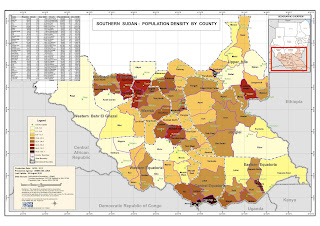
These days, however, international attention is largely focused on southern Sudan ahead of two self-determination referendums (one for southern Sudanese and the other for residents of Abyei, an area straddling the nation's north and south) scheduled for Jan. 9. The referendums mark the final stage of a 2005 peace agreement that ended 22 years of war between the Sudanese government in the mainly Muslim north and rebels based in the mainly Christian and animist south.
U.S. diplomats are working to ensure that the voting proceeds peacefully and that the Sudanese government, faced with the prospect of losing its oil-rich southern territory, accepts what is widely expected to be a southern vote for independence. "Realistically, there is a finite amount of leverage the U.S. government has available in Sudan," said Jon Temin, Sudan program officer at the U.S. Institute for Peace, explaining that with the referendums, there is less leverage for other issues such as Darfur.
For the Darfuri diaspora, the shift in international attention away from their homeland is frustrating. "Darfur is still hurting," Nour said.
07 febbraio 2009

Onde corte USA per il Darfur. Ma nessuno le capisce

Sembrava un'ottima idea, quella di trasmettere sulle onde corte informazioni che potessero aiutare dispersi e rifugiati del martoriato Darfur sudanese. La mezz'ora di trasmissione quotidiana di Afia Darfur, on air dal settembre scorso, costa milioni di dollari all'organizzazione governativa americana che trasmette anche i programmi di Voice of America, Radio Sawa e molti altri. Ma il lavoro non è stato eseguito a puntino. Da alcuni redattori sudanesi di VOA sono arrivate accuse di assoluta inaccuratezza, sembra addirittura che i programmi di Afia siano trasmessi, dai ripetitori nel Botswana e a Sao Tomé, in un arabo standard che nessun darfuriano è in grado di capire. Insomma, un mezzo pasticcio sui cui il Broadcasting Board of Governors, la commissione preposta al controllo delle trasmissioni americane verso aree geografiche esterne, sta indagando per cercare di capire se qualcuno ha giocato sporco. La questione è stata denunciata da questo articolo sul sito di ProPublica e se andate all'articolo originale troverete una serie di link.
Afia Darfur non è la sola trasmissione non africana rivolta al Sudan. Anche Radio Netherland ripete dai suoi impianti in Madagascar e dalla Germania i programmi di Radio Dabanga/Radio Darfur, un progetto fondato da giornalisti sudanesi e olandesi (dalle 5.30 alle 6.30 italiane su 13800 e 7315 kHz). Questo e altri programmi verso il Sudan sono descritti molto bene sulla guida alle onde corte in Africa distribuita gratuitamente dal British DX Club L'emittente di stato da Omdurman si ascolta, un po' irregolarmente su due frequenze dei 41 e 31 metri, 7.200 e 9.505 kHz.

Media & Technology
Critics Say U.S. Radio Program for Darfur Goes Soft on Sudan
by Sheri Fink, ProPublica - February 2, 2009

It was an inspired idea -- bring independent radio programming to one of the most isolated, war-scarred regions of the world, providing millions of displaced Darfuris with news about the political, military and humanitarian responses to their plight.
Funded with a million dollars from the U.S. State Department, Radio Afia Darfur, a half-hour shortwave radio program, is beamed three times a day into war-torn Darfur, Sudan, and refugee-packed eastern Chad.
"The idea was to accurately report what was going on," former Special Envoy for Darfur Andrew Natsios, who left his post before the program was launched, told ProPublica. "Both the government and the rebels were manipulating the people by lying to them and withholding information."
But critics charge that the program -- meant to provide displaced people in Sudan with "accurate and objective information about their country" -- is instead broadcasting in a language most of its target audience doesn't understand and has watered-down criticisms of Sudanese officials (whom the U.S. government holds responsible for genocide in Darfur). An outspoken Darfuri-American news reader who repeatedly challenged the program's non-Darfuri editors has also been fired.
After questions from Congress, the federal agency charged with overseeing the broadcasts, the Broadcasting Board of Governors [1], began reviewing the allegations.
The program's defenders counter that actions taken to preserve balance are being perceived by Darfur human rights activists as bias. "Conflicts within the communities that are in conflict can spill over in terms of conflicts within the broadcasting," Letitia King, director of public affairs for the International Broadcasting Bureau, a part of the Broadcasting Board of Governors, told ProPublica.
Radio Afia's first broadcast was on Sept. 29, 2008. The news was and continues to be delivered in standard Arabic, which differs significantly from the local version of Arabic spoken in Darfur, according to James Dickins, a professor of Arabic at the University of Salford, England, who specializes in Sudanese dialects.
"You're talking about really different languages," he told ProPublica. "Standard Arabic isn't understandable really if you're not educated, and since most people [there] are not educated, they can't understand.”
Three Darfur-born employees of Radio Afia tried to impress on their employers that standard Arabic was not only incomprehensible to the program's intended audience, it was also offensive because it was associated with the people who were killing them.
The "language issue is very sensitive," they wrote [2] (PDF) in a draft of an October 2008 letter to the president of the network that produces the program. "The majority of Darfuris in the IDP camps -- the victims -- suspect any broadcasting in the language or accent of the central Government or the Janjaweed tribes."
By contrast, another independent news program [3] created for Sudan by the United Nations includes programming in "simple" Arabic. A radio program [4] for Darfur launched by the Dutch media organization Press Now translates the news into both the local version of Arabic and three non-Arabic languages spoken by the main tribes displaced by the violence.
"Given the grant amount and urgency to begin broadcasts, there was neither the resources nor the time to support broadcasting in three languages," the BBG's King told ProPublica in an e-mail. King said that the use of local reporters and local interviews means that large portions of the program include voices speaking in the Darfuri dialect.
Radio Afia originates from the studios of Springfield, Va.-based Middle East Broadcasting Networks, Inc., which is also overseen by the BBG and focuses on communicating with the Middle East, not Africa. (A ProPublica investigation last summer detailed the failings of AlHurra [5], the U.S. government-funded Arabic TV station, which is also managed by MBN.)
Radio Afia's two news editors, longtime veterans of the Voice of America, are both Sudanese, but they are not from Darfur.
Former Radio Afia news reader Mohamed Suleiman -- one of the three Darfur-born news readers -- told ProPublica he repeatedly clashed with his Sudanese editors when they argued that events in Darfur did not amount to genocide and when they asked him to focus his interviews with camp residents on their food and medical needs rather than on reports of government harassment and violence. (The Broadcasting Board of Governors, through King, refused ProPublica's request to interview the editors.)
In December, Suleiman's employment was terminated. "I am very confrontational," Suleiman told ProPublica. "Anything I see wrong I just voice it."
A U.S. government official, who requested anonymity because she is not authorized to speak on behalf of the program, said that Suleiman was an activist on behalf of his suffering community. "We can't allow ourselves to be hijacked by people regardless of how right they may be," she said. "That's not what news is.”
If Suleiman, an engineer by training with little traditional journalistic experience, was seen as an activist (he wrote commentary [6] on the Darfur conflict [7] for years), that raises the question of why he was hired to work at Radio Afia in the first place.
The journalistic code of ethics [8] governing the broadcasts requires that opposing views be presented, and that journalists' personal opinions or judgments be left out of factual reporting.
Suleiman's firing has led to a volley of protests from other activists. "He's a trusted colleague," said Sam Bell, director of advocacy for the Genocide Intervention Network [9]. "It seems that information [on Afia Darfur] is being corrupted in precisely the same ways that the Sudanese government is filtering information."
Several congressional representatives have also become involved. On Jan. 15, U.S. Congressman Frank Wolf formally requested [10] (PDF) that the Broadcasting Board of Governors investigate Suleiman's firing, writing to the board's executive director, Jeff Trimble, that "it would be deeply troubling if there were any evidence of manipulation of content on the air."
Letitia King, the BBG spokeswoman, told ProPublica in an e-mail that "the Board is carefully reviewing the issues recently raised concerning Radio Afia and understands the tremendous importance of fulfilling our journalistic mission to provide accurate and balanced news and information."
With an uptick in violence in Darfur over recent days, there is one point on which most of those involved seemed to agree: Getting news to Darfuri civilians is more important than ever.